
Short Answer
Understanding Orbital Mechanics
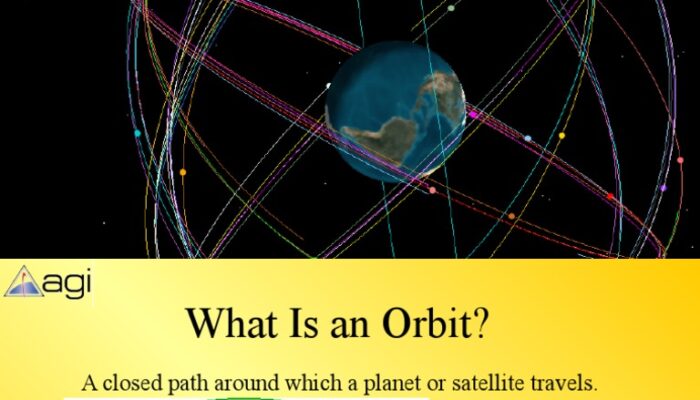
Orbital mechanics is the branch of science that studies the motion of objects such as satellites and celestial bodies under the influence of gravitational forces. It explores the elegant paths traced by planets, spacecraft trajectories, and the synchronized orbits of satellites around their primary bodies. This field not only captivates through the spectacle of space exploration but also holds profound significance in humanity’s ongoing endeavor to decode the universe’s secrets.
Academic Foundations for Orbital Mechanics
Aerospace Engineering: The Primary Pathway
Aerospace engineering stands as the most direct academic route to mastering orbital mechanics. This specialized engineering discipline focuses on the design, development, and operational control of aircraft and spacecraft. Students in aerospace engineering immerse themselves in subjects such as astrodynamics, propulsion, and structural mechanics, acquiring the essential knowledge to understand and predict the behavior of objects moving through space.
Physics: The Theoretical Backbone
Physics, especially classical mechanics and gravitational theory, provides a fundamental theoretical framework for orbital mechanics. Physics majors study the laws governing motion, gravitational forces, and celestial dynamics, which are critical for comprehending orbital paths, periodic motions, and three-dimensional trajectories. This major sharpens analytical thinking and deepens understanding of the natural principles that dictate orbital behavior.

Mathematics: The Language of Orbital Motion
Mathematics plays a crucial role in orbital mechanics, serving as the universal language of science. Majors in applied mathematics, computational modeling, or pure mathematics develop expertise in differential equations, vector calculus, and numerical methods. These mathematical tools are indispensable for solving the complex equations that describe orbital dynamics and spacecraft navigation, enabling precise simulations and optimization of orbital trajectories.
Interdisciplinary Approaches and Complementary Fields
Computer Science: Enabling Simulation and Control
With the rise of sophisticated simulation software and algorithm-driven trajectory planning, computer science has become vital in orbital mechanics. Skills in programming languages, data analysis, and software architecture empower professionals to create detailed models, automate orbital transfers, and manage autonomous spacecraft operations.
Mechanical Engineering: Dynamics and Control Systems
Mechanical engineering shares significant overlap with aerospace engineering, particularly in dynamics, fluid mechanics, and control systems. Mechanical engineers contribute to satellite deployment and maneuvering strategies within gravitational fields, offering versatile skills applicable to spacecraft design and orbital operations.
Emerging Disciplines: Space Systems Engineering and Astrophysics
Newer fields such as space systems engineering integrate electrical engineering, aerospace, and computer science to oversee the comprehensive design and management of space missions. Astrophysics, on the other hand, provides insights into cosmological phenomena, multi-body gravitational effects, and long-term orbital perturbations, enriching the understanding of orbital mechanics from a broader cosmic perspective.
Choosing the Right Major: Balancing Interests and Career Goals
Selecting an academic major to study orbital mechanics depends on individual interests and professional objectives. Aerospace engineering suits those aiming to work hands-on with spacecraft design and orbital control. Physics and mathematics offer strong theoretical foundations ideal for research and advanced study in celestial mechanics. Meanwhile, computer science and mechanical engineering, combined with space systems expertise, open pathways to specialized roles in software development, systems integration, and hardware engineering within the space industry.
Essential Skills and Practical Experience
Success in orbital mechanics requires more than academic knowledge. Critical thinking, quantitative problem-solving, and proficiency in programming languages such as Python, MATLAB, or Fortran are essential for conducting orbital simulations. Gaining practical experience through internships, research projects, and participation in space-related organizations further hones technical abilities and builds valuable professional networks.
The Significance of Orbital Mechanics
Orbital mechanics represents a compelling fusion of intellectual rigor and existential curiosity. It demands both precision and creativity, balancing deterministic mathematical models with real-world complexities like atmospheric drag and gravitational irregularities. Mastery of orbital mechanics symbolizes humanity’s ambition to explore, understand, and eventually inhabit the cosmos, making it a discipline of profound scientific and cultural importance.
Summary: Navigating the Path to Orbital Mechanics Expertise
The ideal academic major for orbital mechanics hinges on the desired balance between theoretical knowledge and practical application. Aerospace engineering offers focused specialization, physics and mathematics provide foundational theory, and allied fields such as computer science and mechanical engineering contribute complementary skills essential for modern space exploration. Regardless of the chosen path, studying orbital mechanics offers an intellectually rewarding journey at the forefront of science and technology, deepening our comprehension of motion, gravity, and humanity’s place in the universe.
FAQ
What is orbital mechanics?
Orbital mechanics is the study of the motion of objects in space under gravitational forces.
Which majors are best for a career in orbital mechanics?
Aerospace engineering, physics, and mathematics are the most relevant majors for a career in orbital mechanics.
What skills are important for studying orbital mechanics?
Critical thinking, quantitative problem-solving, and proficiency in programming languages such as Python and MATLAB are essential.




Leave a Reply