
Short Answer
Understanding the Concept of Variable Time Flow in the Universe
Envision the cosmos as an immense, harmonious orchestra where every celestial entity contributes a unique note. Yet, what if certain regions of this vast ensemble experience time at a pace distinct from others? The idea that time is not a fixed universal constant but a flexible dimension flowing at varying rates throughout space challenges our conventional understanding of reality. This concept invites deeper inquiry into the mysterious and complex nature of time itself.
Definition of Time Variability Across the Cosmos
Time, as we perceive it daily, appears as a consistent and unchanging progression-a steady rhythm guiding events from past to future. However, modern physics, particularly theories emerging from astrophysics and relativity, reveal that this uniformity is an illusion dependent on the observer’s frame of reference. The question “What if time flows differently in various parts of the universe?” leads us into the intricate fabric of spacetime, where factors such as gravity and velocity influence the passage of time.
- Time as a Relative Measure:
Time is not absolute but varies depending on the observer’s position and motion. - Influence of Gravity:
Strong gravitational fields can slow down time relative to regions with weaker gravity. - Effect of Velocity:
Objects moving at speeds close to light experience time differently compared to stationary observers.
Einstein’s Theory of Relativity and Time Dilation
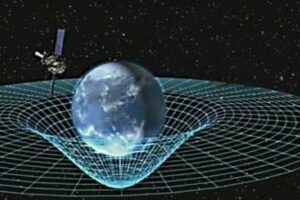
Central to understanding time’s variability is Einstein’s theory of relativity, which revolutionized the concept of time by integrating it with space into a four-dimensional continuum known as spacetime. Time dilation, a key outcome of this theory, describes how time can slow down or speed up relative to an observer’s velocity or gravitational environment. Near massive bodies such as black holes or neutron stars, the intense gravitational pull distorts spacetime, causing time to flow unevenly.
Gravitational Time Dilation
In regions with extreme gravity, the curvature of spacetime becomes pronounced, making time appear to move more slowly compared to areas with weaker gravitational influence. For example, clocks positioned near a black hole tick at a much slower rate than those far away, a phenomenon observable to distant observers.
Velocity-Induced Time Dilation
Similarly, when an object travels at velocities approaching the speed of light, time aboard that object slows relative to a stationary observer. This effect means that astronauts moving at relativistic speeds would experience significantly less passage of time compared to people remaining on Earth.
Mathematical Framework of Time Dilation
The quantitative description of time dilation is expressed through formulas derived from special and general relativity:
- Special Relativity (Velocity-based):
Time dilation factor: γ = 1 / √(1 – v²/c²)
Where v is the velocity of the moving object and c is the speed of light. The elapsed time Δt’ for the moving observer relates to the stationary observer’s time Δt by Δt’ = Δt / γ. - General Relativity (Gravitational):
Time dilation near a massive object is given by Δt’ = Δt √(1 – 2GM/rc²)
Where G is the gravitational constant, M is the mass of the object, r is the radial distance from the mass center, and c is the speed of light.
Implications of Variable Time Flow in the Universe
The uneven progression of time across different cosmic regions has profound consequences. Civilizations located in distant galaxies might experience time at rates vastly different from one another, complicating communication and shared historical understanding. This temporal disparity could lead to fragmented timelines where events unfold asynchronously across the universe.
- Cosmic Communication Challenges:
Time differences could distort or delay signals between distant civilizations. - Historical and Causal Complexity:
Events may appear out of sequence or disconnected due to varying time flows. - Influence on Cosmological Observations:
Phenomena such as the universe’s accelerated expansion and dark energy might be partially explained by differential time passage affecting how we perceive distant cosmic events.
Philosophical and Existential Considerations
The concept that time does not flow uniformly throughout the universe also raises deep philosophical questions about existence, memory, and destiny. If time’s arrow bends and twists depending on location and motion, then the experience of life and evolution becomes a complex mosaic rather than a simple linear progression. The notion of “now” fragments into multiple, localized moments, each unique to its observer’s frame of reference.
Speculations on Consciousness and Time
Could consciousness itself be influenced by these temporal variations? It is conceivable that beings adapted to different rates of time flow might perceive reality in fundamentally different ways. Some entities might experience lifespans spanning millennia within what humans perceive as mere seconds, opening speculative avenues about the diversity of life and awareness in the cosmos.
Practical Applications of Time Dilation on Earth
Although these phenomena seem abstract, they have tangible effects in our daily lives. Technologies such as the Global Positioning System (GPS) must account for time dilation caused by satellites’ high velocities and the Earth’s gravitational field to maintain accuracy. This real-world application highlights the integral role of relativistic time effects in modern technology.
Why Understanding Variable Time Flow Is Crucial
Grasping the concept that time flows differently across the universe enriches our comprehension of the cosmos and our place within it. It challenges simplistic notions of time and encourages exploration into the fundamental workings of reality. This understanding is vital not only for advancing physics and cosmology but also for appreciating the profound complexity and beauty of existence itself.
FAQ
What is time dilation?
Time dilation is a phenomenon in which time passes at different rates due to differences in gravity or velocity, as described by Einstein's theory of relativity.
How does gravity affect time?
In strong gravitational fields, time passes more slowly compared to areas with weaker gravity, a concept known as gravitational time dilation.
What are the implications of variable time flow?
Variable time flow can complicate communication between distant civilizations and affect our understanding of historical events across the universe.




Leave a Reply