

Short Answer
Definition of Gravity
Gravity is a fundamental force of nature that causes objects with mass to attract one another. It is an invisible yet omnipresent phenomenon that governs the motion of celestial bodies and the structure of the universe. This force is responsible for keeping planets in orbit around stars, holding atmospheres close to planetary surfaces, and maintaining the cohesion of galaxies.
- Universal Attraction:
Every object with mass exerts a gravitational pull on every other mass in the universe. - Spacetime Curvature:
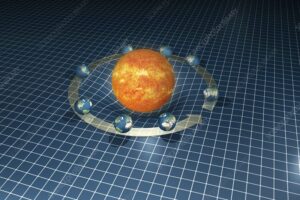
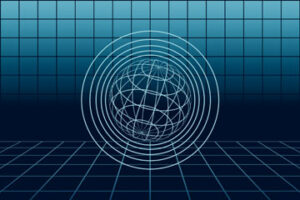
Gravity can be understood as the warping of spacetime caused by mass and energy, as described by Einstein’s theory of general relativity.
Historical Background and Fundamental Principles
The concept of gravity was first mathematically described by Sir Isaac Newton in the 17th century through his law of universal gravitation. Newton’s law states that every particle of matter attracts every other particle with a force proportional to the product of their masses and inversely proportional to the square of the distance between them. This principle laid the foundation for understanding gravitational interactions on Earth and throughout the cosmos.
How Gravity Operates Across the Universe
Gravity functions as a force that pulls masses toward each other, influencing objects from the smallest particles to the largest cosmic structures. The strength of gravity depends on two key factors: the amount of mass involved and the distance separating the objects. The greater the mass, the stronger the gravitational pull; the farther apart the objects, the weaker the force.
Importantly, gravity extends infinitely, though its influence diminishes with distance. This continuous reach is what governs planetary orbits, satellite trajectories, and the paths of comets and asteroids.
Gravity on Earth Compared to Other Celestial Bodies
Earth’s gravity is unique in its suitability for sustaining life. With an average gravitational acceleration of approximately 9.8 meters per second squared (m/s²), it is strong enough to retain a life-supporting atmosphere and oceans, yet gentle enough to allow complex organisms to thrive.
Other planets exhibit a wide range of gravitational strengths depending on their mass and size:
- Jupiter:
The largest planet in our solar system, Jupiter’s gravity at its cloud tops is about 24.79 m/s², more than twice that of Earth. - The Moon:
Earth’s natural satellite has a surface gravity roughly one-sixth that of Earth, about 1.62 m/s², which explains the low-gravity environment experienced by Apollo astronauts.
The variation in surface gravity arises from the interplay between a planet’s mass and radius. Two planets with identical masses can have different gravitational pulls if their sizes differ, due to differences in density and mass distribution.
Gravity Beyond the Solar System: Exoplanets and Extreme Objects
Exploring worlds outside our solar system reveals even more diverse gravitational environments. Exoplanets, such as “super-Earths,” are larger and more massive than Earth but smaller than gas giants, often possessing stronger gravitational fields. These conditions could significantly affect atmospheric retention, surface pressure, and geological activity, raising questions about the potential for life and its adaptability under such forces.
Beyond planets, gravity manifests in extraordinary ways in stars and compact objects:
- Neutron Stars and White Dwarfs:
These dense remnants of stellar evolution exhibit intense gravitational fields far exceeding those of planets. - Black Holes:
Representing gravity’s most extreme form, black holes are regions where gravitational pull is so strong that not even light can escape, profoundly warping spacetime.
Mathematical Description of Gravity
Newton’s law of universal gravitation is expressed as:
F = G * (m₁ * m₂) / r²
- F: Gravitational force between two masses
- G: Gravitational constant (6.67430 × 10⁻¹¹ N·m²/kg²)
- m₁, m₂: Masses of the two objects
- r: Distance between the centers of the two masses
This formula quantifies how gravitational force decreases with the square of the distance and increases with the product of the masses involved.
Common Misunderstandings About Gravity
- Misconception: Only Earth has gravity.
Correction: Gravity is a universal force present wherever there is mass, affecting all planets, stars, and galaxies. - Misconception: Gravity is a force that only acts on objects on the surface of planets.
Correction: Gravity extends infinitely and governs the motion of objects in space, including orbits and cosmic structures.
Significance of Gravity in Science and Daily Life
Gravity is essential not only for the structure and dynamics of the universe but also for life on Earth. It holds our atmosphere and oceans in place, enabling the conditions necessary for biological processes. In technology, understanding gravity is crucial for satellite deployment, space exploration, and engineering projects. On a cosmic scale, gravity orchestrates the formation of stars, solar systems, and galaxies, shaping the universe’s architecture and evolution.
Conclusion: Gravity as the Cosmic Architect
Far from being unique to Earth, gravity is an intrinsic property of mass that permeates the entire universe. While Earth’s gravitational field creates an environment uniquely suited for life, gravity’s influence extends from the smallest particles to the most massive black holes. As humanity continues to explore the cosmos, our understanding of gravity’s diverse roles deepens, revealing it as the fundamental force that binds the universe together and sustains the very fabric of existence.


Leave a Reply