
Short Answer
Definition of the Sun’s Gravitational Influence
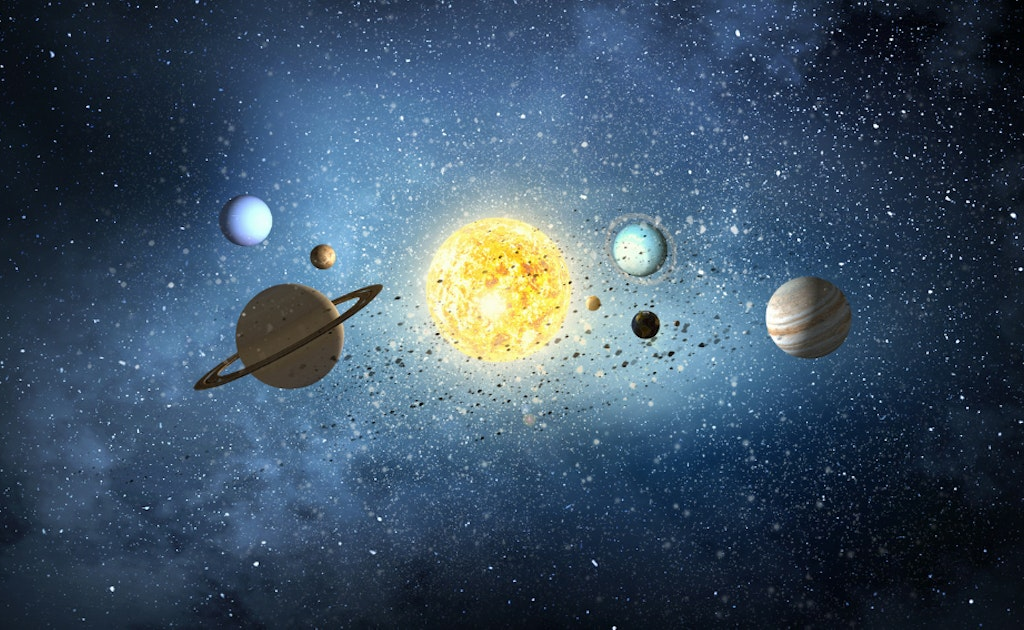
The sun, a massive star at the center of our solar system, exerts a gravitational force that governs the motion of planets, comets, asteroids, and other celestial bodies. This gravitational pull is the fundamental force that keeps the solar system bound together, orchestrating the orbits of its constituents. Understanding how far the sun’s gravity extends involves exploring the limits of its dominance over other cosmic forces and bodies within the vastness of space.
Fundamentals of Gravitational Force
Gravity is one of the four fundamental forces in nature and theoretically extends infinitely. Every object with mass attracts every other mass, regardless of distance. However, the strength of this attraction diminishes with the square of the distance between the objects, as described by Newton’s law of universal gravitation. Although the sun’s mass is over 330,000 times that of Earth, its gravitational pull weakens significantly as distance increases. Instead of an abrupt cutoff, the sun’s gravitational influence is better understood through regions where its pull predominates over other forces.
The Heliopause and the Heliosphere
The heliosphere is a vast, bubble-like region created by the solar wind-a continuous flow of charged particles streaming from the sun’s outer atmosphere, or corona. This region acts as a protective shield, deflecting harmful interstellar radiation and marking a boundary where the pressure from the solar wind balances the pressure from the interstellar medium. Although the heliosphere is not a strict gravitational boundary, it serves as a practical indicator of the sun’s sphere of influence in terms of particle and electromagnetic dominance. It extends roughly 100 astronomical units (AU) from the sun, with 1 AU representing the average distance between Earth and the sun.
The Hill Sphere: Defining Gravitational Dominance
The Hill Sphere is a critical concept in celestial mechanics that defines the region around a celestial body where its gravitational pull is dominant over that of a more massive body farther away. For the sun, the Hill Sphere represents the zone within which it can retain satellites and smaller objects against the gravitational influence of the Milky Way galaxy. This sphere extends approximately 1 to 2 light-years from the sun, encompassing distant objects such as those in the Oort Cloud and marking the farthest reaches of the sun’s gravitational control.
The Oort Cloud: The Outer Frontier of Solar Gravity
The Oort Cloud is a hypothesized spherical shell of icy bodies believed to exist between 2,000 and 100,000 AU from the sun. Although it has not been directly observed, this distant region is thought to be the source of long-period comets that occasionally enter the inner solar system. The Oort Cloud represents the outermost boundary of the sun’s gravitational influence, where it still manages to hold onto these frozen remnants of the early solar system. The gravitational perturbations from passing stars or galactic tides can dislodge these objects, sending them on journeys toward the sun.
Galactic Influences on the Sun’s Gravitational Reach
The sun’s gravitational domain is not isolated; it exists within the dynamic environment of the Milky Way galaxy. Nearby stars, molecular clouds, and dark matter exert gravitational forces that can alter the boundaries of the sun’s influence. Over millions of years, close encounters with other stars can strip away distant objects from the Oort Cloud, reshaping the extent of the sun’s gravitational hold. This interplay between solar gravity and galactic forces highlights the complex and evolving nature of our solar system’s outer limits.
Gravitational Effects Within the Solar System
Closer to the sun, its gravitational pull is most apparent in the stable, elliptical orbits of the eight major planets, dwarf planets, asteroids, and their moons. These bodies follow predictable paths governed by the sun’s mass and the laws of celestial mechanics. Beyond these large objects, even tiny particles such as interplanetary dust are influenced by solar gravity, contributing to phenomena like the zodiacal light-a faint glow caused by sunlight scattering off dust particles within the inner solar system.
Influence on Interstellar Visitors
The sun’s gravity also affects objects passing through the solar neighborhood from other star systems. Recent discoveries of interstellar objects like ‘Oumuamua and comet Borisov demonstrate the sun’s ability to alter the trajectories of these cosmic visitors during their brief encounters. These interactions emphasize the sun’s gravitational reach beyond the confines of the solar system and its role in shaping the paths of objects traveling through local interstellar space.
Why Understanding the Sun’s Gravitational Extent Matters
The sun’s gravitational influence is a fundamental force that maintains the structure and order of the solar system. It governs the orbits of planets, the behavior of comets, and the distribution of cosmic dust, playing a crucial role in the conditions that support life on Earth. Moreover, studying the limits of solar gravity enhances our comprehension of celestial mechanics, the interaction between stars and their environments, and the dynamic processes shaping our cosmic neighborhood. This knowledge deepens our appreciation of the invisible forces that sculpt the universe and sustain the delicate balance of motion and stability within it.
Common Misconceptions About the Sun’s Gravity
The sun’s gravity ends abruptly at a certain distance.
Gravity extends infinitely but weakens with distance; the sun’s influence gradually fades rather than stopping suddenly.
The heliosphere marks the boundary of the sun’s gravitational pull.
The heliosphere defines the extent of solar wind influence, not the gravitational boundary, which is much larger.
The sun’s gravity only affects planets and large bodies.
Solar gravity influences all objects with mass, including dust particles and interstellar visitors passing through the solar system.
Mathematical Explanation: Newton’s Law of Universal Gravitation
The gravitational force between two masses is described by Newton’s law of universal gravitation:
F = G * (m₁ * m₂) / r²
- F: Gravitational force between the two masses
- G: Gravitational constant (6.67430 × 10⁻¹¹ N·m²/kg²)
- m₁ and m₂: Masses of the two objects (e.g., the sun and a planet)
- r: Distance between the centers of the two masses
This formula illustrates that as the distance r increases, the gravitational force F decreases proportionally to the square of the distance, explaining why the sun’s pull weakens with distance but never fully disappears.
FAQ
How far does the Sun's gravity reach?
The Sun's gravity can influence objects up to about 1 to 2 light-years away, primarily within the Hill Sphere.
What defines the boundary of the Sun's gravitational influence?
There is no strict boundary; it gradually weakens with distance, but the Oort Cloud represents the outermost region of its influence.


Leave a Reply