
Short Answer
Definition of Gravity and Its Cosmic Role
Gravity is an invisible yet omnipresent force that governs the attraction between masses. It is responsible for everyday phenomena such as objects falling to the ground and rivers flowing downhill, as well as celestial mechanics like the Moon orbiting Earth and Earth orbiting the Sun. Beyond these familiar examples, gravity extends its influence across the vast cosmos, shaping the structure and behavior of galaxies, clusters, and the universe itself.
Gravity as the Architect of Cosmic Structure
On a grand scale, gravity acts as the fundamental force that organizes matter in the universe. It draws clouds of gas and dust together to form protostars, orchestrates the assembly of solar systems, and corrals stars into galaxies. Without gravity’s persistent pull, matter would disperse randomly, leaving the universe as a chaotic and unstructured void devoid of the intricate celestial formations observed by astronomers.
Interplay with Dark Matter and Dark Energy
Dark Matter: The Invisible Gravitational Glue
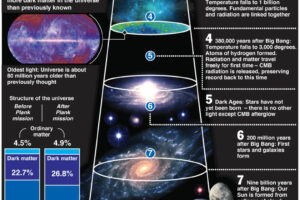
Dark matter is a mysterious form of matter that neither emits nor absorbs light but exerts a significant gravitational pull. It is estimated to make up about 27% of the universe’s total mass-energy content. This unseen substance is crucial for maintaining the cohesion of galaxies, preventing them from disintegrating as they spin. The gravitational effects of visible matter alone cannot explain the observed rotational speeds of galaxies, highlighting dark matter’s essential role.

Dark Energy: The Cosmic Expander
Contrasting gravity’s attractive force, dark energy is a mysterious phenomenon responsible for the accelerated expansion of the universe. Comprising roughly 68% of the universe’s total content, dark energy causes galaxies to move away from each other at an increasing rate. This expansive force challenges the simplistic idea that gravity alone holds the universe together, introducing a dynamic tension between attraction and repulsion on cosmic scales.
The Big Bang and the Cosmic Tug-of-War
The universe began with the Big Bang, a cataclysmic event characterized by rapid expansion and extreme conditions. Initially, gravity struggled to counteract this outward thrust. Over billions of years, gravity succeeded locally by binding matter into atoms, stars, and galaxies. However, on the largest scales, the universe continues to expand due to dark energy’s influence. This ongoing interplay raises profound questions about the universe’s ultimate destiny: whether gravity will eventually reverse expansion in a “Big Crunch” or if dark energy will drive eternal acceleration.
Gravity in the Framework of General Relativity
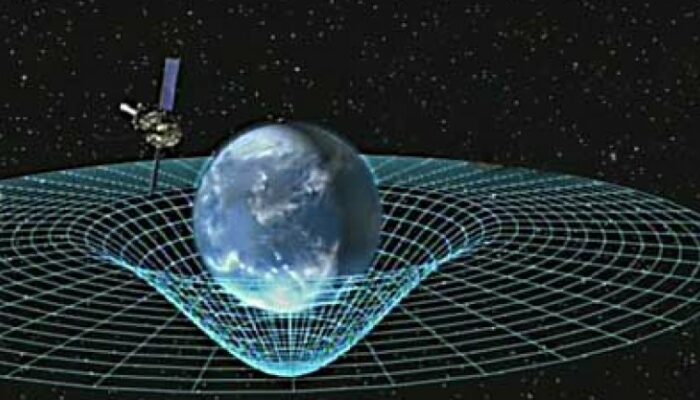
Albert Einstein’s theory of general relativity revolutionized our understanding of gravity by describing it not as a force transmitted through space but as the curvature of spacetime caused by mass and energy. Massive objects distort the fabric of spacetime, causing smaller masses to follow curved trajectories, which we perceive as gravitational attraction. This theory has been validated through numerous experiments, including the observation of gravitational lensing, where light bends around massive bodies.
Gravitational Lensing and Its Astronomical Significance
Gravitational lensing occurs when light from distant objects bends around massive clusters, providing compelling evidence of gravity’s influence. This phenomenon allows astronomers to map the distribution of dark matter and understand the universe’s large-scale structure. By studying how light is deflected, scientists gain insights into the invisible scaffolding that shapes cosmic formations.
Gravitational Waves: Ripples in Spacetime
Gravitational waves are disturbances in spacetime generated by violent cosmic events such as black hole mergers. Their direct detection in recent years has confirmed predictions made by general relativity and opened a new window into the universe’s dynamic processes. These waves travel across the cosmos, carrying information about energetic gravitational phenomena billions of light-years away.
Black Holes: Gravity’s Extreme Manifestation
Black holes represent the most intense expression of gravity, formed when massive stars collapse under their own gravitational pull, compressing matter into singularities of infinite density. The event horizon of a black hole marks the boundary beyond which nothing, not even light, can escape. These enigmatic objects profoundly affect their surroundings, influencing galaxy evolution and serving as gravitational anchors within large cosmic structures.
The Dynamic Balance of the Universe
While gravity is fundamental in maintaining the integrity of local structures such as stars, planets, and galaxies, the universe as a whole is shaped by a complex balance between gravitational attraction and the repulsive force of dark energy. This cosmic tension influences the formation of galaxy clusters and the vast cosmic web-the filamentary network of matter spanning the universe.
Summary: Gravity’s Role in Cosmic Cohesion and Expansion
Gravity is undeniably a key force that shapes the formation and evolution of planetary systems, stars, galaxies, and clusters. However, it operates in concert with dark matter, which enhances gravitational binding, and dark energy, which drives the universe’s accelerated expansion. Together, these components create a cosmos that is both cohesive and ever-changing, governed by a delicate balance between forces of attraction and expansion.
Why Understanding Gravity Matters
Comprehending gravity’s role is essential for advancing our knowledge of the universe’s origin, structure, and fate. It underpins technologies such as satellite navigation and informs astrophysical research that probes the fundamental laws of nature. The study of gravity, dark matter, and dark energy continues to challenge and expand our understanding of the cosmos, revealing a universe that is as complex as it is fascinating.

Leave a Reply