
Short Answer
Understanding Gravity on Planets
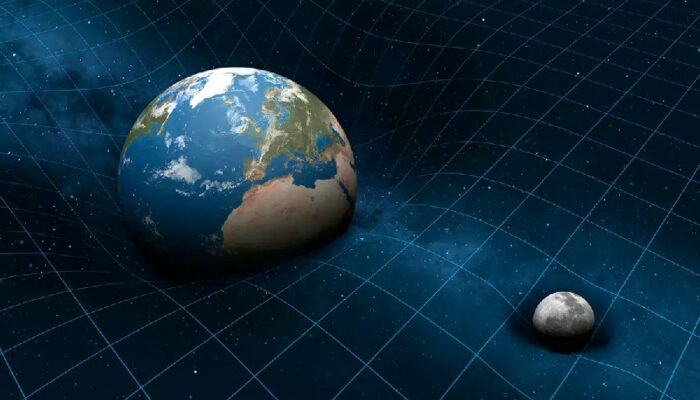
Gravity is a fundamental force that governs the attraction between objects with mass. It is the invisible glue that holds planets, moons, and other celestial bodies in their orbits, while also shaping the environments on their surfaces. The strength of gravity on a planet depends not only on its mass but also on its size, specifically the radius from its center to the surface where gravity is measured.
- Mass:
The greater the mass of a planet, the stronger its gravitational pull tends to be. - Radius:
A larger radius spreads the mass over a bigger volume, which can reduce surface gravity despite high mass.
How Planetary Gravity Varies Across the Solar System
Each planet in our solar system exhibits a unique gravitational acceleration at its surface, influenced by its composition, size, and density. Earth’s gravity, approximately 9.8 meters per second squared (m/s²), serves as the standard reference for life as we know it. However, when compared to other planets, Earth’s gravity is neither the strongest nor the weakest.
Gravity of the Gas Giants
Jupiter and Saturn, the gas giants, possess some of the most powerful gravitational fields among the planets. Jupiter, the largest planet, has a surface gravity of about 24.79 m/s², more than double that of Earth. This means objects weigh significantly more there; for instance, a 10-pound object on Earth would feel like over 25 pounds on Jupiter. Saturn’s gravity, while less intense than Jupiter’s, still exceeds Earth’s at roughly 10.44 m/s², despite its lower density and different atmospheric composition.
Gravity of the Ice Giants
Neptune and Uranus, classified as ice giants, also display interesting gravitational characteristics. Neptune’s surface gravity is approximately 11.15 m/s², slightly stronger than Earth’s, whereas Uranus has a weaker gravity of about 8.69 m/s². These differences highlight how density and planetary size combine to influence gravitational strength.
Gravity of the Terrestrial Planets
Smaller rocky planets like Mercury and Mars have considerably weaker gravity. Mercury’s surface gravity is around 3.7 m/s², and Mars is close at 3.71 m/s². This reduced gravitational pull affects their ability to retain atmospheres and has significant implications for potential human colonization and surface conditions.
Scientific Explanation of Surface Gravity
Surface gravity (g) on a planet can be calculated using Newton’s law of universal gravitation:
g = (G × M) / R²
- G: Gravitational constant (6.674 × 10⁻¹¹ N·m²/kg²)
- M: Mass of the planet
- R: Radius of the planet (distance from the center to the surface)
This formula shows that gravity increases with mass but decreases with the square of the radius, explaining why some massive planets may have surface gravity comparable to or only slightly higher than smaller but denser planets.
Impact of Gravity on Planetary Environments
Gravity influences much more than just the weight of objects. It plays a crucial role in shaping geological features, atmospheric retention, and even biological evolution.
- Geological Activity:
Stronger gravity can enhance tectonic and volcanic activity by exerting greater pressure on a planet’s interior. - Atmospheric Retention:
Planets with sufficient gravity can hold onto thick atmospheres, which are essential for climate regulation and potential habitability. - Biological Adaptations:
The gravity of a planet affects the physiology of living organisms, influencing muscle strength, bone density, and overall mobility.
Earth’s Gravity: The “Goldilocks” Force
While Earth does not have the highest gravity in the solar system, its gravitational pull is perfectly balanced to support life. It is strong enough to maintain a stable atmosphere rich in oxygen and nitrogen, yet not so intense as to crush living beings or prevent the development of complex ecosystems. This equilibrium makes Earth’s gravity uniquely suited to sustain the diverse forms of life that inhabit it.
Common Misconceptions About Planetary Gravity
The planet with the greatest mass always has the strongest surface gravity.
Surface gravity depends on both mass and radius; a larger radius can reduce surface gravity despite high mass.
Gravity alone determines a planet’s habitability.
Habitability depends on a combination of factors including gravity, atmosphere, temperature, and chemical composition.
Why Understanding Planetary Gravity Is Important
Studying gravity across different planets enhances our comprehension of planetary formation, atmospheric dynamics, and potential for life beyond Earth. It informs space exploration missions, helps predict environmental conditions on other worlds, and guides the design of equipment and habitats for astronauts. Moreover, gravity’s influence extends to fundamental physics, affecting time dilation and the behavior of light near massive bodies.
Practical Implications and Thought Experiments
Imagining how an astronaut’s weight changes on different planets illustrates the challenges of human space travel. On Jupiter, the intense gravity would make movement exhausting and could exceed the limits of human endurance and equipment strength. Conversely, Mars’ weaker gravity might lead to muscle deterioration without proper exercise. These considerations are vital for planning long-term missions and potential colonization.
Conclusion: The Multifaceted Nature of Planetary Gravity
Earth’s gravity, while not the strongest in the solar system, represents a finely tuned balance that supports life and geological activity. The diversity of gravitational forces across planets reflects the complex interplay of mass, size, and composition. Appreciating this complexity enriches our understanding of the cosmos and our place within it, highlighting gravity’s profound role in shaping planetary environments and the potential for life throughout the universe.



Leave a Reply