
Short Answer
Definition of Gravity
Gravity is a fundamental natural force responsible for the attraction between objects that possess mass. It governs the motion of celestial bodies, the behavior of objects on Earth, and the structure of the universe itself. This force acts universally, influencing entities ranging from the tiniest particles to the largest galaxies.
- Universal Attraction:
Gravity causes all masses to pull toward each other, regardless of their size or composition. - Mass-Dependent:
The strength of gravitational attraction depends directly on the masses involved and inversely on the square of the distance separating them.
Fundamental Principles of Gravitational Interaction
At its essence, gravity is an attractive force that exists between any two masses. Newton’s law of universal gravitation mathematically expresses this relationship, stating that the force between two objects is proportional to the product of their masses and inversely proportional to the square of the distance between them. This implies that every object, no matter how small, generates a gravitational field, though the intensity varies widely.
Newtonian Gravity
Newtonian physics provides a classical framework for understanding gravity as a force acting at a distance:
- Force Equation:
( F = G frac{m_1 m_2}{r^2} ), where ( F ) is the gravitational force, ( G ) is the gravitational constant, ( m_1 ) and ( m_2 ) are the masses, and ( r ) is the distance between their centers. - Implication:
Every mass exerts a gravitational pull on every other mass, no matter how minute.
Mass and Its Role in Gravity
Mass is an intrinsic attribute of matter, quantifying the amount of substance within an object. Since gravity is directly linked to mass, any particle or object possessing mass inherently produces a gravitational field. This includes not only macroscopic objects but also subatomic particles such as electrons and quarks, which have gravitational effects too subtle to detect with current technology.
Gravity at the Quantum Scale
While gravity is universal, its effects at microscopic scales are extraordinarily weak, posing significant challenges for physicists attempting to unify gravity with quantum mechanics. The gravitational influence of elementary particles is negligible compared to other fundamental forces, making experimental observation difficult.
Gravity in the Cosmos
On astronomical scales, gravity is the dominant force shaping the structure and dynamics of the universe. Massive bodies like stars, planets, and moons generate strong gravitational fields that govern orbital motions, internal processes, and the formation of complex systems.
- Stellar Gravity:
The immense gravitational pull within stars compresses gas and dust, triggering nuclear fusion that produces light and heat. - Planetary Gravity:
Gravity maintains planetary atmospheres, influences ocean tides, and creates conditions necessary for life. - Everyday Objects:
Objects such as books or pencils have gravitational fields, but these are so weak they have negligible effects beyond their immediate surroundings.
Einstein’s General Relativity: A New Perspective on Gravity
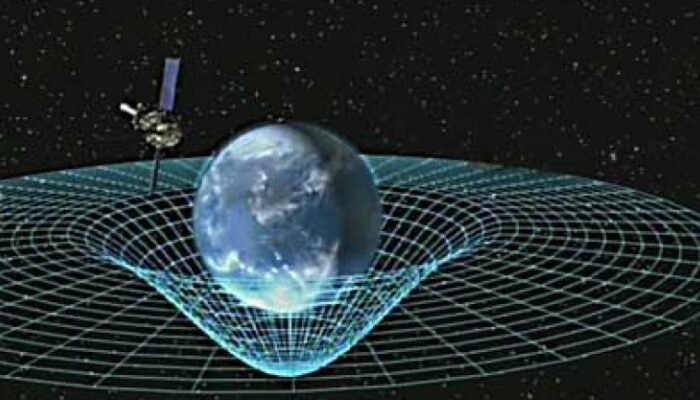
Albert Einstein’s theory of General Relativity redefined gravity not as a force but as the curvature of spacetime caused by mass and energy. This framework explains phenomena that Newtonian gravity cannot, such as the bending of light near massive objects and time dilation in strong gravitational fields.
- Spacetime Curvature:
Mass and energy distort the fabric of spacetime, guiding the motion of objects along curved paths. - Energy Contribution:
Even massless particles like photons influence and are influenced by gravitational fields through their energy.
Exotic Gravitational Phenomena
Gravity also manifests in extraordinary cosmic entities and phenomena that highlight its profound effects:
- Black Holes:
Regions where mass is concentrated so densely that gravitational pull prevents even light from escaping, illustrating gravity’s extreme intensity. - Dark Matter and Gas Clouds:
Invisible or diffuse matter that exerts gravitational influence, shaping galaxy formation and cosmic evolution despite being undetectable by electromagnetic means.
Gravity’s Role in Cosmic Structure and Motion
Gravity orchestrates the large-scale architecture of the universe, from the orbital dance of binary stars to the clustering of galaxies within superclusters. It continuously influences matter across the vacuum of space, leaving imprints on cosmic background radiation and guiding the evolution of the cosmos.
Comparative Strength and Significance of Gravity
Among the four fundamental forces, gravity is the weakest, yet its persistent and cumulative nature enables the formation and stability of complex structures in the universe. Without gravity’s steady pull, matter would remain dispersed, preventing the emergence of stars, planets, and life.
Challenges and Frontiers in Gravitational Physics
Understanding gravity at the quantum level remains a major scientific challenge. The pursuit of a quantum gravity theory aims to reconcile General Relativity with quantum mechanics, potentially involving hypothetical particles called gravitons that mediate gravitational interactions at the smallest scales.
Gravity in Everyday Life
Although gravity’s effects are often taken for granted due to their constancy, they are fundamental to daily experiences such as walking, balance, and the behavior of objects. Recognizing that every atom and molecule participates in gravitational attraction deepens our appreciation of the interconnectedness of the universe.
Summary: The Universality of Gravity
In essence, all objects in existence, regardless of their size or composition, possess gravitational influence. This force arises from mass and energy, operating across all scales from the quantum realm to the vast cosmos. While often imperceptible in small objects, gravity underpins the structure, dynamics, and evolution of the universe. Ongoing research continues to expand our understanding of this fundamental interaction, revealing the intricate gravitational web that binds all matter and energy.
FAQ
Do all objects have gravity?
Yes, all objects with mass generate a gravitational field, regardless of their size.
How does gravity affect everyday life?
Gravity is responsible for keeping us grounded, affecting how we walk, balance, and interact with objects.
What is the difference between Newtonian gravity and General Relativity?
Newtonian gravity describes gravity as a force between masses, while General Relativity views it as the curvature of spacetime caused by mass and energy.



Leave a Reply