

Short Answer
Understanding Dark Matter
Dark matter has long been a cornerstone concept in cosmology and astrophysics, introduced to explain gravitational effects that visible matter alone cannot account for. Phenomena such as the unexpected rotation speeds of stars in galaxies and the bending of light from distant objects-known as gravitational lensing-have consistently suggested the presence of an invisible form of matter. This mysterious substance is thought to make up approximately 27% of the universe’s total mass-energy content, yet it has eluded direct detection despite extensive experimental efforts.
Galactic Dynamics and the Dark Matter Hypothesis
Observations reveal that stars located at the outer edges of galaxies orbit at velocities that defy predictions based on Newtonian gravity and the visible mass present. Without an additional gravitational source, these stars would escape their galaxies. To reconcile this, scientists propose that galaxies are embedded in massive halos of dark matter, which exert the necessary gravitational pull to maintain these high orbital speeds. This hypothesis has become widely accepted because it aligns well with a variety of astrophysical data.
Challenging the Existence of Dark Matter
Despite its explanatory power, the concept of dark matter raises profound questions. What if the anomalies attributed to dark matter are instead signs of a fundamental flaw in our understanding of gravity? Alternative theories, such as Modified Newtonian Dynamics (MOND) and emergent gravity models, suggest that gravitational laws may differ on galactic or cosmological scales. These frameworks propose modifications to classical gravity that could account for observed phenomena without invoking unseen matter, offering a radically different perspective on cosmic structure.

Philosophical and Epistemological Implications
The debate over dark matter also touches on deeper philosophical issues about how science fills gaps in knowledge. The tendency to hypothesize invisible entities to explain unexplained observations reflects a human inclination to seek tangible explanations, even when direct evidence is lacking. This raises an epistemological tension between accepting unseen particles as real or revising the fundamental laws that govern the universe. Both approaches challenge our understanding and highlight the dynamic nature of scientific inquiry.
The Role of Dark Matter in the Standard Cosmological Model
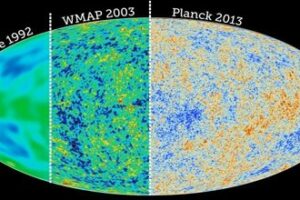
The Lambda Cold Dark Matter (ΛCDM) model, which integrates dark energy, dark matter, and ordinary matter, has been remarkably successful in describing the universe’s large-scale structure, the cosmic microwave background radiation, and its accelerating expansion. Removing dark matter from this framework would necessitate significant revisions or entirely new models to explain these phenomena, underscoring the central role dark matter plays in contemporary cosmology.
Public Fascination and Symbolism of Dark Matter
Dark matter captivates not only scientists but also the public imagination, symbolizing the vast unknowns of the cosmos. Its invisibility combined with its profound gravitational influence challenges human perception and technological capabilities, evoking a sense of wonder and intellectual curiosity. This metaphorical significance contributes to the enduring interest in uncovering its true nature.
Impact on Astrophysical Research and Methodologies
The hypothesis of dark matter underpins many astrophysical measurement techniques, including the analysis of galactic rotation curves, gravitational lensing, and cosmic microwave background data. Should the dark matter paradigm be overturned, it would prompt a reevaluation of these datasets and the assumptions behind them, potentially leading to new insights or increased uncertainty. This exemplifies the provisional and evolving character of scientific knowledge.
Exploring Alternative Theoretical Landscapes
Rejecting the existence of dark matter opens the door to novel theoretical possibilities, such as undiscovered fields, new fundamental forces, or modifications to the geometry of spacetime itself. These ideas challenge physicists and philosophers to reconcile empirical evidence with innovative conceptual frameworks, pushing the boundaries of our understanding of the universe.
Scientific Progress and the Enigma of Dark Matter
The ongoing investigation into dark matter exemplifies how science advances through both incremental refinement and revolutionary shifts. Far from being a mere technical issue, the dark matter question highlights the profound mysteries of the cosmos. A universe without dark matter may not be simpler but rather more complex, requiring a fundamental rethinking of gravity, matter, and the forces shaping existence.
Conclusion: Embracing the Quest for Cosmic Understanding
Contemplating a cosmos devoid of dark matter invites a transformative intellectual journey. It challenges established beliefs, encourages alternative hypotheses, and exposes the limits of current scientific frameworks. While the resolution of the dark matter puzzle remains elusive, the pursuit itself enriches humanity’s cosmic narrative, inspiring continuous exploration and deeper appreciation of the universe’s mysteries.




Leave a Reply