

Short Answer
Definition of Ether and Dark Matter
Throughout the history of physics, two enigmatic concepts-ether and dark matter-have played pivotal roles in shaping our understanding of the universe. Although both are invisible and elusive, they differ fundamentally in their nature and purpose.
- Ether:
Historically conceived as a pervasive, invisible medium filling all space, ether was believed to be the carrier of light waves and electromagnetic phenomena. It was imagined as a subtle, all-encompassing fabric that allowed waves to propagate through the vacuum of space. - Dark Matter:
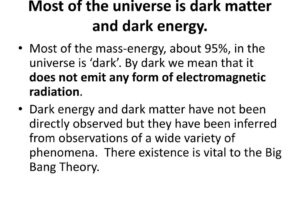
A modern astrophysical concept, dark matter refers to an unseen form of matter that exerts gravitational influence on visible objects but neither emits nor absorbs light. It accounts for a significant portion of the universe’s total mass and is essential for explaining various cosmic phenomena.
Historical Context and Evolution of the Ether Concept
In the 19th century, the ether was a cornerstone of classical physics, posited as the medium through which light waves traveled, much like sound waves require air. This hypothetical substance was thought to permeate every corner of the cosmos, providing a framework for electromagnetic interactions.
However, the ether hypothesis faced critical challenges, most notably from the Michelson-Morley experiment, which failed to detect the expected motion of Earth through this medium. Subsequently, Albert Einstein’s theory of relativity revolutionized physics by eliminating the need for ether, describing space and time as a unified continuum capable of supporting electromagnetic waves without any underlying substance.

Emergence and Role of Dark Matter in Modern Cosmology
Unlike ether, dark matter was introduced in the 20th century as a response to gravitational anomalies observed in galaxies and galaxy clusters. Scientists noticed that the visible matter alone could not account for the rotational speeds of galaxies or the bending of light around massive objects (gravitational lensing).
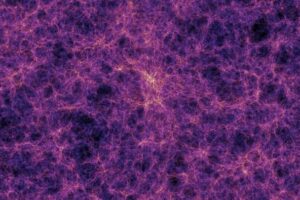
Dark matter is thus understood as an invisible mass that shapes the large-scale structure of the universe. It does not interact with electromagnetic radiation, making it undetectable by conventional telescopes, but its gravitational effects are measurable and critical for explaining cosmic dynamics.
Comparative Analysis: Ether vs. Dark Matter
While ether and dark matter both address phenomena beyond direct sensory perception, their conceptual foundations and evidentiary support differ markedly.
- Conceptual Basis:
Ether was a theoretical construct devised to reconcile wave propagation with classical mechanics, lacking direct empirical evidence. Dark matter, conversely, is grounded in extensive astrophysical observations and is integral to current cosmological models. - Function:
Ether served as a medium for electromagnetic waves, whereas dark matter acts as a gravitational scaffold influencing the formation and behavior of cosmic structures. - Scientific Status:
Ether was ultimately discarded due to experimental refutation and theoretical advancements. Dark matter remains a vibrant area of research, with ongoing efforts to identify its composition and properties.
Scientific Significance and Implications
Dark matter’s importance extends beyond explaining galactic phenomena; it bridges multiple scientific disciplines, including particle physics, cosmology, and astrophysics. Its study involves sophisticated technologies such as particle accelerators, space-based observatories, and deep-space telescopes, highlighting its central role in advancing our understanding of the universe.
In contrast, the ether concept, while obsolete, played a crucial historical role by stimulating scientific inquiry and paving the way for revolutionary theories like relativity.
Metaphorical Perspectives
Metaphorically, ether can be likened to an ancient cosmic ocean-an all-encompassing medium carrying light waves like ships across a vast sea. Dark matter, on the other hand, resembles a massive iceberg hidden beneath the ocean’s surface, unseen yet exerting a profound gravitational pull that governs the motion of celestial bodies.
Common Misconceptions
Dark matter is simply a modern version of ether.
Although both concepts address unseen cosmic phenomena, dark matter is supported by empirical evidence and serves a different role than the discarded ether hypothesis.
Ether was proven to exist but was ignored.
Ether was never detected experimentally and was replaced by more accurate theories that better explained electromagnetic phenomena.
Why Understanding These Concepts Matters
The exploration of ether and dark matter reflects humanity’s enduring quest to comprehend the unseen forces shaping reality. Dark matter, in particular, represents a frontier of scientific discovery, challenging researchers to uncover new physics beyond the known particles and forces. This pursuit not only deepens our grasp of the cosmos but also drives technological innovation and philosophical reflection on the nature of existence.
Conclusion: The Legacy and Future of Cosmic Mysteries
Rather than viewing dark matter as a mere replacement for ether, it is more accurate to see it as a successor in the evolving narrative of cosmology. Each concept embodies a distinct era of scientific thought-ether as a speculative medium of classical physics, and dark matter as an empirically motivated enigma of modern astrophysics.
These ideas illustrate the dynamic nature of scientific theories, which adapt and transform in response to new evidence and insights. As observational tools improve and theoretical frameworks advance, the mysteries once cloaked in shadow may reveal deeper layers of the universe’s intricate design, continuing humanity’s timeless journey to illuminate the cosmos.

Leave a Reply