
Short Answer
Understanding Dark Energy
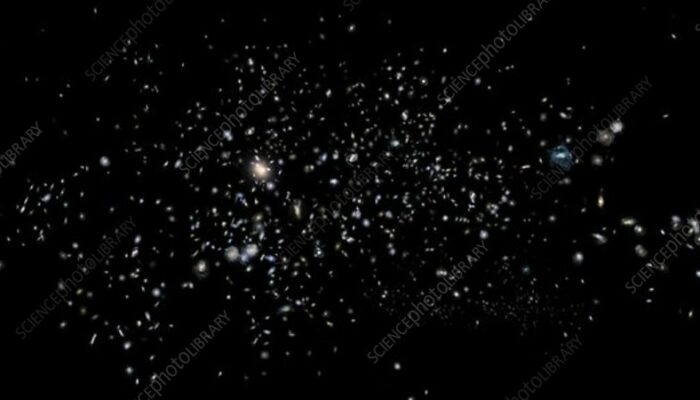
Dark energy is a mysterious and dominant force in the cosmos, accounting for approximately 68% of the universe’s total energy content. It acts as a repulsive influence, driving the accelerated expansion of space. Unlike matter and radiation, which become less influential as the universe expands, dark energy appears to maintain a constant or potentially increasing effect, challenging traditional notions of energy behavior in an expanding cosmos.
Dark Energy and Cosmic Expansion
The relationship between dark energy and the universe’s expansion is central to modern cosmology. As space stretches, ordinary matter and radiation dilute, but dark energy’s behavior is markedly different. The prevailing cosmological framework, known as the ΛCDM (Lambda Cold Dark Matter) model, treats dark energy as a cosmological constant-an unchanging energy density that uniformly fills space. In this model, the total amount of dark energy increases proportionally with the expanding volume of the universe, since its density remains fixed.
Dynamic Dark Energy Models
Beyond the cosmological constant, alternative theories propose that dark energy is dynamic, evolving over time or varying across space. One prominent example is quintessence, which describes dark energy as a slowly changing scalar field. The energy density of quintessence can fluctuate depending on the field’s potential energy landscape, potentially growing or diminishing as the universe evolves. These models suggest that dark energy’s influence on cosmic expansion may not be static but could change, affecting the universe’s past and future expansion rates.
Potential Consequences of Increasing Dark Energy
If dark energy intensifies as the universe expands, it could lead to an accelerating acceleration of cosmic expansion. This scenario might culminate in the so-called “Big Rip,” a theoretical end-of-universe event where the fabric of spacetime, along with galaxies, stars, planets, and even atomic structures, is progressively torn apart. Such a dramatic outcome underscores the profound impact that the growth of dark energy could have on the ultimate fate of the cosmos.
Observational Evidence and Challenges
Empirical data from Type Ia supernovae, the cosmic microwave background, and baryon acoustic oscillations provide critical insights into the universe’s expansion history and energy composition. However, detecting changes in dark energy’s density remains challenging. The key parameter in this investigation is the equation of state parameter, w, which represents the ratio of dark energy’s pressure to its energy density. Current measurements place w very close to -1, consistent with a cosmological constant, but slight deviations leave open the possibility of evolving dark energy.
Philosophical and Theoretical Implications
The idea that dark energy might grow as the universe expands challenges conventional principles of energy conservation and dissipation. While matter and radiation dilute with expansion, dark energy’s potential increase suggests it may be an intrinsic property of spacetime itself. This raises profound questions about the nature of the vacuum and whether it harbors an energy reservoir that changes over cosmic timescales.
Microphysical Origins and Theoretical Challenges
Quantum field theory proposes that vacuum fluctuations contribute to dark energy, but theoretical predictions vastly exceed observed values, a discrepancy known as the cosmological constant problem. Resolving this issue may require new physics, such as higher-dimensional theories like string theory, where dark energy’s growth could emerge naturally from complex field dynamics or phase transitions in the fabric of the universe.
Impact on Cosmic Structure Formation
Dark energy not only influences the expansion of the universe but also affects the formation and evolution of cosmic structures. An increasing dark energy density could suppress gravitational collapse, altering how galaxies and clusters form and distribute across space. This interplay highlights dark energy’s critical role in shaping both the large-scale and small-scale architecture of the cosmos.
Future Observational Prospects
Upcoming astronomical projects, including the Vera C. Rubin Observatory, Euclid mission, and Nancy Grace Roman Space Telescope, aim to measure cosmic expansion with unprecedented accuracy. By analyzing redshifts, gravitational lensing, and other phenomena, these observatories seek to determine whether dark energy remains constant or evolves over time, potentially growing as the universe expands. Their findings could revolutionize our understanding of cosmology and fundamental physics.
Summary: The Significance of Dark Energy’s Evolution
Exploring whether dark energy grows alongside cosmic expansion is a profound scientific and philosophical endeavor. It challenges our deepest intuitions about energy and the nature of reality, suggesting a universe whose invisible energies may intensify as space itself stretches. Whether dark energy remains constant or evolves, unraveling its mysteries is essential for comprehending the cosmos’s past, present, and future.
FAQ
What is dark energy?
Dark energy is a form of energy that constitutes about 68% of the universe and is responsible for its accelerated expansion.
Does dark energy change over time?
Current models suggest that dark energy may remain constant or could evolve, affecting cosmic expansion rates.
What are the implications of increasing dark energy?
An increase in dark energy could lead to scenarios like the 'Big Rip' where the universe's structure is torn apart.





Leave a Reply