
Short Answer
Understanding the Cosmic Forces: Gravity and Dark Energy
The universe is governed by two fundamental forces that shape its evolution and structure: gravity and dark energy. While gravity has long been recognized as the force that pulls matter together, dark energy emerges as a mysterious agent driving the accelerated expansion of the cosmos. This interplay between attraction and repulsion raises profound questions about the nature of reality and the ultimate fate of the universe.
Definition of Gravity and Dark Energy
- Gravity:
A fundamental force described initially by Isaac Newton and later refined by Albert Einstein’s General Relativity. Gravity is the attractive force that causes matter to coalesce, binding planets to stars and stars within galaxies by curving spacetime. - Dark Energy:
An enigmatic form of energy that permeates all of space uniformly, exerting a repulsive effect that accelerates the expansion of the universe. It is often associated with the cosmological constant, representing vacuum energy with negative pressure.
The Role of Gravity in Cosmic Structure
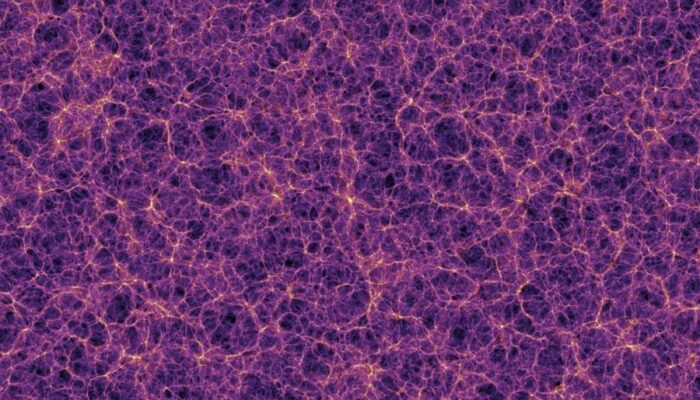
Gravity acts as the universe’s architect, drawing matter together to form stars, galaxies, and larger cosmic structures. It governs the motion of celestial bodies and shapes the curvature of spacetime, orchestrating the cosmic dance on scales ranging from planetary systems to vast galaxy clusters. Without gravity’s persistent pull, matter would disperse, and the universe would lack the organized complexity observed today.
The Emergence of Dark Energy and Its Discovery
In the late 1990s, astronomers studying distant Type Ia supernovae made a startling discovery: the universe’s expansion is not decelerating under gravity’s influence but accelerating. This unexpected observation introduced the concept of dark energy, a force counteracting gravity and driving space to expand at an increasing rate. This revelation challenged existing cosmological models and opened new avenues of research into the universe’s composition and dynamics.
How Dark Energy Influences the Universe
Unlike matter and dark matter, dark energy does not cluster or form structures. Instead, it is uniformly distributed throughout space, exerting a negative pressure that causes spacetime to stretch and expand. This expansion dilutes the gravitational pull over large distances, allowing dark energy to dominate the universe’s large-scale behavior as it ages and expands.
Cosmic Evolution: The Balance Between Gravity and Dark Energy
During the early universe, matter and radiation were densely concentrated, allowing gravity to dominate and sculpt the primordial fluctuations into galaxies and clusters. However, as the universe expanded, matter became more diffuse, weakening gravity’s influence. Dark energy then emerged as the prevailing force, pushing space outward and accelerating cosmic expansion.
Potential Outcomes of the Cosmic Tug-of-War
The ongoing contest between gravity and dark energy has significant implications for the universe’s destiny:
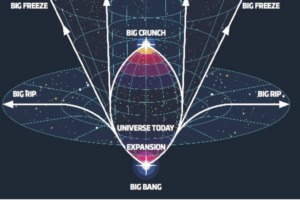
- Big Freeze:
If dark energy remains constant or grows stronger, the universe will continue expanding indefinitely. Galaxies will drift beyond observable horizons, stars will burn out, and the cosmos will approach a cold, dark, and entropic end. - Big Crunch:
Should gravity regain dominance, it could halt or reverse expansion, leading to a contraction of the universe and a possible collapse into a dense state.
The Mysterious Nature of Dark Energy
Despite its profound effects, dark energy’s fundamental nature remains elusive. It may be a true cosmological constant-an unchanging property of space-or a dynamic entity that evolves over time, potentially linked to unknown fields or particles beyond the Standard Model of physics. Understanding dark energy is a frontier in modern cosmology, with implications for new physics and the fundamental laws governing the universe.
Local vs. Cosmic Scales: Where Each Force Dominates
On smaller scales, such as within galaxies and solar systems, gravity’s influence is overwhelming, binding matter tightly and resisting the expansive push of dark energy. However, on the grand scale of the observable universe, dark energy’s repulsive effect shapes the overall geometry and expansion rate of spacetime, dictating the large-scale structure and evolution of the cosmos.
Mathematical Framework: Einstein’s Field Equations and the Cosmological Constant
The interaction between gravity and dark energy is encapsulated in Einstein’s field equations of General Relativity, which describe how matter and energy influence spacetime curvature. The cosmological constant (Λ) is introduced as a term representing dark energy’s uniform vacuum energy density:
Gμν + Λgμν = (8πG/c⁴) Tμν
- Gμν: Einstein tensor describing spacetime curvature
- Λ: Cosmological constant representing dark energy density
- gμν: Metric tensor of spacetime
- Tμν: Energy-momentum tensor of matter and radiation
- G: Gravitational constant
- c: Speed of light
This equation balances the inward warping effect of gravity with the outward inflation driven by dark energy, shaping the universe’s expansion history.
Observational Efforts and Future Research
Astronomers employ a variety of observational tools to unravel the mysteries of dark energy and gravity’s interplay. Measurements of Type Ia supernovae, the cosmic microwave background radiation, and large-scale galaxy surveys provide critical data on the universe’s expansion rate and energy composition. Upcoming missions aim to refine the equation of state parameter for dark energy, which characterizes its pressure-to-density ratio, to determine whether it is constant or variable over time.
Why Understanding This Cosmic Balance Is Crucial
The dynamic relationship between gravity and dark energy is central to cosmology, influencing the formation of cosmic structures, the evolution of the universe, and its ultimate fate. Grasping this balance enhances our comprehension of fundamental physics, informs models of cosmic history, and deepens humanity’s understanding of our place in the vast, ever-expanding universe.
Common Misconceptions About Gravity and Dark Energy
Dark energy is just a form of dark matter.
Dark energy and dark matter are distinct; dark matter exerts gravitational attraction and clusters, while dark energy causes accelerated expansion and is uniformly distributed.
Gravity is weakening everywhere due to dark energy.
Gravity remains strong on local scales, such as within galaxies, but dark energy dominates only on cosmological scales, influencing the universe’s large-scale expansion.
FAQ
What is the role of gravity in the universe?
Gravity acts as the architect of the universe, pulling matter together to form structured cosmic entities.
How does dark energy affect cosmic expansion?
Dark energy exerts a repulsive force that accelerates the universe's expansion, counteracting gravity on large scales.
Are dark energy and dark matter the same?
No, dark energy causes accelerated expansion, while dark matter exerts gravitational attraction and clusters with matter.

Leave a Reply