

Short Answer
Understanding Dark Matter
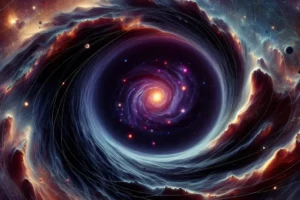
Dark matter stands as one of the most mysterious components of the universe, an invisible substance that neither emits nor absorbs light but exerts a significant gravitational influence. This unseen matter shapes the formation and behavior of galaxies and the cosmos on a grand scale. For many years, it has intrigued scientists and philosophers, inviting deeper exploration beyond what is directly observable. Dark matter challenges our conventional understanding of reality, suggesting it might be more than just a hidden physical entity-it could represent a “shadow” or an unseen dimension of existence itself.
Dark Matter as a Shadow of Reality
The metaphor of dark matter as a “shadow” offers a compelling way to conceptualize its elusive nature. Just as a shadow reveals the outline and presence of an object without showing the object itself, dark matter may embody aspects of the universe that are present but hidden from direct detection. This perspective helps explain puzzling phenomena such as the unexpectedly high rotational speeds of galaxies, which visible matter alone cannot justify, and the subtle irregularities in the cosmic microwave background that hint at unseen forces influencing the early universe.
Role and Significance in Astrophysics
Despite being invisible to electromagnetic radiation, dark matter’s gravitational effects are undeniable. It is estimated to make up about 27% of the universe’s total mass-energy content, vastly outweighing the ordinary matter we can observe. Galaxies appear to be embedded within an invisible framework of dark matter, which holds them together and influences their dynamics. The “shadow” analogy extends to theories proposing that dark matter might originate from higher-dimensional spaces or exist as an alternate form of matter interacting subtly with our universe, evading direct measurement but leaving clear gravitational footprints.

Philosophical and Scientific Implications
This concept invites a profound shift in our epistemological approach, suggesting that reality extends beyond what is tangible and measurable. Our sensory experiences and scientific instruments capture only a fraction of the universe’s totality. Dark matter could be the manifestation of deeper cosmic truths-shadows cast by hidden dimensions or quantum fields that govern the universe in ways still beyond our full comprehension. This aligns with advanced theoretical frameworks such as string theory and brane cosmology, which propose the existence of unseen realms intersecting with our own.
Historical and Philosophical Context
The idea of perceiving only shadows of a greater reality echoes ancient philosophical thought, notably Plato’s allegory of the cave. In this allegory, humans see only shadows on a wall, mistaking them for reality while the true forms remain hidden. Dark matter can be seen as a modern scientific parallel, prompting us to question the completeness of our sensory and scientific observations. It suggests that the universe might be far more complex, layered, and multidimensional than previously imagined.
Exploring the Cosmic Mystery
The enigma of dark matter captivates not only astrophysicists but also anyone fascinated by the universe’s secrets. Understanding its true nature could revolutionize our knowledge of cosmic structure and origins. Hypotheses range from dark matter being remnants of parallel universes, exotic particles beyond the Standard Model of particle physics, or the residue of early cosmic events. Each possibility challenges the limits of current technology and human cognition, inspiring ongoing research and discovery.
Scientific Tools and Methodological Challenges
Considering dark matter as a “shadow” also highlights the limitations of our scientific instruments and theoretical models. These tools may inherently restrict our ability to detect phenomena outside established paradigms. This realization encourages openness to innovative methodologies, interdisciplinary research, and embracing uncertainty as a driver of scientific progress. It urges the scientific community to think beyond measurable quantities and entertain abstract concepts that could reshape fundamental physics.
Connection Between Dark Matter and Dark Energy
Dark matter is closely linked to another cosmic mystery: dark energy, which constitutes about 68% of the universe and is responsible for its accelerated expansion. Together, these dark components form a vast, unseen domain that underlies cosmic evolution. Some theories propose that both dark matter and dark energy might be shadows cast by dimensions or forces beyond our direct observation. Understanding dark matter’s essence could therefore also shed light on the nature of dark energy, potentially uniting two of the most profound enigmas in cosmology.
Metaphysical Perspectives on Dark Matter
Viewing dark matter as a shadow challenges traditional dualisms separating matter from void, visibility from invisibility. It suggests a unified cosmic vision where the visible and invisible coexist and are equally essential to the universe’s harmony. This perspective could inspire new ontological models that dissolve rigid distinctions, fostering a holistic understanding of existence where shadows and objects alike hold intrinsic significance, and the boundaries between perception and reality are fluid and dynamic.
The Quest for Deeper Cosmic Understanding
The pursuit to uncover the nature of dark matter transcends scientific inquiry, entering the realm of philosophical exploration. It encourages us to look beyond superficial appearances and delve into the universe’s hidden layers. Could the cosmos be a grand interplay of light and shadow, matter and antimatter, reality and illusion? If dark matter truly represents a shadow of reality, recognizing its presence challenges humanity to broaden its intellectual horizons and embrace complexity and mystery as fundamental aspects of the cosmic story.
Conclusion: Embracing the Unknown
Contemplating dark matter as a shadow cast by deeper layers of reality opens the door to transformative insights and paradigm shifts in scientific thought. This concept redefines the limits of knowledge, fosters humility in the face of the unknown, and sparks enduring curiosity about our place in the universe. While the mystery of dark matter remains unsolved, the journey toward understanding promises to illuminate not only the cosmos but also the profound nature of existence itself.



Leave a Reply