
Short Answer
Definition of Dark Energy
Dark energy is an elusive and mysterious form of energy that is driving the accelerated expansion of the universe. It constitutes roughly 68% of the total energy content of the cosmos and exerts a repulsive influence on the fabric of spacetime. Unlike ordinary matter or radiation, dark energy does not cluster or form structures but instead appears as a smooth, uniform energy field permeating all of space.
Dark Energy in Cosmological Models
Within the widely accepted ΛCDM (Lambda Cold Dark Matter) cosmological framework, dark energy is mathematically represented by the cosmological constant (Λ). This constant, originally introduced by Einstein, assigns a fixed energy density to empty space, producing a negative pressure that counterbalances gravitational attraction. This negative pressure is responsible for the observed acceleration in the universe’s expansion.
Relativity and the Speed Limit
According to Einstein’s theory of relativity, no particle or signal carrying mass can exceed the speed of light in a vacuum, which is approximately 299,792 kilometers per second. Photons, which are massless particles of light, travel at this ultimate speed, establishing it as the universal speed limit for information transfer and causal interactions. However, dark energy is not a particle or conventional energy form, but rather a property of spacetime or a scalar field with unusual characteristics, which complicates the application of traditional speed constraints.

Dark Energy and the Expansion of Space
One key perspective is that dark energy does not move through space but instead affects the metric of spacetime itself, causing it to expand. This expansion can lead to distant regions of the universe receding from each other at effective speeds greater than that of light. Importantly, this superluminal recession does not violate special relativity or causality because it is space itself that is expanding, not objects moving through space faster than light.
Theoretical Models of Dark Energy Propagation
Some theoretical approaches explore whether dark energy could propagate through space at speeds exceeding that of light. For example, quintessence models describe dark energy as a dynamic scalar field evolving over cosmic timescales. Fluctuations in this field, sometimes associated with hypothetical particles called “quintessons,” may have phase velocities that surpass the speed of light. However, these superluminal phase velocities do not equate to faster-than-light transmission of information or energy, thus remaining consistent with relativity.
Exotic Dark Energy Theories
Other speculative theories modify general relativity or introduce exotic forms of dark energy, such as k-essence or phantom energy. Phantom energy, characterized by a negative kinetic term, predicts extreme phenomena like the “Big Rip,” where the universe could eventually disintegrate. In these models, the effective speed of sound within the dark energy fluid-governing how quickly perturbations propagate-can exceed the speed of light. This superluminal sound speed reflects unusual physical properties but does not imply causality violations.
Observational Challenges and Experimental Constraints
Directly measuring the speed at which dark energy propagates is currently beyond our technological capabilities. Dark energy’s diffuse and pervasive nature means it does not emit detectable signals or waves. Instead, scientists infer its properties through observations of the universe’s large-scale structure, expansion rate, and phenomena such as baryon acoustic oscillations, weak gravitational lensing, and Type Ia supernovae. Future missions aim to refine our understanding of dark energy’s equation of state and dynamics, potentially offering indirect insights into its propagation characteristics.
Speed of Light, Causality, and Dark Energy
The speed of light serves as a fundamental limit to prevent causal paradoxes in physics. However, the expansion of the universe and the behavior of fields embedded in spacetime introduce scenarios where effective superluminal phenomena occur without violating causality. These include the recession of galaxies beyond the particle horizon and the phase velocities of scalar field perturbations. Distinguishing between these contexts is crucial to avoid misconceptions about faster-than-light travel.
Implications from Quantum Gravity and Advanced Theories
Emerging theories in quantum gravity and string theory may eventually reconcile apparent paradoxes related to dark energy and superluminal effects. Concepts such as the holographic principle and the multiverse hypothesis suggest that speed and locality might be fundamentally different in deeper layers of reality. Within these advanced frameworks, dark energy could represent phenomena that transcend classical spacetime descriptions, potentially revolutionizing our understanding of motion and influence in the cosmos.
Why Understanding Dark Energy’s Speed Matters
Investigating whether dark energy can travel faster than light intersects astrophysics, quantum field theory, and cosmology, challenging our notions of speed, causality, and vacuum dynamics. While it is improbable that dark energy consists of superluminal particles or signals, the expansion of spacetime allows effective recession velocities beyond light speed. Additionally, theoretical fluctuations in dark energy fields may exhibit superluminal phase velocities without breaching fundamental physical laws. Continued theoretical and observational efforts are essential to unravel these complexities, deepening our comprehension of the universe’s accelerated expansion and the fundamental limits imposed by the speed of light.
Common Misconceptions About Dark Energy and Speed
Dark energy is a particle that moves faster than light.
Dark energy is not a particle but a property of spacetime or a scalar field; its effects on expansion can lead to apparent superluminal recession without actual faster-than-light motion.
Superluminal phase velocities imply faster-than-light information transfer.
Phase velocities exceeding light speed do not correspond to information or energy traveling faster than light, thus preserving causality.
Real-World Examples of Dark Energy Effects
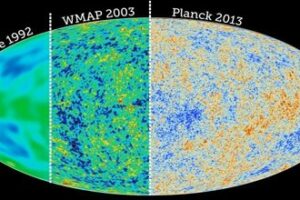
While dark energy itself is not directly observable, its influence is evident in the accelerated expansion of the universe, as measured by distant Type Ia supernovae. Observations of the cosmic microwave background and large-scale galaxy distributions also reflect dark energy’s role in shaping cosmic evolution. These phenomena provide indirect but compelling evidence of dark energy’s pervasive impact on the cosmos.
FAQ
What is dark energy?
Dark energy is an elusive form of energy that constitutes about 68% of the universe and drives its accelerated expansion.
Can dark energy travel faster than light?
While dark energy itself does not travel, its effects can cause regions of space to recede from each other at effective speeds beyond light.
Does dark energy violate the laws of physics?
No, dark energy's effects do not violate relativity; it is the expansion of space, not objects moving through it.
Leave a Reply