
Short Answer
Understanding Time Dilation
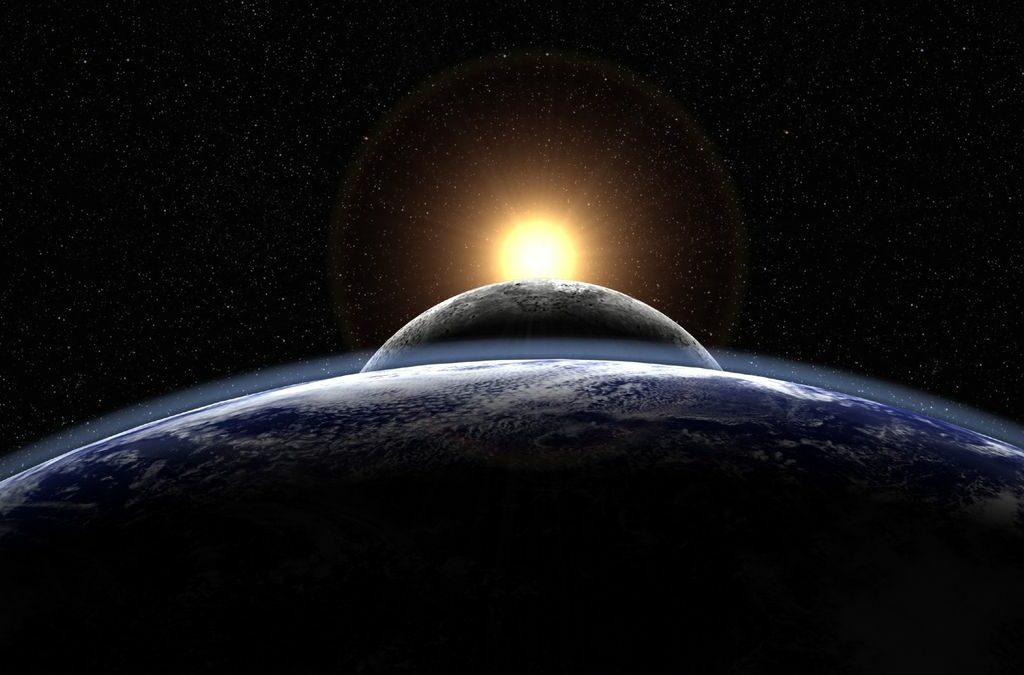
Time dilation is a fundamental concept in modern physics that describes how time can pass at different rates depending on relative motion and gravitational influence. Contrary to our everyday experience of time as a steady, unchanging flow, time is flexible and can be stretched or compressed by factors such as velocity and gravity. This phenomenon is a cornerstone of Albert Einstein’s theories of relativity, which revolutionized our understanding of space and time.
Definition and Key Principles
Time dilation refers to the difference in elapsed time as measured by two observers, either due to their relative speeds or differences in gravitational potential. It manifests in two primary forms:
- Special Relativity Time Dilation:
When an object moves at speeds close to the speed of light relative to an observer, time for the moving object slows down compared to the observer’s frame of reference. - General Relativity Time Dilation:
Time also slows down in stronger gravitational fields. Clocks closer to massive objects tick more slowly than those farther away.
Mechanics of Time Dilation
According to Einstein’s Special Theory of Relativity, the passage of time depends on the relative velocity between observers. The faster an object moves, the slower its internal clock runs compared to a stationary observer. This effect becomes significant only at velocities approaching the speed of light.
General Relativity extends this concept by showing that gravity affects time. Massive bodies curve spacetime, causing time to dilate near them. For example, a clock near a black hole’s event horizon would tick much slower than one far away from such intense gravity.
Mathematical Framework
The time dilation effect due to velocity is quantified by the Lorentz factor (γ), expressed as:
γ = 1 / √(1 – v²/c²)
- v: velocity of the moving object relative to the observer
- c: speed of light in vacuum
The dilated time interval (Δt’) experienced by the moving observer relates to the proper time interval (Δt) by:
Δt’ = γ × Δt
For gravitational time dilation, the formula near a non-rotating spherical mass is:
Δt’ = Δt × √(1 – 2GM/rc²)
- G: gravitational constant
- M: mass of the object creating the gravitational field
- r: radial distance from the center of the mass
- c: speed of light
Practical Examples in Space Exploration
Astronauts aboard the International Space Station (ISS) provide a real-world illustration of time dilation. Orbiting Earth at roughly 17,500 miles per hour, they experience slight time dilation effects due to their high velocity, causing their clocks to tick marginally slower than those on Earth. However, because the ISS is farther from Earth’s gravitational field compared to the surface, gravitational time dilation causes their clocks to tick slightly faster. These two effects nearly balance out, resulting in astronauts aging only milliseconds less than people on Earth during their missions.
In contrast, extreme environments such as near black holes demonstrate far more dramatic time dilation. For instance, an hour spent near the event horizon of a supermassive black hole could correspond to several years passing on Earth. This phenomenon is famously depicted in the film “Interstellar,” where characters experience minutes while decades elapse elsewhere.
Origins of the “One Hour Equals Seven Years” Concept
The popular phrase suggesting that one hour in space equals seven years on Earth is a poetic exaggeration rooted in theoretical scenarios involving near-light-speed travel or proximity to intense gravitational fields. While not applicable to typical space travel, it captures the essence of how time can be profoundly distorted under extreme relativistic conditions.
Time Dilation in Everyday Space Technology
Even satellites orbiting Earth experience time dilation, though on a much smaller scale. Systems like GPS must account for both velocity-based and gravitational time dilation to maintain accuracy. The discrepancies are measured in nanoseconds but are critical for navigation and communication technologies.
Common Misconceptions About Time Dilation
Time dilation means time literally stops or reverses.
Time dilation slows the passage of time relative to another observer but does not stop or reverse it.
Astronauts age years less than people on Earth during typical space missions.
The difference is usually only milliseconds or seconds, not years, unless traveling at near-light speeds or near massive gravitational bodies.
Significance of Time Dilation
Understanding time dilation is crucial for both theoretical physics and practical applications. It challenges our intuitive notions of time as absolute and highlights the interconnectedness of space, time, velocity, and gravity. In technology, accounting for time dilation ensures the precision of satellite-based systems. In future space exploration, especially missions involving high speeds or strong gravitational fields, time dilation will become increasingly relevant for navigation, communication, and human experience.
Historical and Cosmic Context
Time’s fluidity is not only a feature of relativistic physics but also reflected in Earth’s own history. Geological and tidal forces have gradually slowed Earth’s rotation over billions of years, lengthening days from an estimated 19 hours in the distant past to 24 hours today. This illustrates the mutable nature of time measurement tied to celestial mechanics.
Conclusion: The Cosmic Dance of Time and Space
The phrase “one hour in space equals seven years on Earth” serves as a metaphor for the extraordinary effects of time dilation under extreme conditions. While everyday space travel involves only minute differences in elapsed time, the underlying principles reveal a universe where time is a dynamic, malleable dimension. As humanity ventures further into space, these relativistic effects will not only challenge our scientific understanding but also expand our perception of reality itself.


Leave a Reply