
Short Answer
Understanding Astrophysics Research
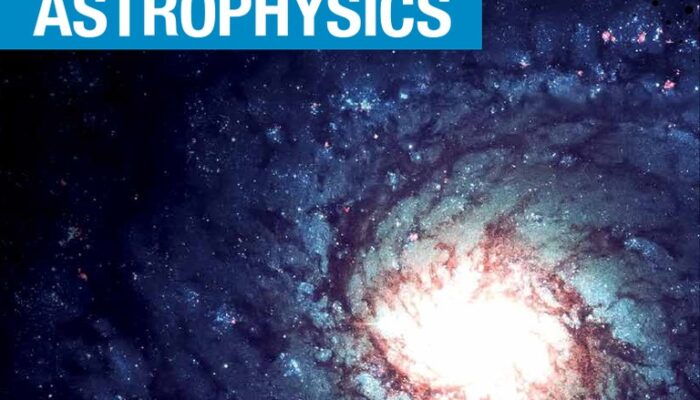
Astrophysics research involves investigating the fundamental mysteries of the universe, ranging from the behavior of stars to the large-scale structure of cosmic phenomena. Embarking on this scientific journey requires more than mere fascination; it demands a structured approach, intellectual rigor, and a commitment to advancing knowledge through original inquiry.
Foundational Knowledge in Astrophysics
Before engaging in research, it is crucial to develop a strong theoretical base. Astrophysics integrates complex principles from various scientific disciplines, including physics, mathematics, and computational science. Key areas of study include:
- Classical Mechanics:
Understanding the motion of bodies under forces, essential for modeling celestial dynamics. - Electromagnetism:
Explains the behavior of electromagnetic radiation, crucial for interpreting astronomical observations. - Quantum Mechanics:
Provides insight into the behavior of particles at atomic and subatomic scales, relevant for high-energy astrophysics. - Thermodynamics:
Governs energy transfer processes in stars and interstellar matter. - Mathematics:
Proficiency in differential equations and linear algebra is vital for formulating and solving astrophysical models.
Many aspiring astrophysicists enhance their expertise through graduate-level coursework, self-directed study of advanced textbooks, and engagement with academic lectures and publications.
Exploring Current Research and Literature
Diving into contemporary scientific literature is essential to grasp the forefront challenges and methodologies in astrophysics. Leading journals such as The Astrophysical Journal and Monthly Notices of the Royal Astronomical Society provide comprehensive insights into ongoing research. This exploration helps identify unresolved questions and niche areas suitable for investigation, facilitating the formulation of innovative and feasible research objectives.
Formulating a Research Question
Given the vastness of astrophysics, focusing on a specific topic is critical for effective research. Potential areas include:
- Stellar Evolution:
Studying the life cycles of stars from formation to demise. - Galactic Dynamics:
Investigating the motion and interaction of galaxies. - Dark Matter Distribution:
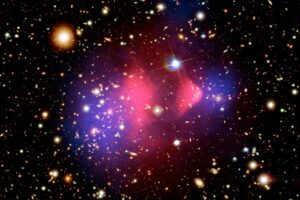
Exploring the unseen mass influencing cosmic structures. - Exoplanet Atmospheres:
Analyzing the composition and properties of planets beyond our solar system.
A clearly defined hypothesis or research goal provides direction and scope, enabling focused data collection and analysis.
Data Collection in Astrophysics
Unlike laboratory sciences, astrophysics primarily relies on observational data obtained through telescopes and space missions. Accessing these data sets involves navigating extensive online archives maintained by organizations such as NASA, the European Space Agency, and the Sloan Digital Sky Survey. These repositories cover a broad range of the electromagnetic spectrum-from radio waves to gamma rays-allowing multifaceted study of celestial phenomena.
Developing computational skills to process and analyze large volumes of data is indispensable. Crafting algorithms to efficiently handle these datasets enhances the ability to extract meaningful patterns and insights.
The Role of Simulations and Computational Models
When direct observations are limited or unavailable, theoretical and computational simulations become invaluable. Utilizing or creating simulation software-such as hydrodynamic models or N-body simulations-enables researchers to study gravitational interactions, star formation, and cosmic evolution. Proficiency in programming languages like Python, C++, or FORTRAN, alongside knowledge of numerical methods, is essential for this aspect of astrophysical research.
The integration of observational data with simulation results forms a comprehensive framework for testing hypotheses and advancing understanding.
Statistical Analysis and Hypothesis Testing
Astrophysical data often contain subtle signals obscured by noise and confounding factors. Rigorous statistical methods are necessary to validate hypotheses reliably. Common techniques include Bayesian inference, maximum likelihood estimation, and Monte Carlo simulations. Additionally, effective data visualization is crucial for interpreting results and communicating findings clearly in scientific publications and presentations.
Building a Scientific Network
Collaboration is a cornerstone of astrophysics, frequently involving international and interdisciplinary partnerships. Engaging with the scientific community through conferences, seminars, online forums, and joint projects provides mentorship, constructive feedback, and resource sharing. Developing professional relationships fosters growth, encourages diverse perspectives, and sustains motivation throughout the research process.
Publishing and Sharing Research
Disseminating research findings through peer-reviewed journals is fundamental to contributing to the scientific body of knowledge. Preparing manuscripts requires clear articulation of research questions, methodologies, results, and interpretations. The peer review process ensures the quality and originality of the work. Beyond academic publishing, presenting at conferences and participating in public science communication broadens the impact and accessibility of research.
Significance of Conducting Astrophysics Research
Engaging in astrophysics research not only deepens our comprehension of the universe but also drives technological innovation and inspires curiosity. The pursuit of understanding cosmic phenomena challenges existing paradigms and expands the frontiers of human knowledge. Persistence, adaptability, and intellectual rigor are essential qualities for those who seek to contribute meaningfully to this dynamic and profound field.
FAQ
What is the first step to start research in astrophysics?
The first step is to develop a strong theoretical base in physics and mathematics.
What type of data is primarily used in astrophysics research?
Astrophysics primarily relies on observational data obtained from telescopes and space missions.
How important is collaboration in astrophysics research?
Collaboration is crucial, as it fosters mentorship, resource sharing, and diverse perspectives.


Leave a Reply