

Short Answer
Definition of Extended Scientific Space Missions
Extended scientific space missions refer to the deliberate prolongation of space exploration projects beyond their originally planned timelines. These extensions allow space agencies and scientific communities to deepen their investigations into astrophysical phenomena, gather additional data, and uncover new insights that were not initially anticipated. Rather than viewing deadlines as rigid endpoints, these missions embrace flexibility to maximize scientific returns and broaden humanity’s understanding of the cosmos.
Historical Context and Evolution
Throughout history, scientific exploration has often transcended the constraints of time. Deadlines, while useful for project management, can sometimes limit the scope of discovery by imposing artificial boundaries. European space organizations such as the European Space Agency (ESA), along with various national agencies, have increasingly recognized the value of extending mission durations. This approach reflects a shift from viewing missions as finite tasks to perceiving them as ongoing journeys of inquiry, where each milestone is a stepping stone rather than a conclusion.
Psychological and Cultural Motivations Behind Space Exploration
The human fascination with space stems from an innate curiosity and a profound desire to explore the unknown. This drive is not only scientific but also deeply cultural, as the cosmos serves as a vast canvas onto which humanity projects its hopes, fears, and existential questions. Extended missions like the Hubble Space Telescope and the Rosetta mission to comet 67P/Churyumov-Gerasimenko exemplify this enduring allure, enabling researchers to probe the origins of the universe and the fundamental laws governing it.
Scientific Discoveries Enabled by Mission Extensions
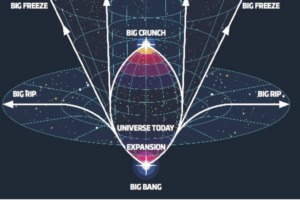
Prolonging space missions often leads to unexpected breakthroughs that challenge existing paradigms. For instance, ongoing observations from the Hubble Space Telescope have revealed the accelerated expansion of the universe, a phenomenon that has reshaped our understanding of dark energy and cosmology. These discoveries prompt both scientists and philosophers to reconsider humanity’s place in the vast expanse of space and time, sparking profound existential reflections.
Ethical and Environmental Considerations
Extending space missions involves complex negotiations among various stakeholders, balancing scientific goals with environmental stewardship and economic realities. Ethical questions arise regarding the exploitation of extraterrestrial resources and the responsibility humanity holds toward other celestial bodies. The concept of stewardship emphasizes the need to approach space exploration with respect and caution, recognizing the potential ecological significance of these environments within the broader universal context.
International Collaboration and Sociopolitical Impact
Many extended space missions are characterized by international cooperation, exemplified by projects like the International Space Station (ISS). These collaborations transcend political and cultural divides, fostering a sense of global unity and shared purpose. Such partnerships not only advance scientific knowledge but also enhance diplomatic relations, offering a hopeful model for peaceful cooperation amid global tensions.
Public Engagement and Educational Opportunities
The continuation of space missions provides valuable opportunities for public outreach and education. As missions extend, they generate ongoing streams of new information that captivate public imagination and inspire curiosity across diverse audiences. Integrating these discoveries into educational programs helps cultivate future generations of scientists and informed citizens, deepening society’s appreciation for the universe and the scientific endeavor.
Why Extending Space Missions Matters
Extending scientific missions is more than a logistical decision; it represents a profound commitment to expanding human knowledge and understanding. These prolonged explorations yield critical insights into the nature of the cosmos and humanity’s role within it, while also stimulating interdisciplinary dialogue encompassing ethics, economics, culture, and philosophy. Ultimately, the extension of space missions underscores the timeless human quest for discovery, reminding us that the pursuit of knowledge is an ongoing journey fueled by curiosity and wonder.
FAQ
What are extended scientific space missions?
They are missions that are prolonged beyond their original timelines to allow for more in-depth exploration and data collection.
Why are these missions important?
They provide critical insights into cosmic phenomena, challenge existing scientific paradigms, and enhance public engagement in science.



Leave a Reply