
Short Answer
Definition of Atomic Nucleus
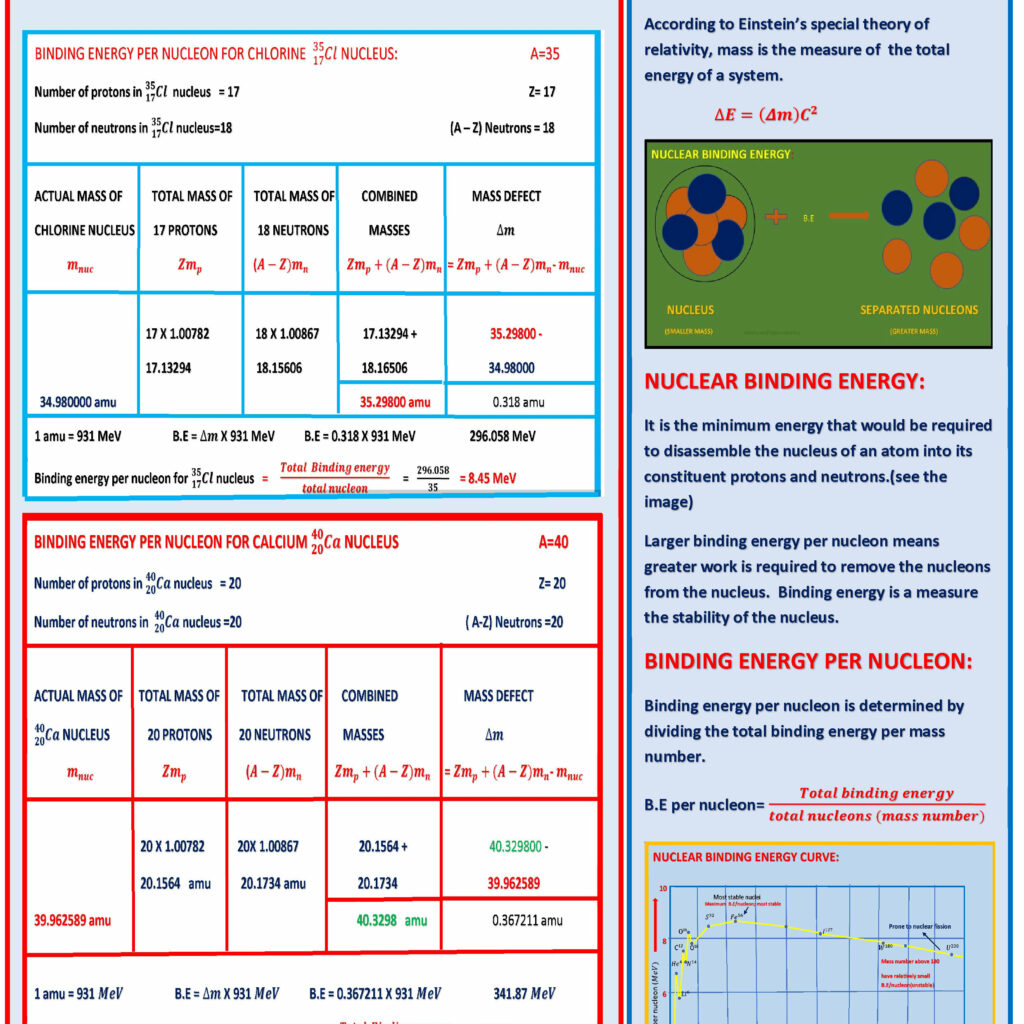
The atomic nucleus is the dense, positively charged center of an atom, containing most of its mass. It is composed primarily of protons and neutrons, collectively known as nucleons. The discovery of the nucleus fundamentally changed the understanding of atomic structure, shifting the view from indivisible particles to complex entities with internal components.
Historical Background and Early Atomic Models
The concept of the atom dates back to ancient philosophy, where thinkers like Democritus introduced the idea of “atomos,” meaning indivisible units of matter. These early ideas were speculative and lacked experimental evidence. The scientific revolution of the 19th century, particularly advances in electromagnetism and radioactivity, paved the way for a more empirical approach to atomic theory.
- Democritus’ Atomism:
Proposed that matter is composed of tiny, indivisible particles called atoms. - 19th Century Discoveries:
Developments in electromagnetism and the discovery of radioactivity challenged the notion of atoms as indivisible.
Discovery of the Electron and the Plum Pudding Model
In 1897, J.J. Thomson’s experiments with cathode rays revealed the existence of electrons, negatively charged particles smaller than atoms. This led to the Plum Pudding Model, which envisioned electrons embedded within a diffuse, positively charged substance. Although groundbreaking, this model could not explain certain experimental results that emerged later.
Rutherford’s Gold Foil Experiment and the Nuclear Model
Ernest Rutherford’s 1911 gold foil experiment was a turning point in atomic theory. By bombarding a thin gold foil with alpha particles, Rutherford observed unexpected deflections, with some particles bouncing back. This contradicted the Plum Pudding Model and suggested a concentrated positive charge at the atom’s center-the nucleus.
- Experiment Setup:
Alpha particles directed at thin gold foil. - Observations:
Most particles passed through, but some deflected at large angles or rebounded. - Conclusion:
Atoms have a small, dense, positively charged nucleus containing most of the mass.
Bohr’s Atomic Model and Quantum Theory Integration
Building on Rutherford’s findings, Niels Bohr introduced a model in 1913 that incorporated quantum principles. He proposed that electrons orbit the nucleus in fixed energy levels or shells, explaining atomic emission spectra. This model refined the understanding of atomic structure by linking electron arrangement to elemental properties.
Advances in Nuclear Composition and Particle Physics
Mid-20th century research expanded knowledge of the nucleus’s internal structure. High-energy particle collisions revealed protons and neutrons as the nucleus’s constituents. Further exploration into quantum chromodynamics (QCD) uncovered that these nucleons are made of quarks, held together by the strong nuclear force mediated by gluons.
- Protons:
Positively charged particles within the nucleus. - Neutrons:
Electrically neutral particles contributing to nuclear mass. - Quarks and Gluons:
Fundamental particles and force carriers inside nucleons.
Technological Innovations in Nuclear Research
Techniques such as nuclear magnetic resonance (NMR) and radiative methods have enabled detailed studies of nuclear properties like spin and magnetic moments. Particle accelerators have facilitated the discovery of numerous subatomic particles and deepened understanding of nuclear forces and interactions, including the behavior of neutrinos and the weak nuclear force.
Significance of the Atomic Nucleus in Science and Technology
The identification of the atomic nucleus has had profound implications across multiple fields. It laid the foundation for quantum mechanics, nuclear energy, and particle physics. Understanding nuclear structure is essential for applications ranging from medical imaging and cancer treatment to energy production and astrophysics.
Contemporary Research and Future Directions
Current scientific investigations continue to explore the nucleus’s role in broader cosmic phenomena. Studies on neutron stars, nuclear fusion, and dark matter seek to unravel fundamental forces and particles governing the universe. The nucleus remains a central focus in the quest to comprehend matter at its most elemental level.
Common Misconceptions About Atomic Structure
Atoms are indivisible.
Atoms consist of smaller particles-electrons, protons, and neutrons-and even these are made of quarks.
Electrons are embedded randomly within the atom.
Electrons occupy defined energy levels orbiting the nucleus, as described by quantum theory.
The nucleus is large compared to the atom.
The nucleus is extremely small relative to the overall size of the atom but contains nearly all its mass.
Summary
The realization that atoms contain nuclei was the result of cumulative scientific efforts involving theoretical insights and experimental breakthroughs. From ancient philosophy to modern particle physics, this discovery revolutionized our understanding of matter’s fundamental nature and continues to inspire ongoing research into the universe’s deepest mysteries.






Leave a Reply