
Short Answer
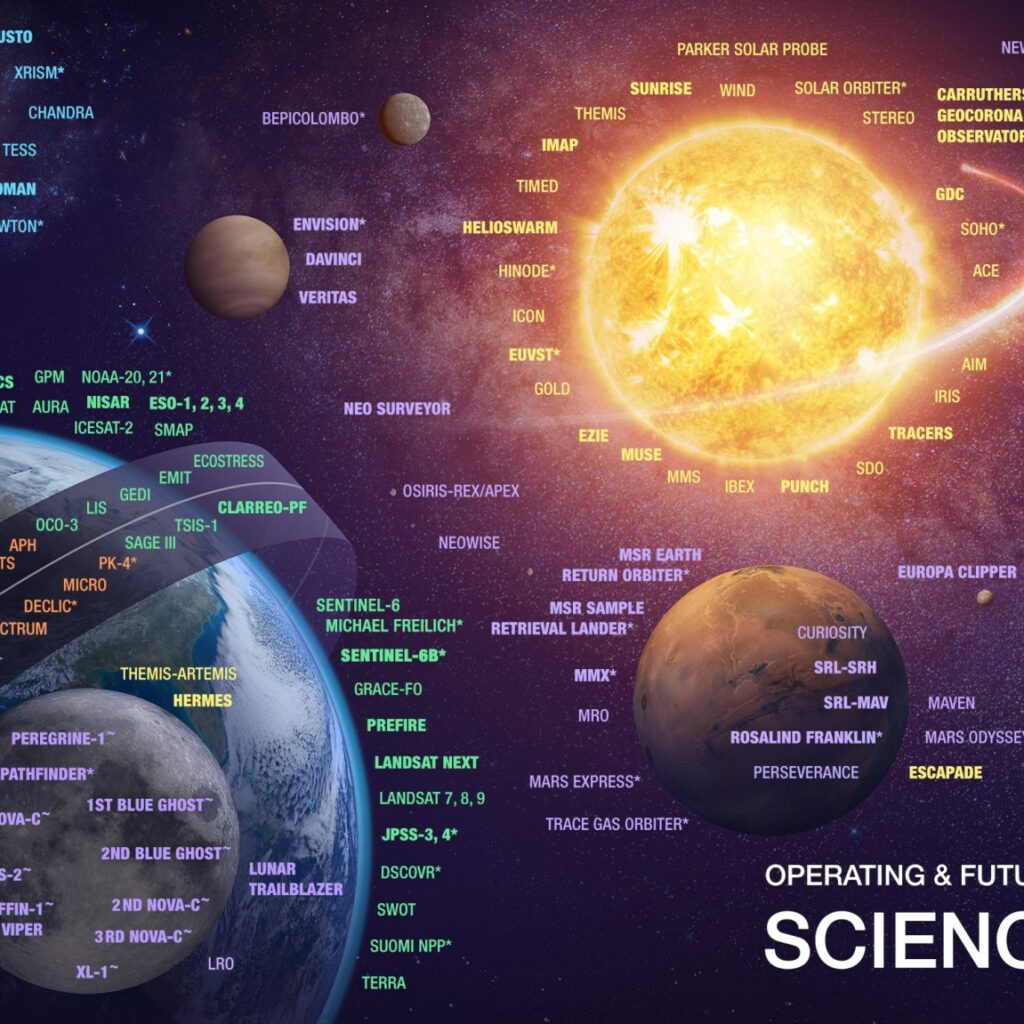
Overview of NASA’s Pioneering Space Missions
Humanity’s relentless exploration of the cosmos embodies a profound mixture of curiosity, ambition, and awe. From the earliest spacecraft that orbited the Moon to the advanced rovers navigating alien landscapes today, NASA’s missions have continuously expanded the horizons of human knowledge. This comprehensive A-Z guide highlights NASA’s landmark missions, revealing not only their scientific achievements but also the deeper motivations behind humanity’s fascination with space.
Definition and Scope of NASA Missions
NASA missions encompass a wide array of exploratory projects designed to study celestial bodies, gather scientific data, and develop technologies for space travel. These missions range from manned lunar landings to robotic probes venturing into the farthest reaches of the solar system and beyond.
- Human Exploration:
Missions involving astronauts, such as the Apollo program and the International Space Station, focus on human presence and research in space. - Robotic Exploration:
Unmanned spacecraft like the Voyager probes and Mars rovers conduct scientific investigations of planets, moons, and interstellar space. - Earth Observation:
Satellites such as Landsat and DSCOVR monitor Earth’s environment, climate, and weather patterns from orbit. - Technological Innovation:
Experimental projects like the X-43A hypersonic vehicle push the boundaries of aerospace engineering.
Key NASA Missions and Their Contributions
Apollo Program: Humanity’s First Steps on the Moon
Between 1961 and 1972, the Apollo program revolutionized space exploration by achieving the first human landings on the lunar surface. These six manned missions overcame immense technological challenges and geopolitical rivalry, symbolizing human determination to explore beyond Earth. Iconic images such as Earthrise from lunar orbit fostered a new global environmental awareness alongside cosmic curiosity.
Voyager Missions: Journey to the Outer Solar System and Beyond
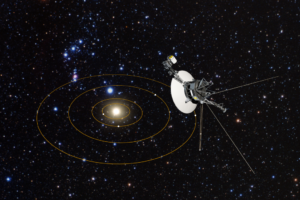
Launched in 1977, the Voyager 1 and 2 spacecraft embarked on an unprecedented voyage through the outer planets and into interstellar space. Carrying the Golden Record-a collection of Earth’s sounds and music-they serve as emissaries of humanity’s quest to communicate across the cosmos. Their extensive data on Jupiter, Saturn, Uranus, and Neptune have vastly expanded our understanding of the solar system’s giants.
Curiosity Rover: Unlocking Mars’ Past
Since its 2012 landing, the Curiosity rover has transformed Mars exploration by analyzing rock samples and atmospheric conditions to assess the planet’s past habitability. This robotic explorer exemplifies how advanced technology extends human reach, turning the barren Martian landscape into a site of scientific discovery and hope for future life detection.
Deep Space Climate Observatory (DSCOVR): Earth from a Unique Vantage Point
Stationed at the Earth-Sun Lagrange point, DSCOVR provides continuous monitoring of Earth’s climate and weather systems. This mission highlights NASA’s commitment to understanding and protecting our home planet, demonstrating the intrinsic link between space science and terrestrial environmental stewardship.
Exoplanet Exploration Program: Searching for Other Worlds
NASA’s Exoplanet Exploration Program, utilizing telescopes like Kepler and TESS, has identified thousands of planets orbiting distant stars. This program fuels the scientific and philosophical quest to discover potentially habitable worlds beyond our solar system, expanding the narrative of cosmic pluralism and the search for extraterrestrial life.
FireSat Program: Monitoring Earth’s Wildfires from Space
Though less publicized, the FireSat missions exemplify NASA’s application of space technology to address urgent Earth-bound challenges. By tracking wildfires from orbit, these missions contribute to environmental protection and disaster management, linking space exploration with climate resilience.
Genesis Mission: Sampling the Solar Wind
The Genesis mission collected particles from the solar wind and returned them to Earth, providing direct insight into the primordial materials that formed the solar system. This sample-return endeavor connects us tangibly to the cosmic origins of planetary bodies and elemental matter.
Hubble Space Telescope: A Window to the Universe
Since its launch, the Hubble Space Telescope has revolutionized astronomy by capturing stunning images of distant galaxies, nebulae, and other celestial phenomena. It stands as a testament to international cooperation and scientific perseverance, transforming theoretical concepts into vivid visual realities that inspire both scientists and the public.
International Space Station (ISS): A Global Laboratory in Orbit
The ISS represents a landmark in international collaboration, orbiting approximately 250 miles above Earth. It serves as a microgravity laboratory for research in diverse fields such as biology, physics, and human physiology, embodying humanity’s collective effort to advance knowledge despite geopolitical complexities.
Juno Mission: Probing Jupiter’s Mysteries
Juno’s mission to Jupiter investigates the planet’s internal structure, magnetic fields, and atmospheric dynamics through a unique polar orbit. This mission exemplifies NASA’s innovative approach to planetary science, providing unprecedented insights into the largest planet in our solar system.
K2 Mission: Extending the Kepler Legacy
Following the original Kepler mission, K2 adapted to technical challenges by targeting specific regions of the sky to continue the search for exoplanets. This mission highlights the resilience and creativity inherent in scientific exploration.
Landsat Program: Earth Observation Through Decades
Operating for over 40 years, the Landsat satellites have delivered the most comprehensive continuous imagery of Earth’s surface. These data support environmental monitoring, urban development, and resource management, illustrating the vital connection between space technology and sustainable development.
Mars Reconnaissance Orbiter: Detailed Martian Surveillance
Since 2006, this orbiter has provided high-resolution images revealing Mars’ geological features and water history. It exemplifies NASA’s meticulous and patient approach to planetary investigation.
New Horizons: Exploring the Outer Solar System
New Horizons’ 2015 flyby of Pluto unveiled a dynamic, icy world with active geology, challenging previous assumptions and reigniting public interest in distant celestial bodies.
OSIRIS-REx: Asteroid Sample Return Mission
OSIRIS-REx collected samples from the near-Earth asteroid Bennu to study the solar system’s building blocks. This mission grounds abstract cosmic questions in physical artifacts, advancing our understanding of planetary formation.
Pioneer Missions: Trailblazers of Deep Space
Pioneers 10 and 11 were among the first spacecraft to explore Jupiter and Saturn, symbolizing humanity’s initial steps beyond familiar space and inspiring future exploration.
QuikSCAT: Enhancing Climate and Weather Forecasting
QuikSCAT monitored global ocean winds, improving meteorological predictions and deepening knowledge of Earth’s climate systems, demonstrating the practical benefits of space research.
Ranger Program: Early Lunar Reconnaissance
The Ranger missions of the 1960s captured close-up lunar images before impact, laying the groundwork for subsequent manned moon landings and illustrating the incremental nature of scientific progress.
Spitzer Space Telescope: Infrared Astronomy
Operating in the infrared spectrum, Spitzer revealed cosmic phenomena hidden from visible light, such as star formation and distant galaxies, expanding our understanding of the universe’s complexity.
TESS: Surveying Nearby Exoplanets
The Transiting Exoplanet Survey Satellite (TESS) focuses on detecting planets around the brightest nearby stars, facilitating future studies of their atmospheres and potential habitability.
Ulysses Probe: Studying the Sun’s Poles
A collaborative NASA-ESA mission, Ulysses orbited the Sun’s poles to gather unique data on solar wind and magnetic fields, highlighting the importance of international partnerships in space science.
Van Allen Probes: Protecting Earth’s Space Environment
These probes studied Earth’s radiation belts, crucial for safeguarding satellites and astronauts from harmful charged particles, emphasizing the protective role of space research.
WMAP: Mapping the Early Universe
The Wilkinson Microwave Anisotropy Probe charted tiny fluctuations in the cosmic microwave background, providing key insights into the universe’s age, composition, and shape, bridging empirical science with profound cosmological questions.
X-43A Hypersonic Research: Advancing Aerospace Technology
The experimental X-43A vehicle pushed the boundaries of atmospheric flight and propulsion, contributing to future capabilities in interplanetary travel despite not being a direct space mission.
Yutu Lunar Rover: International Collaboration on the Moon
Part of China’s Chang’e program, the Yutu rover has been studied collaboratively by NASA scientists, exemplifying the growing importance of global partnerships in space exploration.
Z-2 Spacesuit Development: Preparing for Deep Space
The Z-2 prototype spacesuit integrates engineering, human physiology, and design to support future missions beyond low Earth orbit, reflecting NASA’s focus on enabling safe and effective human exploration.
Why NASA’s Missions Are Vital
NASA’s diverse missions collectively illustrate that space is more than a physical frontier; it is a multidimensional realm reflecting human intellect, emotion, and aspiration. Each mission contributes to an ongoing narrative of discovery, resilience, and innovation. Beyond scientific breakthroughs, these endeavors inspire global cooperation, technological advancement, and a deeper understanding of our place in the cosmos. The persistent allure of space exploration stems from humanity’s innate desire to connect with the universe, comprehend its mysteries, and find meaning within its vast expanse.
Common Misconceptions About NASA Missions
Space exploration is purely scientific with no practical benefits.
Many NASA missions, such as Landsat and DSCOVR, provide critical data for environmental monitoring, disaster management, and climate science, directly benefiting life on Earth.
Only manned missions are significant.
Robotic missions like Voyager, Curiosity, and New Horizons have yielded invaluable scientific knowledge and often pave the way for future human exploration.
Space missions are isolated national efforts.
Many projects, including the ISS and Ulysses, are international collaborations, highlighting the global nature of space exploration.
FAQ
What is the significance of NASA's Voyager missions?
The Voyager missions provided crucial data about the outer planets and are now exploring interstellar space, carrying the Golden Record to communicate with potential extraterrestrial life.
How does the Hubble Space Telescope contribute to our understanding of the universe?
The Hubble Space Telescope captures high-resolution images of distant celestial phenomena, greatly expanding our knowledge of the universe.


Leave a Reply