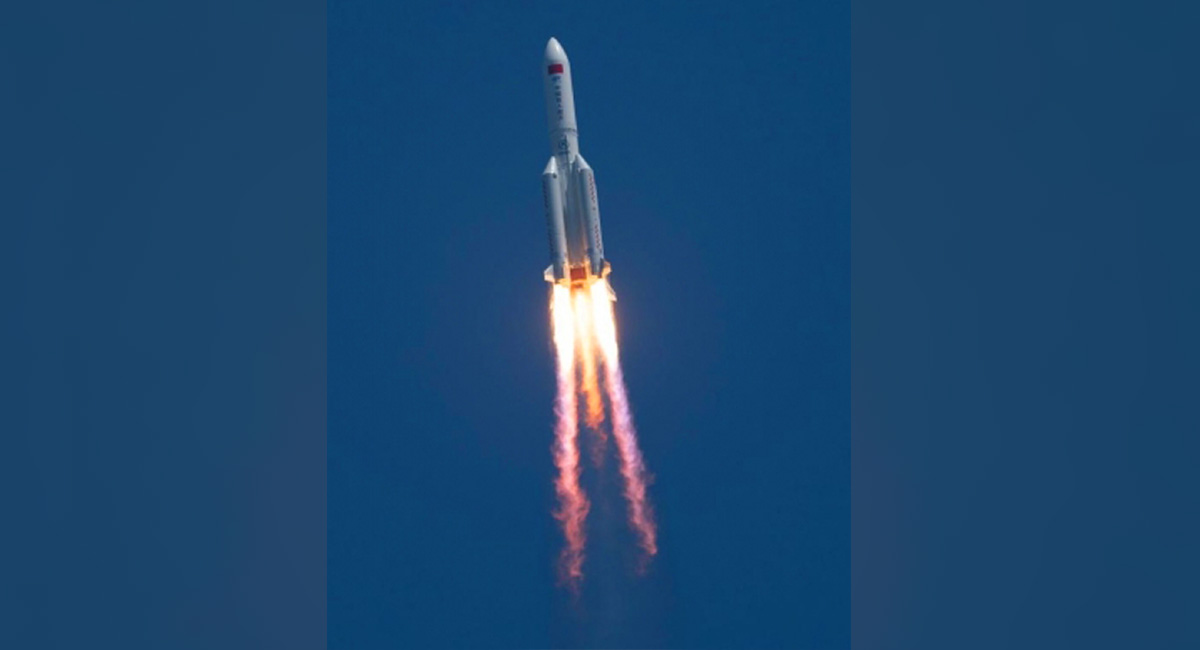
The advent of manned space exploration has long been overshadowed by terrestrial concerns, but the launch of the first module of the International Space Station (ISS) in the late 20th century marked a pivotal juncture in humanity’s endeavor to transcend earthly confines. This significant event symbolized not merely an engineering triumph, but a profound shift in our collective perception of our place in the cosmos. By meticulously examining the implications and aspirations tied to this celestial undertaking, one can garner insights into the promise of future explorations and the philosophical questions they invoke regarding human existence.
On November 20, 1998, the Zarya module, the inaugural segment of the ISS, was propelled into low Earth orbit. Its successful deployment heralded a new era of collaboration among nations, uniting disparate entities under the aegis of scientific inquiry and exploration. One cannot overstate the importance of this collaborative approach, which mitigates the geopolitical tensions that have historically marred international relations. The ISS serves as a microcosm of what is achievable when nations converge towards a common goal: the advancement of human knowledge and the survival of our species in the broader cosmos.
This module, often regarded as the backbone of the ISS, underscored the technological marvels inherent in modern aerospace engineering. Equipped with sophisticated life support systems and modular capabilities, it enabled the assembly of subsequent components in a manner that fostered an unprecedented adaptability. The integration of various modules, each contributing specialized functions, has fostered a laboratory environment unlike any terrestrial counterpart. This iterative design has facilitated a range of experiments that prod at the very boundaries of human understanding and ingenuity.
The potential for scientific discovery aboard the ISS transcends mere academic curiosity. Research conducted in microgravity has led to breakthroughs in myriad fields, specifically in materials science, biology, and medicine. The unique environment enables scientists to observe phenomena that are otherwise obscured by the gravitational influences of Earth. For instance, studies on protein crystallization, which hold implications for drug development, showcase the profound significance of space-based research. Such revelations beckon further inquiry into the physiological responses of organisms when exposed to sustained microgravity.
Moreover, the ISS encapsulates a significant interlude in the ongoing effort to establish a sustainable human presence beyond Earth. It has acted as a proving ground for technologies required for long-duration space travel, including life support, radiation protection, and effective exercise regimens to combat the deleterious effects of prolonged weightlessness. The data gleaned from these experiments not only augurs well for future manned missions to Mars but also instills a sense of urgency about the need for human adaptability in extraterrestrial environments.
The ISS also challenges our philosophical preconceptions about life beyond Earth. The notion of an orbiting laboratory populated by astronauts from various nations compels humanity to ponder the implications of extraterrestrial life. As scientists delve into astrobiology aboard the station, the question of whether we are alone in the universe becomes increasingly tantalizing. The prospect of encountering intelligent life, or even microbial organisms, prompts a reevaluation of ethical considerations surrounding space exploration. How do we approach the possibility of contacting extraterrestrial beings? What moral obligations do we hold in their exploration?
As we delve deeper into the implications of the ISS, we encounter the importance of education and public engagement. The station has served as a platform for inspiring the next generation of scientists, engineers, and thinkers. Public outreach initiatives, such as live feeds from the ISS and collaborations with educational institutions, have significantly raised awareness about the marvels of space exploration. This is of paramount importance as the challenges humanity faces—climate change, resource depletion, and global inequity—require innovative solutions that do not exist solely within the confines of Earth. By cultivating curiosity and interest in science, we can inspire more individuals to contribute to these endeavors.
The ISS has also become a beacon of international cooperation in the face of formidable challenges. In an era characterized by division, the collaborative efforts to construct and operate the station exemplify the potential for unity among nations. The shared vision of advancing human capabilities in space accentuates our commonality and the interconnectedness of human destiny. Each mission conducted aboard the ISS reinforces the notion that humanity’s quest for knowledge transcends borders and nationalistic ambitions.
As we reflect on the launch of the first module of the ISS, it is essential to recognize its dual significance: as a consequence of technological capabilities and as a catalyst for philosophical and ethical discourse. The ongoing exploration of space necessitates a delicate balance between scientific ambition and ethical stewardship. It challenges humanity to contemplate not only what we can achieve but also what responsibilities we bear in the pursuit of knowledge. For every data point collected, for every experiment conducted, we must remain cognizant of the broader implications of our cosmic endeavors.
In conclusion, the launch of the first module of the International Space Station served as a transformative moment in the narrative of human exploration. It encapsulated the spirit of cooperation, creativity, and curiosity that defines humanity’s quest for understanding. As we stand on the threshold of further exploration, the ISS continues to promise a shift in perspective that extends beyond the confines of our planet, captivating our collective imagination and compelling us to reflect upon our place within the vast tapestry of the universe.