The cosmos, an infinite tapestry of celestial phenomena, constantly reveals its mysteries to intrepid astronomers. Among its many wonders, pulsars—neutron stars emitting beams of radiation—fascinate both scientists and enthusiasts alike. The discovery of the first double pulsar, designated as PSR J0737-3039, has paved an unprecedented avenue for astrophysical exploration, offering an unparalleled glimpse into the machinations of extreme gravitational fields and the fabric of spacetime itself.
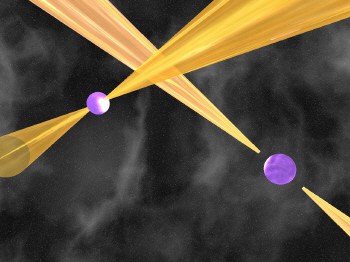
To comprehend the significance of PSR J0737-3039, one must first grasp the enigmatic nature of pulsars. Neutron stars, the remnants of supernova explosions, are born from the cataclysmic deaths of massive stars. Comprised primarily of neutrons, these entities possess a density comparable to that of an atomic nucleus, capable of exerting immense gravitational forces. When such a star rotates, its magnetic field causes beams of radiation to sweep across space like the beam of a lighthouse. If the alignment between the pulsar’s rotation and Earth is fortuitous, these beams can be detected as pulses of radiation, giving rise to the pulsar phenomenon.
The uniqueness of PSR J0737-3039 lies in its binary system, containing two pulsars—hence the term “double pulsar.” This configuration allows for an extraordinary opportunity to study relativistic effects in a controlled environment. The two pulsars, named PSR J0737-3039A and PSR J0737-3039B, are locked in a gravitational dance, orbiting each other in a period of merely 2.4 hours. Their companionship extends beyond mere orbit; they interact in a gravitational embrace that reveals fundamental aspects of the laws of physics.
This binary system manifests a rich tapestry of relativistic phenomena. One of the most compelling aspects of PSR J0737-3039 is its potential to test General Relativity. As the pulsars orbit, their mutual gravitational influence causes time dilation—an effect predicted by Einstein’s theory, wherein time runs slower in stronger gravitational fields. Observations of the timing of the pulses from PSR J0737-3039A can offer empirical data that may confirm or challenge the parameters of relativity. In effect, the pulsars act as cosmic laboratories, two celestial metronomes ticking away the seconds of a universe governed by elegance and enigma.
Moreover, the binary nature of this pulsar system facilitates the observation of gravitational waves—ripples in spacetime propagating across the cosmos. As PSR J0737-3039’s pulsars spiral towards one another, they emit gravitational waves, detectable by current and future observatories. This phenomenon not only confirms previous predictions of General Relativity but also opens a portal into the study of black holes and the very fabric of spacetime. Gravitational waves thus serve as messengers from the heart of the universe, revealing the dizzying dynamics that govern celestial bodies.
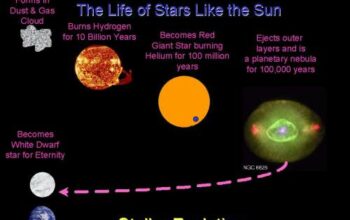
The discovery of PSR J0737-3039 also holds implications for the understanding of the life cycle of neutron stars. The interaction between its pulsars provides insights into how these dense remnants can evolve in proximity to one another and the mechanisms that govern their eventual fate. In a sense, these pulsars are not merely lifeless remnants of stellar evolution; they embody an intersection of life and death—an interstellar commentary on existence governed by extreme physical laws.
Additionally, the double pulsar system serves to illuminate the nature of magnetars—an even more exotic offshoot of neutron stars characterized by extraordinarily strong magnetic fields. Through comparative analysis, researchers can glean further insights into the magnetic phenomena that accompany these enigmatic celestial bodies. Each observation acts as a brushstroke on the canvas of astrophysics, enriching our comprehension of magnetism in the cosmos.
From a broader perspective, the contributions of double pulsars extend beyond stellar interactions and adopt a more profound metaphysical quality. They compel humanity to confront its own existence against the majesty of the universe—a juxtaposition where the infinitesimal nature of human life intersects with the gargantuan tapestry of cosmic events. In observing the double pulsar, one is reminded of the interconnectedness of all things, a push against the boundaries of individualism in favor of a collective consciousness that stretches across space and time.
Ultimately, the first double pulsar, PSR J0737-3039, captivates not merely through its scientific significance but through its ability to inspire wonder and reflection. It is a reminder of the ceaseless curiosity that propels humanity to seek understanding in the cosmos, challenging our perceptions of time, space, and reality. As researchers continue to investigate this fascinating system, each new finding offers a breadcrumb leading deeper into the labyrinth of nature’s secrets—a tantalizing glimpse of the broader universe that awaits beyond our terrestrial confines.
The discovery of PSR J0737-3039 invites both the seasoned astrophysicist and the casual observer to engage with the wonders of the universe. It is a symphony of cosmological phenomena, a harmonious interplay of gravitas and light, astrophysics and philosophy. As we stand on the precipice of understanding, the first double pulsar beckons—a celestial lighthouse illuminating the dark, expansive sea of the cosmos.