The intricate dance of molecular biology often evokes comparisons to machinery, where precision and function intertwine in a harmonious symphony of life. One such notion that captures this essence is the concept of “Piston-Powered DNA.” This metaphor serves to illustrate any number of mechanical functions with the biological processes that govern cell function and genetic expression. By examining the mechanics of DNA, we can unveil a striking parallel between biological systems and engineered machines, emphasizing the dynamic nature of molecular interactions.
At the heart of this metaphor is the piston—a component traditionally associated with engines, wherein force is generated through systematic movement. Likewise, DNA operates through a series of exquisitely orchestrated processes, where molecular components exert force and manipulate their surroundings to carry out essential biological functions. In essence, both pistons and DNA embody an inherent capacity for movement and energy transfer, albeit in vastly differing realms.
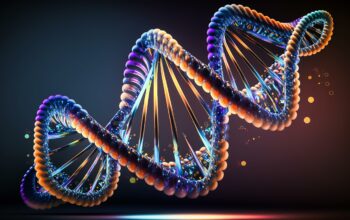
DNA, or deoxyribonucleic acid, comprises two antiparallel strands forming a double helix, with nucleotides—the basic units—interlinked by hydrogen bonds. This structure allows DNA to store and transmit genetic information. One could imagine this double helix as an elegantly designed machine, where each twist and turn plays an integral role in the overall function. The pistons, akin to the helices in DNA, exert mechanical force through conformation changes that guide the processes of replication and transcription. While traditional pistons convert linear motion into rotary motion, the molecular ‘pistons’ at play within DNA propel biological operations essential for life.
In the realm of cellular mechanics, a prominent function of DNA is the production of RNA, which serves as a messenger between the genetic blueprint and protein synthesis. This process can be likened to a piston-driven engine, where the motion of mechanical parts facilitates the transformation of energy from one form to another. Transcription, in this analogy, requires molecular ‘force’ released during the unwinding of the DNA helix. This unwinding mirrors the upward stroke of a piston, creating a space into which RNA polymerase, the molecular equivalent of an engine’s driven component, can insert complementary nucleotides to construct mRNA. Each nucleotide addition is a decisive movement, reflecting the meticulous synchronization of molecular mechanics and energetic exchanges to generate a functional product.
Moreover, the analogy extends to include mechanisms such as DNA repair. Cellular integrity demands resilience and adaptability akin to a well-engineered piston system capable of withstanding wear and tear. DNA molecules often encounter lesions or structural aberrations that threaten their functionality. The repair mechanisms act as responsive pistons, seeking out damaged regions, much like automotive pistons adeptly rectifying faults within the engine’s operation. Yet, just as not all mechanical systems achieve optimal performance, so too can DNA repair pathways falter, leading to potential genomic instability and, ultimately, disease.
The robustness of the ‘piston-powered DNA’ metaphor becomes even more pronounced when considering chromatin remodeling. Histones, around which DNA winds, can be thought of as regulating force that modulates DNA accessibility, akin to the compression of a piston that alters the dimensions of a cylinder. The process by which chromatin compacts and decompacts allows for gene expression and silencing, a dynamic that illustrates the principles of operational efficiency and selective engagement, reminiscent of finely tuned mechanisms in a piston-driven machine. These alterations significantly impact cellular functions, demonstrating that the molecular nature of DNA is not static; rather, it is an adaptive system continuously responding to internal and external stimuli.
Furthermore, the unique appeal of the ‘piston-powered DNA’ metaphor lies in its capacity to convey the interplay between order and chaos inherent in biological systems. Just as pistons are pivotal in converting potential energy into kinetic energy, biological processes similarly transform genetic information into functional entities that embody the emergent properties of life. This revelation underscores a profound truth: the precision and unpredictability coalesce, as mechanical efficiency parallels the necessary randomness characteristic of biochemical reactions.
One cannot overlook the implications of molecular mechanics in the broader context of evolutionary biology. The variances in DNA sequences, akin to mechanical tolerances in pistons, underscore the phenomena of genetic diversity and adaptability. Natural selection acts upon these divergent forms, fostering an environment where only the most efficient and robust systems prevail. This shapes the evolutionary narrative, suggesting that the mechanics of life—encoded within DNA itself—serve as both a testament to ancestral lineage and a roadmap for future adaptations.
In summary, the analogy of ‘Piston-Powered DNA’ elucidates the multifaceted dynamics of molecular biology, providing a nuanced understanding of how life operates at the molecular level. From the precise mechanisms involved in genetic transcription to the adaptive resilience exhibited in DNA repair and chromatin remodeling, the comparison to pistons encapsulates the essence of biological function. This metaphor not only democratizes complex biochemical processes but also emphasizes the elegance inherent in the machinery of life. Each molecular interaction is a testament to resilience, efficiency, and the intricate dance that sustains existence, bridging the worlds of engineering and biology in a strikingly profound manner.