In the realm of modern physics, the dichotomy between matter and antimatter presents a fascinating narrative steeped in complexity and paradox. Matter, the tangible substance that constitutes the physical universe, is at odds with its elusive counterpart, antimatter. The concept of antimatter, although initially relegated to the confines of theoretical physics, has burgeoned into an essential element of contemporary research. This exploration delves into the dramatic differences between matter and antimatter, elucidating their intrinsic properties, interactions, and implications for our understanding of the universe.
The constitution of matter centers around particles that carry a positive or negative charge. Protons, neutrons, and electrons amalgamate to form atoms, which in turn create the myriad substances observed in nature. In contrast, antimatter comprises particles that possess the same mass but exhibit opposing charge characteristics. An antiproton, for instance, possesses a negative charge, whereas a positron, the antimatter analog of the electron, carries a positive charge. Collectively, these particles revert to positrons and antiprotons, culminating in an “antimatter atom” that mirrors the structure of a hydrogen atom, albeit with altered charge characteristics.
One quintessential difference between matter and antimatter is their propensity for annihilation upon encountering one another. This annihilation process yields a release of energy as described by Einstein’s equation, E=mc², a corollary critical to the understanding of nuclear reactions and particle physics. The energy liberated during such encounters often translates into high-energy photons, particularly gamma rays. This reaction elucidates the potential of antimatter; a mere gram of antimatter could in theory generate an explosion equivalent to that of tens of kilotons of TNT upon contact with matter.
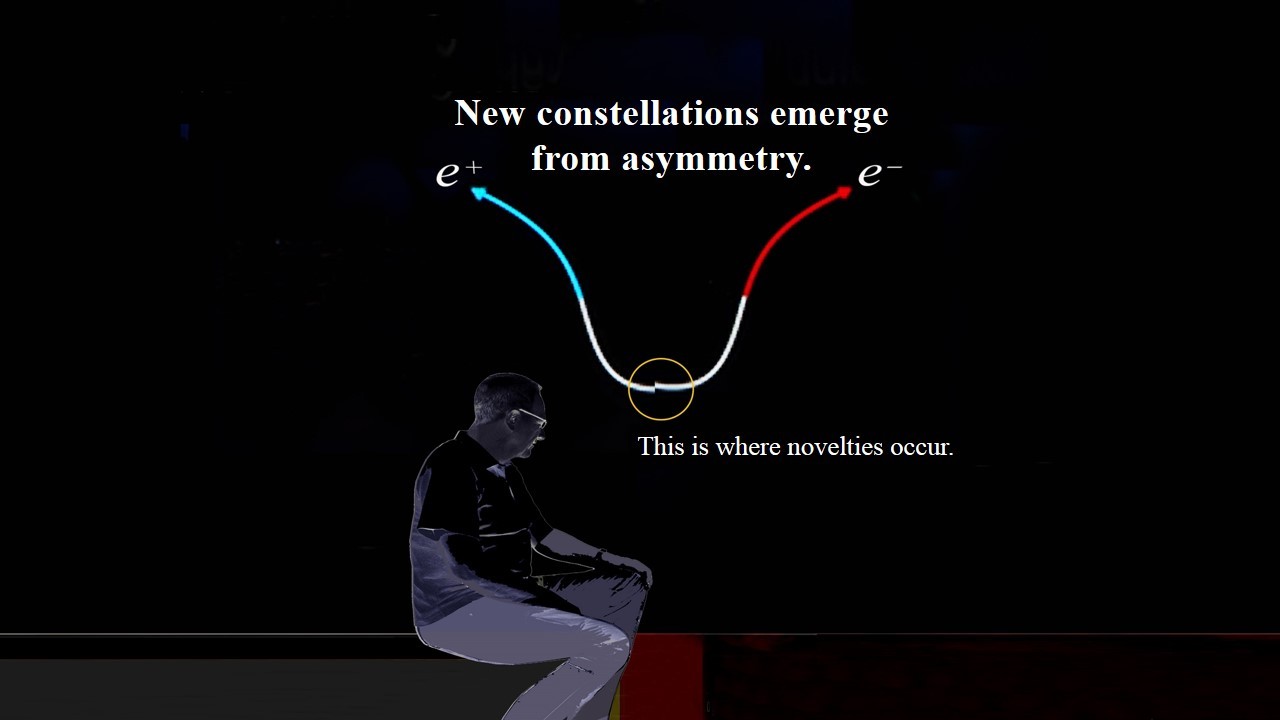
The definitive asymmetry between matter and antimatter poses a perplexing question: Why does the observable universe comprise predominantly matter? This fundamental asymmetry is classified under the umbrella of baryogenesis, a theoretical framework attempting to elucidate the mechanisms that led to an excess of baryonic matter over antimatter following the Big Bang. Numerous hypotheses have emerged, including CP violation — a phenomenon that might suggest processes which favor the production of matter over antimatter during particle decay. Experimental investigations at facilities such as CERN aim to understand these discrepancies, probing the depths of the Standard Model of particle physics and beyond.
This pursuit is not simply an academic exercise; it has significant ramifications in cosmology and our comprehension of the universe’s genesis. The implication of an imbalance hints at uncharted physics that may govern the universe’s structure and ultimate fate. If antimatter exists abundantly somewhere in the cosmos, its interactions could lead to observable consequences; however, direct evidence remains tantalizingly out of reach. Extensive cosmological surveys and analyses continue to search for signs of gamma-ray emissions that could suggest the existence of antiparticles in cosmic radiation.
Moreover, the applications of antimatter in contemporary science cannot be overlooked. Antimatter plays an essential role in positron emission tomography (PET), a medical imaging technique that harnesses positrons to elucidate metabolic processes within the body. The annihilation of positrons upon contact with electrons produces detectable gamma rays, facilitating the imaging of tissues and organs. This intersection of antimatter with practical applications underscores its relevance beyond theoretical frameworks.
Further examination of antimatter’s production reveals its rarity within the universe. Though created in particle accelerators and observable in certain nuclear reactions, its terrestrial existence is fleeting, as it quickly annihilates upon contact with matter. The challenges involved in its containment and study have led researchers to explore various techniques, including magnetic confinement in vacuum chambers, to study antimatter’s properties and behaviors. These efforts have yielded important insights into the nature of fundamental forces and the possible existence of new particles.
The production of antimatter also poses economic considerations. The cost of producing even minute quantities is exorbitant, posing limitations on its widespread application. Nevertheless, advancements in technology may eventually address these economic challenges, paving the way for more extensive research and potential practical uses. This synthesis between theoretical inquiry and applied sciences enhances the dialogue surrounding antimatter, bridging the gap between abstract physics and tangible benefits.
Moreover, as humanity ventures into the cosmos, the implications of antimatter expand exponentially. Should spacecraft harness antimatter as a source of propulsion, the energy released from matter-antimatter annihilation could facilitate unprecedented advancements in space travel, potentially bringing distant celestial bodies within reach. However, the technical challenges and safety concerns surrounding the production, storage, and utilization of antimatter are formidable obstacles that must be navigated diligently.
In conclusion, the dramatic differences between matter and antimatter encapsulate profound intellectual inquiries that permeate the fabric of modern physics. From their intrinsic properties and annihilation interactions to their potential roles in the cosmos and practical applications in medicine, antimatter transcends mere theoretical constructs. Understanding the complexities of this duality not only sheds light on fundamental questions about the universe, but also opens avenues for revolutionary developments in technology and exploration. As research progresses, the mysteries of matter and antimatter continue to entice and challenge scholars, inviting an ongoing exploration of the universe’s fundamental tapestry.