Graphene, a single layer of carbon atoms arranged in a two-dimensional honeycomb lattice, has captivated researchers since its theoretical prediction and subsequent isolation in the early 21st century. This extraordinary material exhibits a myriad of remarkable properties, including exceptional electrical conductivity, mechanical strength, and thermal conductivity. The advent of designer graphene, a term denoting the methodical manipulation of graphene’s structural and electronic properties at the atomic level, marks a significant leap in materials science. As researchers delve deeper into the tailoring of graphene, the implications of this precision engineering span across various fields, including electronics, energy storage, and even biomedicine.
The fascination surrounding designer graphene finds its roots in the extraordinary potential it harbors. While graphene is acknowledged for its intrinsic properties, the ability to manipulate its characteristics intentionally allows for the engineering of devices that are both highly functional and remarkably efficient. Achieving atomic precision in materials science resonates with longstanding aspirations in the field to craft substances that can be tailored for specific applications. Such precision entails leveraging the ability to modify properties such as bandgap, defect density, and surface chemistry, which can profoundly influence performance criteria in practical applications.
A common observation in the journey toward designer graphene is the notable enhancement of properties that are not merely additive, but instead synergistic. For instance, when graphene is integrated with other materials, the resultant heterostructures often exhibit novel phenomena, such as increased superconductivity and enhanced thermal stability. These observations propel researchers to look beyond the simplistic understanding of material properties, hinting at a more complex interplay when materials are engineered at the atomic level.
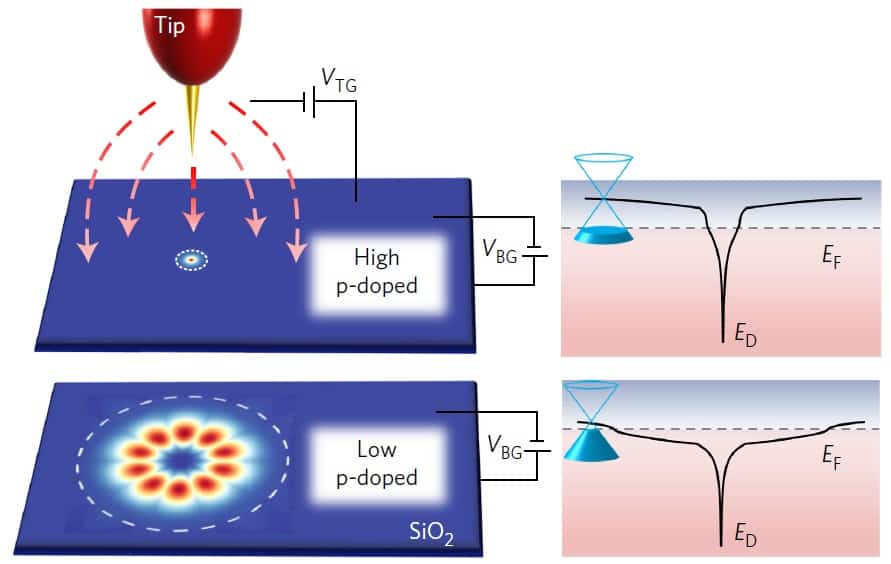
One particular area of interest is the manipulation of the electronic properties of graphene through ‘doping’—the process of introducing different atoms into the lattice. Such techniques allow for the alteration of conductivity types from n-type to p-type, enabling the creation of semiconductors with desired characteristics. Furthermore, the introduction of specific functional groups can lead to the development of materials with tailored chemical reactivity, paving the way for advancements in catalysis and sensor technology. The atomic precision with which these alterations can be executed lends itself to unprecedented control over material behavior, which is paramount for future applications in quantum computing and beyond.
Additionally, the morphological transformations achievable with designer graphene expand the horizons of material design. Methods such as chemical vapor deposition (CVD) or liquid-phase exfoliation facilitate the creation of graphene with specific size dimensions and shapes. For utility in microelectronics, the generation of graphene nanoribbons or graphene dots can tailor their electronic band structure, enhancing performance in transistors and other quantum devices. The resultant phenomena associated with size-dependent properties, such as quantum confinement effects, position designer graphene as a centerpiece in the development of next-generation nanoscale devices.
The structural intricacies of graphene also present an enigmatic allure. A salient characteristic of graphene is its exceptional mechanical strength, attributed to the sp2 hybridization of carbon atoms. The atomic-level precision inherent in the designer graphene approach permits the integration of defects and disorder in a controlled manner. This control not only allows for the engineering of improved mechanical properties but also offers novel pathways for the localization of electronic states, potentially unlocking functionalities like defect-induced magnetism—an area of growing interest in spintronics.
Moreover, the perception of time-dependent transformations within designer graphene systems provides a dynamic viewpoint. The material’s remarkable flexibility permits modifications during thermal and mechanical stress, leading to adjustable properties that are responsive to external stimuli. This opportunity opens up avenues for the development of ‘smart materials’—systems that can actively react to changes in environmental conditions, thus resembling biological systems in terms of adaptability and responsiveness.
On the other hand, inviting contemplation on the implications of designer graphene also leads to discussions regarding its scalability and sustainability. While atomic precision offers unparalleled advantages, the production methods for tailored graphene must be scrutinized through an environmental lens. The methods employed should prioritize green chemistry principles and yield efficient processes that minimize waste and energy consumption. A dialogue concerning responsible innovation and the life cycle of such advanced materials is essential to ensure that their deployment does not inadvertently exacerbate ecological challenges.
The narrative of designer graphene inherently evokes curiosity concerning its future trajectories. Potential applications range from flexible electronics and advanced sensors to biomedical implants that leverage biocompatibility. Furthermore, scientists are exploring graphene’s role in the realm of energy storage, where it can potentially revolutionize batteries and supercapacitors through enhanced charge storage capacity and lifespans. Such prospects, based on a foundation of precision engineering, not only showcase the versatility of this material but also elucidate the interconnectedness of disciplines advancing contemporary research.
In conclusion, the emergence of designer graphene is not merely a testament to the capabilities of modern materials science but symbolizes a profound shift in our understanding of atomic interactions and material behavior. The ability to personalize graphene at the atomic level is paving the way for innovations that promise to redefine technological capabilities. As researchers continue to explore the intricate weave of structural manipulations and their implications, the collective pursuit for knowledge and understanding thrums with excitement. The synthesis of scientific inquiry and the marriage of diverse disciplines is bound to expand the horizons of what graphene can achieve, thus writing a new chapter in the annals of materials science.