Cosmic rays, those elusive and energetic particles that traverse our universe at nearly the speed of light, have sparked significant interest in the scientific community for their potential role in cloud formation. This research, at the intersection of astrophysics and atmospheric science, proposes a tantalizing hypothesis: that cosmic rays may act as catalysts for cloud nucleation. In essence, these high-energy particles could be the unseen architects of our weather systems, influencing climate patterns in ways that challenge conventional understanding.
The exploration of cosmic rays dates back to the early 20th century when they were first identified as high-energy particles originating beyond Earth’s atmosphere. These charged particles, primarily protons and heavier nuclei, are incessantly bombarding our planet, a phenomenon reminiscent of an invisible rain. As scientists have delved deeper into the characteristics of these cosmic visitors, their potential for atmospheric interactions has emerged as an intriguing avenue of research.
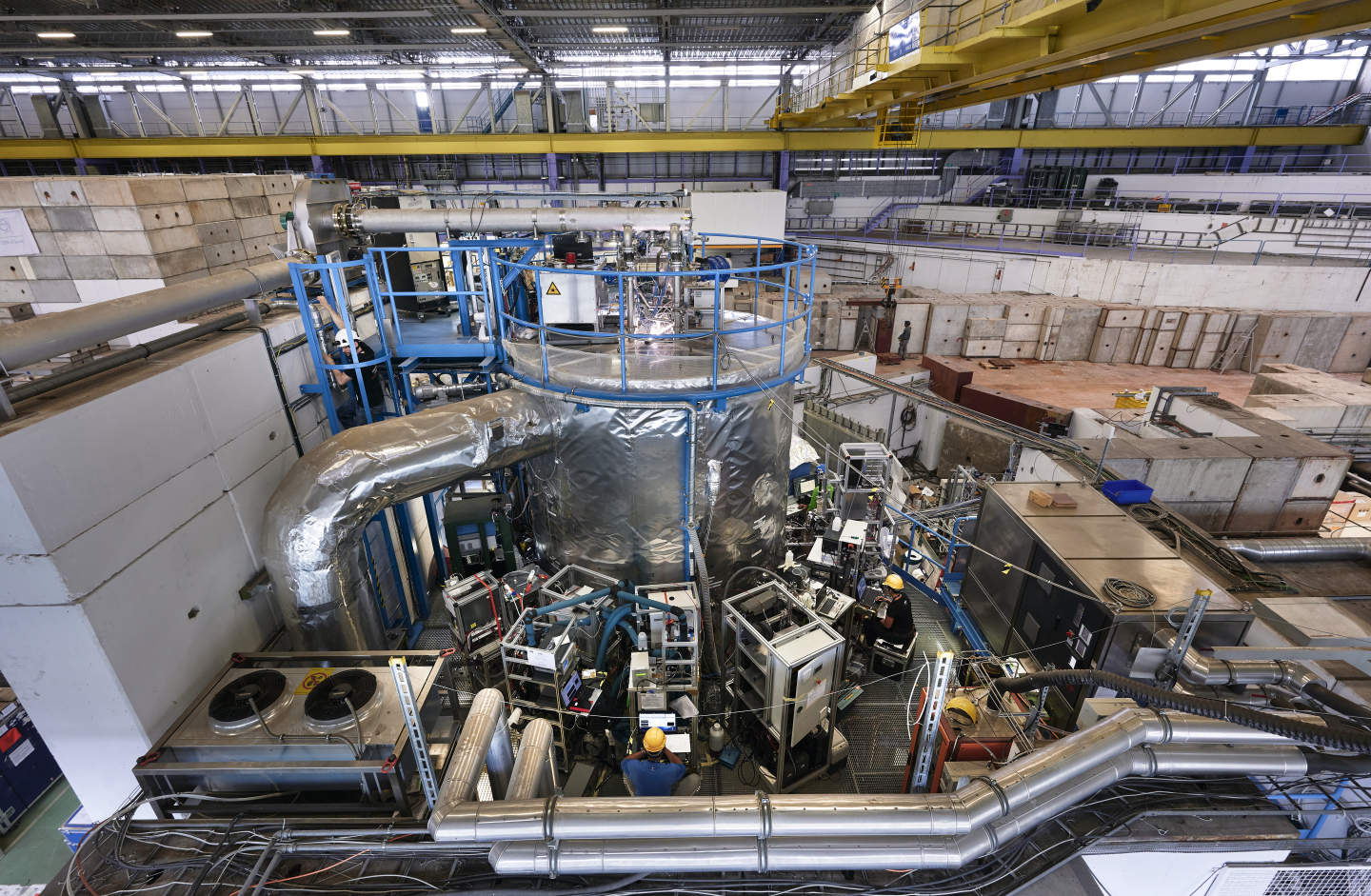
At the core of this inquiry lies the process of cloud formation, which occurs when water vapor condenses into droplets, coalescing around small particles known as aerosols. These aerosols serve as nuclei for the droplets; without them, the water vapor would remain as an invisible gas. This is where the cosmic rays enter the equation: they can ionize air molecules, leading to the production of secondary aerosols. This is a critical step since the number and type of aerosols present in the atmosphere directly influence cloud condensation processes.
Recent studies provide compelling evidence supporting the cosmic ray-cloud hypothesis. One of the most notable pieces of evidence comes from observations regarding the correlation between cosmic ray intensity and cloud cover. Data suggest that during periods of high solar activity, when cosmic ray flux is reduced—due to the sun’s magnetic field acting as a shield—there tends to be a decrease in cloudiness. Conversely, when solar activity diminishes, cosmic rays increase, and so do cloud formations.
One may liken this dynamic to a maestro conducting an orchestra; the cosmic rays, much like a conductor’s baton, guide the nanoparticles in the atmospheric milieu, orchestrating the delicate balance necessary for cloud development. This analogy illustrates not only the complexity but also the astonishing intricacies involved in meteorological phenomena.
Further investigations have utilized advanced modeling to simulate the interactions of cosmic rays with the atmosphere. Empirical data indicate that areas with higher cosmic ray exposure exhibit enhanced cloud formation and increased precipitation rates. This relationship is particularly evident in the polar regions, where the magnetic field’s integrity is lower, allowing more cosmic rays to penetrate. The synergy between cosmic radiation and atmospheric conditions offers a fascinating glimpse into atmospheric dynamics, revealing how cosmic forces shape local weather patterns.
It is essential to acknowledge that this relationship is nuanced. While a correlation between cosmic rays and cloud formation has been established, causation remains a more complex issue. Various climatic factors—including humidity, temperature, and regional geography—interplay to determine local weather outcomes. Thus, while cosmic rays may enhance the likelihood of cloud nucleation under certain circumstances, they do not act in isolation. It is a symphony of influences that culminate in the atmospheric ballet we observe.
Another aspect worth noting is the potential implications of this relationship on climate change. Should cosmic rays indeed influence cloud dynamics, their role in modulating global temperatures becomes significant. In periods of reduced solar activity, the consequent increase in cosmic rays may lead to increased cloud formation, which could, in turn, have a cooling effect on the Earth’s surface. Conversely, during solar maxima, reduced cosmic contributions might allow for greater solar insolation, potentially exacerbating warming trends. The ramifications of these interactions could be profound, calling for rigorous investigation into long-term climate models.
The implications extend beyond our atmospheric boundaries and into our understanding of cosmic phenomena. The interplay between solar activity and cosmic ray intensity could elucidate broader questions regarding astrophysical processes. This research reveals a rich tapestry where astrophysics and meteorology intertwine, inviting not only scientists but also philosophers and theorists to ponder the interconnectedness of our universe.
The curious enigma of cosmic rays as seeding agents for clouds serves as a reminder of nature’s complexity. The evidence, while striking, is just a piece of a much larger puzzle that remains unsolved. As research continues to unfold, the scientific community is charged with unraveling this multifaceted relationship, thereby enriching our comprehension of both the cosmos and our own atmosphere.
In conclusion, the concept that cosmic rays may serve as agents of cloud formation is not merely a scientific query but a profound exploration of connectivity across the cosmos. It challenges us to reconsider our understanding of climate systems and urges a reevaluation of the forces that shape our environment. As scientists peer into the depths of space and probe the atmosphere’s mysteries, the unearthing of such phenomena promises further insights into the intricate web of existence, reminding us of our planet’s place in the vast universe.