
Short Answer
Definition of Planetary Orbit Size
The size of a planet’s orbit refers to the average distance between the planet and the star it revolves around, typically measured by the semi-major axis of the elliptical path. This dimension encapsulates the spatial scale of the planet’s trajectory and is a fundamental characteristic in understanding planetary motion within a star system.
Fundamental Forces Shaping Orbital Dimensions
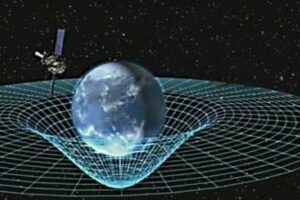
At the heart of orbital size determination lies the gravitational interaction between a star and its planet. This gravitational attraction, described by Newton’s law of universal gravitation, acts as the centripetal force that keeps the planet in orbit. The balance between this inward pull and the planet’s forward velocity creates a stable orbit, whose size depends on the interplay of these forces.
- Gravitational Pull:
The star’s mass directly influences the strength of its gravitational field, drawing planets closer or allowing them to maintain wider orbits. - Orbital Velocity:
A planet’s tangential speed determines how far it can remain from the star while still being gravitationally bound. - Angular Momentum:
Conserved in isolated systems, angular momentum governs the variations in orbital speed and distance, especially in elliptical orbits where planets accelerate near perihelion and decelerate near aphelion.
Role of Initial Conditions in Orbit Formation
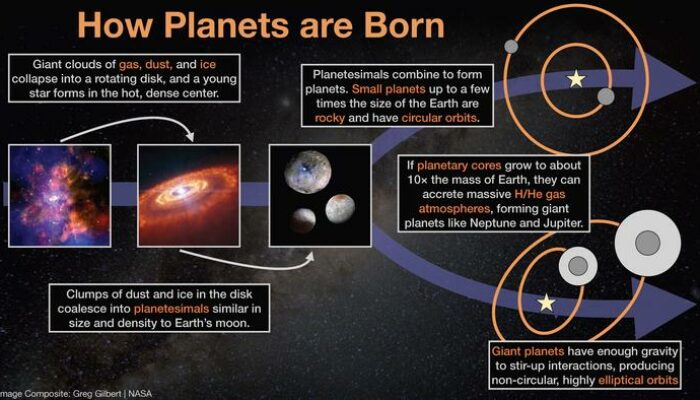
The early environment of a planetary system, particularly the protoplanetary disk composed of gas and dust surrounding a young star, sets the foundational parameters for orbit sizes. Variations in density, temperature, and angular momentum within this disk influence where planetesimals form and how they migrate, ultimately shaping the semi-major axes of emerging planets.
- Protoplanetary Disk Structure:
The distribution of material in the disk determines the initial orbital radii of forming planets. - Accretion and Migration:
Gravitational interactions and collisions during planet formation can cause planets to shift inward or outward from their birth locations.
Influence of Planetary Mass and Multi-Body Interactions
While the star’s mass is the dominant factor, the planet’s own mass also affects orbital characteristics, especially in systems with multiple planets. Mutual gravitational forces can lead to orbital resonances, migrations, and even ejections, causing the orbital sizes to evolve over time.
- Massive Planets:
Gas giants can significantly perturb the orbits of smaller planets, altering the overall architecture of the system. - Orbital Resonances:
Repeated gravitational interactions can lock planets into specific orbital ratios, influencing their distances from the star.
Orbital Eccentricity and Its Impact on Perceived Orbit Size
Orbital eccentricity measures how much an orbit deviates from a perfect circle. Although the semi-major axis defines the average orbital size, the actual distance between a planet and its star varies throughout the orbit if eccentricity is nonzero. This variation adds complexity to understanding orbital dimensions.
- Elliptical Orbits:
Planets move faster when closer to the star and slower when farther away, causing fluctuating distances. - Causes of Eccentricity:
Factors include initial formation conditions, gravitational perturbations from other planets, and external influences like passing stars.
Tidal Forces and Long-Term Orbital Evolution
Tidal interactions between a planet and its star can gradually modify the orbit over extended periods. These forces create tidal bulges that dissipate energy, potentially leading to orbital decay, circularization, or synchronous rotation where the planet’s rotation period matches its orbital period.
- Orbital Decay:
Energy loss through tidal friction can cause the planet to spiral closer to the star. - Orbital Circularization:
Tidal forces tend to reduce eccentricity, making orbits more circular over time. - Synchronous Rotation:
The planet’s spin becomes locked to its orbit, affecting climate and habitability.
Methods for Measuring Orbital Sizes
Advancements in observational astronomy have revolutionized how scientists determine the sizes of planetary orbits, especially for exoplanets beyond our solar system. Techniques such as Doppler spectroscopy, transit photometry, and gravitational microlensing provide precise orbital parameters, enabling detailed studies of diverse planetary systems.
- Doppler Shifts:
Detect changes in a star’s spectrum caused by the gravitational pull of orbiting planets. - Transit Timing:
Measure the dimming of a star’s light as a planet passes in front, revealing orbital period and size. - Gravitational Microlensing:
Observe light bending caused by a planet’s gravity to infer orbital characteristics.
Significance of Orbital Size in Astronomy and Habitability
The dimension of a planet’s orbit is crucial not only for understanding celestial mechanics but also for assessing planetary environments and potential habitability. The orbital radius influences surface temperature, atmospheric conditions, and the likelihood of liquid water, all key factors in the search for life beyond Earth.
Common Misconceptions About Orbital Size
The orbit size is fixed and unchanging.
Orbits evolve over time due to gravitational interactions, tidal forces, and migration processes.
Only the star’s mass determines orbit size.
While star mass is primary, planet mass, initial disk conditions, and multi-body dynamics also play significant roles.
Orbits are always circular.
Most orbits are elliptical, with varying eccentricities affecting the planet-star distance throughout the orbit.
Summary: The Dynamic Nature of Planetary Orbits
The size of a planet’s orbit emerges from a complex interplay of gravitational forces, initial formation conditions, and ongoing cosmic interactions. Far from being static, orbital dimensions reflect a dynamic history shaped by physics and chance. Understanding these factors enriches our knowledge of planetary system architectures and informs the quest to find habitable worlds in the universe.
FAQ
What factors determine the size of a planet's orbit?
The size of a planet’s orbit is influenced by the star’s mass, the planet’s mass, initial conditions in the protoplanetary disk, and multi-body interactions.
How does orbital eccentricity affect a planet's distance from its star?
Orbital eccentricity measures the deviation from a circular orbit, causing varying distances between the planet and the star over time.





Leave a Reply