
Short Answer
Understanding Time Dilation
Time dilation is a fascinating concept derived from Einstein’s theories of relativity, revealing that time is not an absolute constant but varies depending on factors such as gravity and velocity. The popular phrase “one hour in space equals seven years on Earth” captures public imagination but oversimplifies the complex physics behind how time behaves differently in space compared to Earth.
Definition of Time Dilation
Time dilation refers to the difference in elapsed time as measured by two observers, either due to relative velocity or differences in gravitational potential. It highlights that time can pass at different rates depending on the observer’s frame of reference.
- Gravitational Time Dilation:
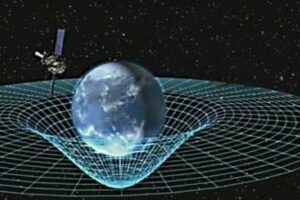
Time slows down near massive objects because gravity warps spacetime, causing clocks closer to these masses to tick more slowly. - Kinematic (Velocity-Based) Time Dilation:
Time slows down for objects moving at speeds close to the speed of light relative to a stationary observer.
Scientific Principles Behind Time Dilation
Einstein’s general theory of relativity explains gravitational time dilation by describing how massive bodies curve spacetime. Clocks closer to Earth’s surface, where gravity is stronger, run slower compared to clocks in orbit where gravity is weaker. Conversely, special relativity addresses kinematic time dilation, where an object’s high velocity causes time to pass more slowly relative to a stationary observer.
Gravitational Time Dilation
Massive celestial bodies like Earth create a gravitational well that affects the flow of time. Astronauts orbiting Earth experience a weaker gravitational pull, so their onboard clocks tick slightly faster than those on the planet’s surface. This effect means astronauts age marginally quicker relative to people on Earth, contrary to the common assumption that time slows down in space.
Kinematic Time Dilation
When an object moves at speeds approaching the speed of light, time for that object slows down relative to a stationary observer. However, current spacecraft velocities are far too slow for this effect to be significant. Thus, astronauts in low Earth orbit experience negligible velocity-induced time dilation.
Mathematical Explanation of Time Dilation
The time dilation effect can be quantified using formulas from relativity:
- Gravitational Time Dilation Formula:
( t_0 = t_f sqrt{1 – frac{2GM}{rc^2}} )
where:
( t_0 ) = proper time experienced near the mass,
( t_f ) = time experienced far from the mass,
( G ) = gravitational constant,
( M ) = mass of the object,
( r ) = radial distance from the center of the mass,
( c ) = speed of light. - Kinematic Time Dilation Formula:
( t’ = frac{t}{sqrt{1 – frac{v^2}{c^2}}} )
where:
( t’ ) = dilated time observed,
( t ) = proper time,
( v ) = velocity of the moving object,
( c ) = speed of light.
Real-World Context: Time Dilation in Space Missions
In practical terms, astronauts aboard the International Space Station (ISS) experience time dilation effects that are measurable but extremely small. Over several months, the difference in aging between astronauts and people on Earth amounts to mere milliseconds. This has been confirmed through precise atomic clock experiments, validating relativity without supporting the exaggerated claim that an hour in space equals seven years on Earth.
Origins and Misinterpretations of the “One Hour Equals Seven Years” Phrase
This expression is largely metaphorical, often conflating extreme theoretical scenarios with everyday spaceflight. It draws from science fiction and theoretical physics involving near-light-speed travel or proximity to massive objects like black holes, where time dilation effects can be profound. For instance, near a black hole, intense gravitational fields can cause time to pass much slower for someone close to the event horizon compared to an outside observer, making minutes feel like years.
Common Misconceptions About Time Dilation
Astronauts age much slower in space.
Due to weaker gravity in orbit, astronauts actually age slightly faster, but the difference is minuscule.
Velocity in current space travel causes significant time dilation.
Speeds of current spacecraft are too low for noticeable velocity-based time dilation.
Time dilation effects in space are dramatic and easily observable.
While real, these effects are extremely subtle in low Earth orbit.
Why Time Dilation Is Important
Understanding time dilation is crucial for both scientific knowledge and practical applications. It deepens our grasp of the universe’s structure, influencing technologies like GPS satellites that must account for relativistic effects to maintain accuracy. Moreover, as humanity contemplates future interstellar travel, time dilation will become a significant factor in mission planning and human experience.
Historical Perspective: Earth’s Changing Day Length
Time’s fluidity is not limited to relativistic effects. Geological evidence suggests that billions of years ago, Earth’s rotation was faster, with days lasting approximately 19 hours. This change over time illustrates how celestial mechanics and planetary evolution influence temporal cycles, complementing the relativistic understanding of time’s variability.
Conclusion: The Dynamic Nature of Time in Space Exploration
The phrase “one hour in space equals seven years on Earth” serves as a poetic symbol rather than a scientific fact. It encapsulates humanity’s curiosity about the universe and the strange, non-intuitive nature of time beyond our planet. As space exploration advances, the subtle interplay of gravity, velocity, and time will continue to challenge our perceptions and expand our understanding of the cosmos.
FAQ
What is time dilation?
Time dilation is the difference in elapsed time measured by observers due to relative velocity or differences in gravitational potential.
Why do astronauts age faster in space?
Astronauts age slightly faster in space due to weaker gravity, which causes their clocks to tick slightly faster compared to those on Earth.
Is the claim that one hour in space equals seven years true?
This claim is an oversimplification and primarily metaphorical; real time dilation effects are much smaller and measurable in milliseconds.



Leave a Reply