
Short Answer
Definition of Gravity as Curved Spacetime
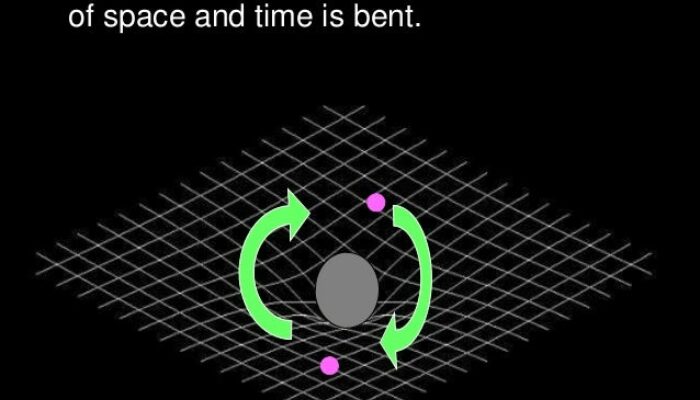
Gravity can be understood as the curvature of spacetime, a concept that merges the dimensions of space and time into a single, dynamic fabric. This fabric, though seemingly intangible, responds to the presence of mass and energy by bending and warping, creating the effects we attribute to gravitational attraction. Rather than being a force pulling objects together, gravity emerges as the geometric distortion of the continuum in which all matter and energy exist.
- Spacetime:
A four-dimensional continuum combining three spatial dimensions and one temporal dimension. - Curvature:
The bending or warping of spacetime caused by mass and energy. - Gravity:
The manifestation of this curvature, influencing the motion of objects and light.
Historical Perspectives on Gravity
For centuries, gravity was primarily viewed through the lens of classical mechanics as a force acting at a distance. Sir Isaac Newton formulated laws that described gravitational attraction with remarkable accuracy, enabling predictions of planetary orbits and terrestrial phenomena. However, Newton’s framework left unanswered questions about how gravity could act instantaneously across empty space without a medium or mechanism.
As scientific inquiry advanced, the limitations of the Newtonian model became apparent, especially when exploring phenomena at cosmic scales or near massive bodies. This paved the way for a revolutionary reinterpretation of gravity.
Einstein’s Geometric Revolution: General Relativity
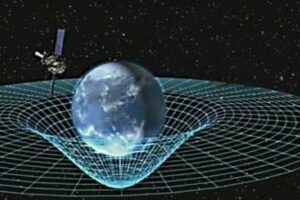
Albert Einstein transformed our understanding by proposing that gravity is not a force but a geometric property of spacetime itself. According to his General Theory of Relativity, massive objects distort the fabric of spacetime, much like heavy balls deform a stretched trampoline. Objects moving nearby follow paths determined by this curvature, which explains gravitational attraction without invoking a mysterious force.
This shift from force to geometry redefined gravity as the natural motion of objects along curved trajectories, or geodesics, within a warped spacetime continuum.
How Curved Spacetime Influences Motion
In this framework, objects do not experience gravity as a pull but move along the contours shaped by mass and energy. The curvature dictates the paths that planets, stars, and even light follow, resulting in phenomena such as orbital motion and gravitational lensing.
- Planetary Orbits:
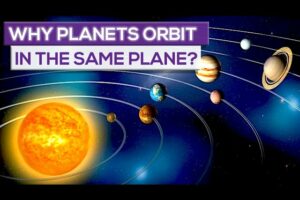
Planets revolve around stars by following curved geodesics in spacetime rather than being pulled by a force. - Light Bending:
Light rays curve when passing near massive objects, an effect confirmed by observations of gravitational lensing.
Mathematical Framework of Curved Spacetime
The mathematical description of gravity in General Relativity is encapsulated by Einstein’s field equations:
Gμν + Λgμν = (8πG/c⁴) Tμν
- Gμν (Einstein tensor):
Represents the curvature of spacetime. - Λ (Cosmological constant):
Accounts for the energy density of empty space. - gμν (Metric tensor):
Describes the geometry of spacetime. - Tμν (Stress-energy tensor):
Encodes the distribution of mass-energy. - G:
Newton’s gravitational constant. - c:
Speed of light in vacuum.
These equations relate the geometry of spacetime to the energy and momentum of whatever matter and radiation are present, forming the foundation for predicting gravitational phenomena.
Empirical Evidence Supporting Curved Spacetime
Several key observations validate the concept of gravity as curved spacetime:
- Mercury’s Orbital Precession:
The slight deviation in Mercury’s orbit from Newtonian predictions is accurately explained by spacetime curvature. - Gravitational Redshift:
Light loses energy escaping strong gravitational fields, shifting toward longer wavelengths. - Gravitational Waves:
Ripples in spacetime generated by accelerating masses, directly detected by observatories such as LIGO.
Challenges and Open Questions
Despite its successes, the geometric interpretation of gravity does not fully reconcile with quantum mechanics, which governs the microscopic world. The smooth, continuous nature of spacetime in General Relativity contrasts with the discrete, probabilistic framework of quantum theory. Efforts to develop a quantum theory of gravity, including string theory and loop quantum gravity, aim to unify these perspectives, suggesting that spacetime’s fabric may possess deeper, more complex properties than currently understood.
Philosophical and Scientific Significance
Viewing gravity as the curvature of spacetime reshapes our fundamental understanding of the universe. It dissolves the classical separation between space, time, and matter, revealing a cosmos where geometry and physics are inseparably intertwined. This perspective not only advances scientific knowledge but also inspires philosophical reflection on the nature of reality, interconnectedness, and the dynamic fabric of existence.
Common Misconceptions About Gravity and Curved Spacetime
Gravity is a force like magnetism or electromagnetism.
Gravity is better described as the effect of curved spacetime geometry, not a force transmitted through space.
Spacetime curvature is like bending a two-dimensional sheet.
Spacetime curvature involves four dimensions, including time, making it fundamentally different from everyday bending of surfaces.
Objects are pulled by gravity in the traditional sense.
Objects follow natural paths determined by spacetime geometry, moving along geodesics without a pulling force.
Why Understanding Gravity as Curved Spacetime Matters
This conceptual framework is crucial for modern physics, enabling precise predictions of cosmic phenomena and guiding technologies such as GPS, which must account for relativistic effects. It also provides a foundation for exploring the universe’s origins, black holes, and the behavior of light and matter under extreme conditions. Ultimately, embracing gravity as curved spacetime enriches both scientific inquiry and our broader appreciation of the cosmos’s intricate design.
FAQ
What is the main idea of gravity as curved spacetime?
Gravity is viewed as the result of the geometric curvature of spacetime caused by mass and energy, rather than a traditional force.
How does General Relativity differ from Newtonian gravity?
General Relativity describes gravity as a curvature of spacetime, while Newtonian gravity describes it as a force acting at a distance.


Leave a Reply