
Short Answer
Definition of Gravity in Cosmic Formation
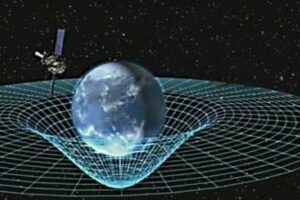
Gravity is the fundamental force responsible for shaping the vast structures of the universe. It is the invisible attraction between masses that orchestrates the formation of stars, planets, and galaxies from diffuse clouds of matter. This universal force acts as the cosmic architect, pulling together scattered particles across the immense void of space to create the luminous and complex celestial bodies we observe.
Gravity’s Role in Star and Planet Formation
The process of star and planet formation begins within the interstellar medium, a region filled with sparse gas and dust known as molecular clouds. These clouds, often spanning several light-years, serve as the birthplaces of stars. Gravity initiates its influence by gradually drawing atoms and molecules inward, overcoming the natural tendency of particles to disperse due to thermal pressure.
- Gravitational Collapse:
When the mass within a molecular cloud becomes sufficiently concentrated, gravity surpasses internal pressure, causing the cloud to collapse under its own weight. - Fragmentation:
The collapsing cloud breaks into smaller clumps, each potentially evolving into a star or planetary system. - Angular Momentum Conservation:
As the cloud contracts, any initial rotation speeds up, forming a spinning accretion disk around the dense core, which later gives rise to planets. - Protostar Heating:
The infalling material converts gravitational potential energy into heat, raising the core temperature until nuclear fusion ignites.
Mechanism of Star Birth
Within the dense core of a collapsing molecular cloud, gravity compresses matter to extreme densities and temperatures. This compression triggers nuclear fusion, primarily the fusion of hydrogen atoms into helium, releasing vast amounts of energy. The outward pressure generated by fusion balances the inward pull of gravity, stabilizing the star in a state known as the main sequence. This equilibrium marks the star’s official birth and sustains it for millions to billions of years.
Formation of Planetary Systems
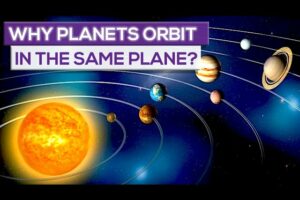
Planets emerge from the residual material in the accretion disk surrounding a newborn star. Dust particles within this disk collide and adhere, gradually forming larger bodies called planetesimals. Through continued accumulation and gravitational interactions, these planetesimals grow into protoplanets and eventually mature planets. The gravitational forces within the disk also influence orbital dynamics, leading to diverse planetary system architectures.
Gravity’s Influence on Galactic Structures
On a much grander scale, gravity governs the assembly and evolution of galaxies. Early in the universe’s history, slight density variations allowed gravity to gather matter into dense regions known as dark matter halos. These halos acted as gravitational wells, attracting ordinary matter that cooled and condensed to form the first stars and galaxies.
- Galaxy Formation:
Gravity shaped the morphology of galaxies, producing spirals, ellipticals, and irregular forms. - Galactic Dynamics:
The gravitational pull maintains the coherent rotation and structure of galaxies over billions of years. - Galactic Interactions:
Collisions and mergers driven by gravity have significantly influenced galactic evolution, triggering starbursts and structural transformations.
Interplay Between Gravity, Dark Matter, and Dark Energy
Understanding gravity’s full impact requires considering its interaction with dark matter and dark energy. While gravity pulls matter together to form cosmic structures, dark energy causes the accelerated expansion of the universe, pushing galaxies apart. Dark matter, an invisible form of mass, provides the gravitational scaffolding essential for galaxy formation. The balance and tension between these forces remain central challenges in contemporary astrophysics.
Why Gravity Is Essential in the Universe
Gravity is the fundamental force that sculpts the universe’s architecture. It transforms diffuse particles into stars, organizes stars into planetary systems, and arranges these systems into galaxies. Without gravity, the cosmos would lack the structure and complexity necessary for the existence of planets, stars, and ultimately life. Its subtle yet profound influence underpins the cosmic order and continues to be a key focus of scientific inquiry.
Common Misconceptions About Gravity in Astronomy
Gravity only pulls objects downward.
Gravity is a universal force that attracts masses toward each other in all directions, not just downward on Earth.
Stars form instantly.
Star formation is a gradual process involving the slow collapse of molecular clouds over millions of years.
Gravity alone explains the universe’s expansion.
While gravity pulls matter together, dark energy drives the accelerated expansion of the universe.
Real-World Examples of Gravity’s Cosmic Role
Our own solar system exemplifies gravity’s role in cosmic formation. The Sun formed from a collapsing molecular cloud, with planets coalescing from the surrounding accretion disk. The Milky Way galaxy, a vast spiral of billions of stars, is held together by gravity and shaped by its interactions with neighboring galaxies. Observations of galaxy collisions, such as the anticipated merger between the Milky Way and the Andromeda galaxy, showcase gravity’s ongoing influence on cosmic evolution.
Conclusion: The Cosmic Dance of Gravity
Gravity is the silent, persistent force weaving the universe’s grand tapestry. From the smallest particles to the largest galactic clusters, it governs the formation, structure, and evolution of cosmic bodies. As we gaze at the night sky, we witness the enduring legacy of gravity’s work-a cosmic dance that has fascinated humanity for millennia and continues to inspire scientific discovery.
FAQ
What is gravity?
Gravity is the force that attracts two bodies towards each other, influencing the formation of stars and galaxies.
What are dark matter and dark energy?
Dark matter is an invisible mass that provides gravitational support for galaxies, while dark energy drives the accelerated expansion of the universe.




Leave a Reply