
Short Answer
Definition of Dark Energy
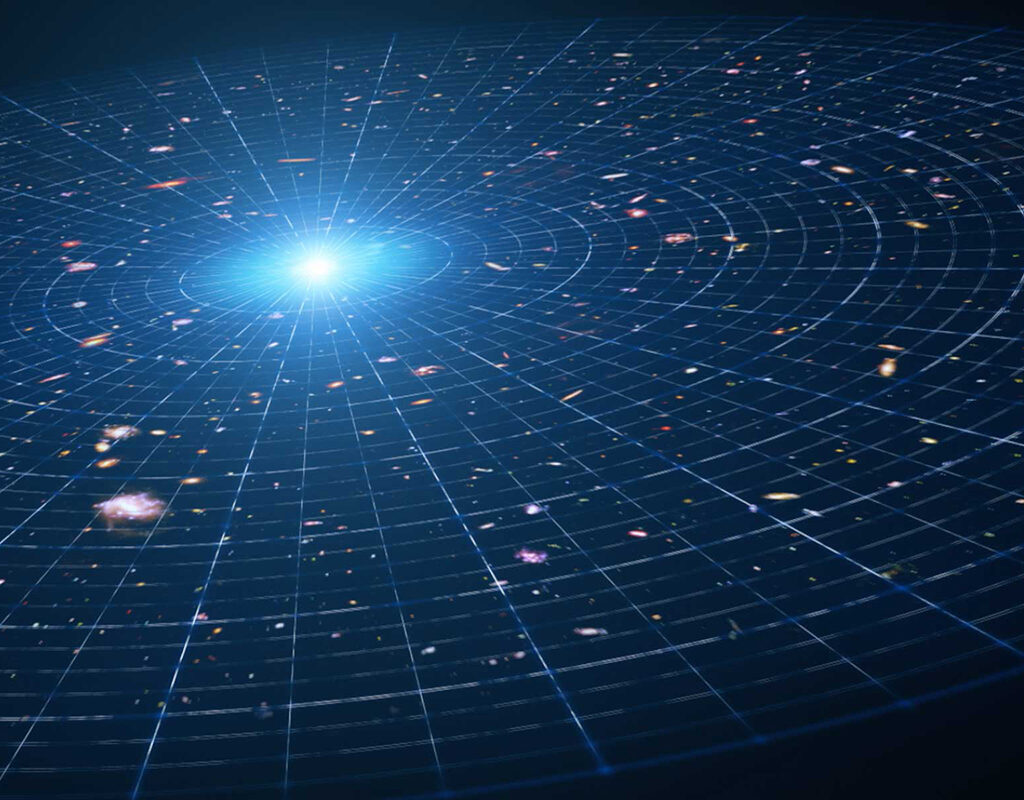
Dark energy is a mysterious and dominant component of the universe, accounting for roughly 68% of its total energy content. It is an enigmatic force responsible for the accelerated expansion of the cosmos, influencing the structure and evolution of spacetime on the largest scales. Despite its significance, dark energy remains poorly understood, detected only through its gravitational effects on cosmic expansion.
- Role in the Universe:
Dark energy acts as a repulsive force that counteracts gravity, pushing galaxies apart and causing the universe’s expansion to speed up. - Discovery:
Observations in the late 1990s, particularly of distant supernovae, revealed that the universe’s expansion is accelerating, a phenomenon attributed to dark energy.
Impact of Dark Energy on Cosmic Expansion
Dark energy fundamentally alters the dynamics of the universe’s expansion. Without it, the gravitational attraction between matter and energy would dominate, slowing down or even reversing the expansion. Instead, dark energy provides a persistent outward pressure that causes galaxies to recede from each other at an increasing rate, shaping the large-scale structure of the cosmos.
Hypothetical Scenario: Absence of Dark Energy
Imagining a universe devoid of dark energy invites profound speculation about cosmic evolution and fate. If dark energy were to suddenly disappear, the repulsive force accelerating expansion would vanish, leaving gravity as the prevailing influence. This shift would initiate a deceleration in cosmic expansion, altering the universe’s trajectory dramatically.
Consequences for Cosmic Expansion and Structure
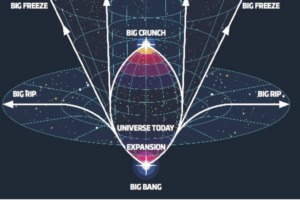
In the absence of dark energy, the universe’s expansion would slow down as gravitational forces pull matter together more strongly. Depending on the density of matter and radiation relative to a critical threshold, the universe might:
- Continue expanding at a decreasing rate if matter density is low.
- Halt expansion and begin contracting if matter density exceeds the critical density, potentially leading to a “big crunch.”
This reversal would mark a stark departure from the current accelerating expansion, potentially culminating in a cosmic collapse.
Effects on Galaxy Formation and Star Birth
Without the expansive push of dark energy, galaxy clusters could start merging more rapidly, reversing the current trend of cosmic dispersal. This increased gravitational interaction might trigger bursts of star formation due to collisions and gas compression, or conversely, accelerate the depletion of interstellar gas, limiting future stellar creation.
Influence on Cosmic Geometry and Fate
The universe’s shape and ultimate destiny are closely tied to dark energy’s properties, often described by its equation of state, which relates pressure to energy density. Without dark energy:
- The universe’s geometry, currently considered flat and open, might shift toward a closed configuration.
- This change could alter the physical laws governing expansion and contraction phases, potentially leading to a cyclical or collapsing universe.
Implications for Cosmological Measurements
The disappearance of dark energy would significantly affect key cosmological parameters:
- Hubble Constant:
The rate of cosmic expansion, currently increasing, would slow down, causing the Hubble constant to decrease over time and reshaping our understanding of cosmic distances and timelines. - Cosmic Microwave Background (CMB):
The CMB’s temperature fluctuations and anisotropies, which encode the universe’s expansion history, would evolve differently, potentially altering models of the early universe.
Dark Energy and Quantum Vacuum Energy
Dark energy is often interpreted as vacuum energy embedded in the quantum fabric of spacetime. Its disappearance would challenge current theories by:
- Disrupting the interplay between quantum fields and gravity.
- Complicating efforts to unify quantum mechanics with general relativity.
- Raising questions about the fundamental vacuum state of spacetime.
Speculative Outcomes and Theoretical Considerations
The sudden loss of dark energy could trigger unprecedented cosmic phenomena, such as:
- Phase transitions in spacetime geometry.
- Instabilities that threaten the universe’s structural integrity.
- Potential cycles of cosmic destruction and rebirth, suggesting alternate evolutionary paths for the cosmos.
Current Understanding and Research Frontiers
While the disappearance of dark energy remains a theoretical exercise, its nature is a central question in modern cosmology. Ongoing observations of distant galaxies, supernovae, and the cosmic microwave background aim to:
- Determine whether dark energy’s properties change over time.
- Refine measurements of cosmic expansion and geometry.
- Unveil the fundamental physics underlying this elusive force.
Significance of Dark Energy in Cosmology
Dark energy is crucial for understanding the universe’s past, present, and future. It governs the large-scale structure, influences galaxy formation, and shapes the ultimate fate of the cosmos. Contemplating its absence highlights the delicate balance of forces that sustain the universe and underscores the vast mysteries still awaiting discovery.
FAQ
What is dark energy?
Dark energy is a mysterious force that makes up about 68% of the universe, causing its accelerated expansion.
What would happen if dark energy vanished?
Without dark energy, the universe would slow its expansion, potentially leading to a collapse.
How does dark energy affect galaxy formation?
Dark energy influences the distance between galaxies, and its absence could lead to increased gravitational interactions.

Leave a Reply