
Short Answer
Definition of the Cosmic Microwave Background
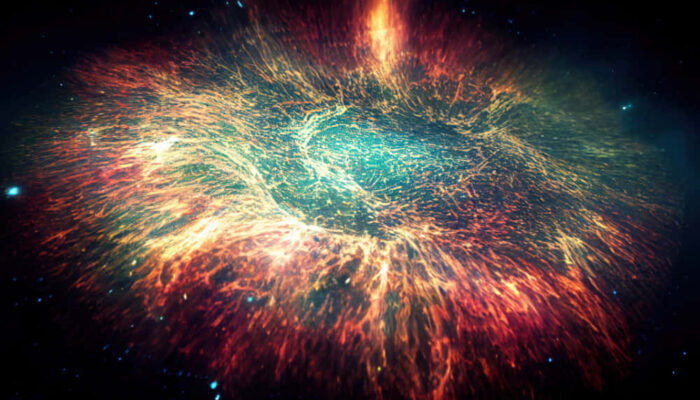
The Cosmic Microwave Background (CMB) is a pervasive, faint radiation that fills the entire universe, serving as a relic from its earliest epochs. It represents the afterglow of the Big Bang, providing a snapshot of the cosmos when it first became transparent to light. This radiation is observed today as a nearly uniform microwave signal detectable in every direction, offering crucial insights into the universe’s infancy and subsequent evolution.
Origins and Formation of the CMB
The CMB originated during a critical phase in the early universe known as the recombination era. Initially, the universe was an extremely hot, dense plasma composed of photons, electrons, and baryons. In this state, photons were continuously scattered by free electrons, preventing light from traveling freely and rendering the universe opaque. This period, often described as a primordial fog, lasted for several hundred thousand years after the Big Bang.
As the universe expanded, it cooled gradually to about 3,000 Kelvin. At this temperature, electrons combined with protons to form neutral hydrogen atoms-a process termed “recombination,” although it was the first formation of atoms rather than a reassembly. This transition was pivotal because it allowed photons to decouple from matter and move unimpeded through space. These freed photons constitute the Cosmic Microwave Background radiation we detect today.
Physical Mechanism Behind the CMB
Following recombination, photons began traveling freely across the expanding universe. Over billions of years, the expansion stretched their wavelengths from the visible and infrared spectrum into the microwave range, a phenomenon known as cosmological redshift. Consequently, the CMB is essentially a fossilized imprint of the universe at the moment it became transparent, providing a direct observational window into conditions over 13 billion years ago.
Temperature Anisotropies and Their Significance
While the CMB is remarkably uniform, it exhibits tiny temperature fluctuations on the order of one part in 100,000. These anisotropies are the imprints of primordial quantum fluctuations that were magnified during the inflationary epoch preceding recombination. These initial irregularities in matter density served as the seeds for the formation of large-scale cosmic structures such as galaxies, clusters, and the cosmic web, linking the smooth background radiation to the complex universe observed today.
Role of Particle Physics in the Early Universe
The creation of the CMB is deeply intertwined with fundamental particle physics. The behavior of forces like electromagnetism, and the strong and weak nuclear interactions under extreme early-universe conditions, influenced the plasma state and the subsequent formation of neutral atoms. Studying the CMB allows physicists to test theories of high-energy physics, constrain neutrino properties, and explore the nature of dark matter and dark energy, which have shaped cosmic evolution from the very beginning.
Insights into Cosmic Geometry and Topology
Analysis of the CMB’s angular power spectrum, which quantifies the scale and intensity of temperature variations, has provided compelling evidence that the universe is spatially flat on large scales. This finding supports the Big Bang model and the theory of cosmic inflation, reinforcing our understanding of the universe’s overall shape and structure.
Why the Cosmic Microwave Background Is Important
The CMB is more than a mere remnant of the past; it is a dynamic archive containing encoded information about the universe’s earliest moments. It continues to inspire research into unresolved cosmological questions, such as the origin of primordial fluctuations and the mechanisms driving inflation. By studying the CMB, scientists gain invaluable insights into the fundamental processes that shaped the cosmos.
Common Misconceptions About the CMB
The term “recombination” implies electrons and protons were previously combined.
In cosmology, “recombination” refers to the first time electrons and protons combined to form neutral atoms, not a reassembly.
The CMB is uniform without any variations.
Although highly uniform, the CMB contains tiny temperature fluctuations that are crucial for understanding the formation of cosmic structures.
The CMB photons have always been microwaves.
Initially, these photons were much higher energy (visible or infrared) but were redshifted into the microwave range due to the universe’s expansion.
Real-World Examples and Observations
The CMB has been extensively studied through satellite missions such as COBE, WMAP, and Planck, which have mapped its temperature fluctuations with increasing precision. These observations have refined cosmological parameters, confirmed the flatness of the universe, and provided evidence supporting inflationary theory. The CMB also serves as a critical tool in testing models of dark matter and dark energy, influencing modern astrophysics and cosmology.
Conclusion: The Cosmic Microwave Background as a Window to the Past
The Cosmic Microwave Background acts as a bridge connecting present-day observers with the universe’s primordial past. Each photon in the CMB carries the legacy of the universe’s first moments, illuminating the transition from an opaque, chaotic plasma to a transparent cosmos filled with light. Studying the CMB not only reveals where we come from but also opens pathways to understanding the vast, unexplored mysteries of the universe’s origin and evolution.
FAQ
What is the Cosmic Microwave Background?
The Cosmic Microwave Background (CMB) is a faint radiation left over from the Big Bang, providing a snapshot of the universe when it first became transparent to light.
How did the CMB form?
The CMB formed during the recombination era when the universe cooled enough for electrons and protons to combine into neutral hydrogen atoms, allowing photons to travel freely.
Why is the CMB important?
The CMB is crucial for understanding the early universe, cosmic structure formation, and testing theories of dark matter and dark energy.



Leave a Reply