
Short Answer
Understanding the Cosmic Forces: Gravity and Dark Energy
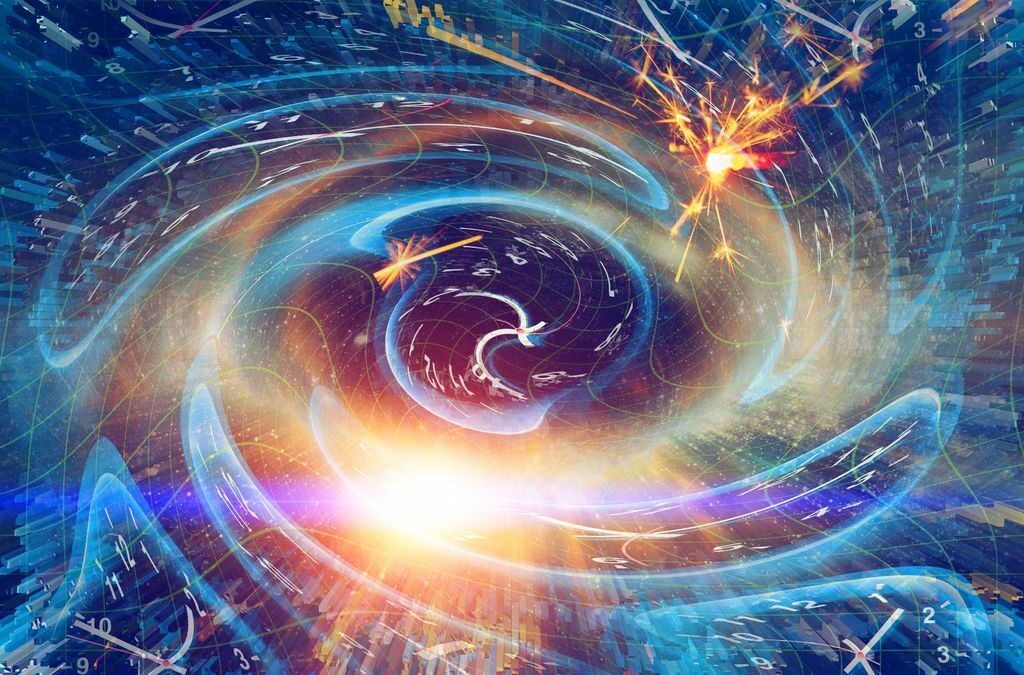
Within the vast expanse of the cosmos, two monumental forces engage in a profound interaction that shapes the universe’s evolution: gravity and dark energy. Gravity acts as the universe’s primordial architect, gradually assembling matter into stars, galaxies, and clusters-creating luminous islands amid the vast darkness of space. In contrast, dark energy is an elusive force that drives the universe’s accelerated expansion, subtly yet persistently stretching the fabric of spacetime. This ongoing cosmic interplay raises a compelling question for scientists and cosmologists alike: can gravity ever overcome the influence of dark energy?
Definition of Gravity and Dark Energy
To appreciate the significance of this cosmic contest, it is essential to define these two fundamental phenomena.
- Gravity:
Gravity is the fundamental force of attraction between masses. It governs the motion of objects from everyday experiences, such as falling apples, to the grand scale of celestial bodies orbiting stars and galaxies clustering together. This force is responsible for the formation and maintenance of the cosmic web that structures the observable universe. - Dark Energy:
Dark energy is a mysterious form of energy that permeates all of space and is believed to be responsible for the accelerating expansion of the universe. Unlike gravity, which pulls matter together, dark energy exerts a repulsive effect, pushing spacetime outward. Its nature remains largely theoretical, but observations such as distant supernovae, galaxy distributions, and the cosmic microwave background provide strong evidence for its existence.
Mechanics of the Cosmic Interaction
Gravity and dark energy operate on vastly different principles and scales. Gravity’s strength diminishes with distance, binding matter into complex structures. Dark energy, however, appears uniform and constant throughout space, exerting a repulsive force that accelerates the universe’s expansion. This creates a dynamic tension: gravity attempts to pull matter together, while dark energy drives it apart.
The Cosmic Battlefield: A Metaphorical Perspective
Envision the universe as a grand battlefield where gravity stands as a steadfast fortress, constructed from the accumulated mass of matter over billions of years. Dark energy acts like a rising tide, slowly but inexorably eroding this fortress by accelerating the expansion of space. Current observations suggest that this tide is gaining ground, pushing the universe toward an ever-faster expansion that challenges gravity’s hold.
Cosmological Parameters Influencing the Outcome
The ultimate fate of this cosmic struggle depends on several key cosmological factors:
- Critical Density of Matter:
The amount of matter in the universe determines gravity’s overall strength. If matter density were high enough, gravity could slow or reverse expansion, potentially leading to a “Big Crunch.” - Expansion Rate:
The speed at which the universe expands influences whether gravity can counteract dark energy’s push. - Equation of State of Dark Energy:
This parameter describes how dark energy’s density changes over time, affecting its influence on cosmic expansion.
Current empirical data indicate that the universe’s matter density is insufficient to halt the acceleration caused by dark energy.
Evolutionary Theories of Dark Energy
Dark energy may not be a constant force. Some theoretical models, such as quintessence, propose that dark energy’s strength varies over time, potentially waxing and waning like a cosmic pulse. If dark energy weakens, gravity might regain dominance, allowing cosmic structures to form more robustly and slowing expansion. Conversely, if dark energy intensifies, a scenario known as the “Big Rip” could occur, where all gravitationally bound systems-from galaxies to atoms-are torn apart, leaving gravity powerless.
Gravity’s Dominance on Local Scales
Despite dark energy’s overwhelming influence on the large-scale structure of the universe, gravity remains the dominant force within smaller regions such as galaxies and clusters. Here, gravitational attraction continues to govern the motion of stars and galaxies, enabling the birth and death of stars and maintaining local cosmic neighborhoods. However, beyond these gravitationally bound systems, accelerated expansion causes distant galaxies to recede at speeds exceeding that of light, effectively isolating them from our observable universe.
Philosophical and Scientific Significance
The interplay between gravity and dark energy transcends mere physical phenomena, touching on profound philosophical questions about the nature of the universe and our place within it. This cosmic tug-of-war challenges human understanding by involving forces and timescales far beyond everyday experience, inspiring awe and driving scientific inquiry into the fundamental workings of reality.
Ongoing Research and Observational Efforts
Advancements in observational astronomy continue to refine our knowledge of gravity and dark energy. Techniques such as mapping galaxy distributions, analyzing the cosmic microwave background, and utilizing advanced space telescopes provide critical data. Each observation contributes to unraveling whether gravity might one day halt or reverse the acceleration driven by dark energy, or if the universe’s expansion will continue unabated.
Conclusion: The Cosmic Dance of Gravity and Dark Energy
Gravity and dark energy engage in a complex and ongoing cosmic dance that determines the universe’s ultimate destiny. Gravity, the force that builds and sustains cosmic structures, and dark energy, the mysterious driver of accelerated expansion, together shape the past, present, and future of all existence. Whether gravity will eventually triumph or remain forever outpaced by dark energy remains one of the most profound open questions in cosmology, inviting humanity to explore deeper into the mysteries of the cosmos.
FAQ
What is gravity?
Gravity is the force of attraction between masses, governing the motion of celestial bodies.
What is dark energy?
Dark energy is a mysterious energy form causing the accelerated expansion of the universe.
How do gravity and dark energy interact?
Gravity pulls matter together while dark energy pushes it apart, creating a cosmic tension.
What are the implications of their interaction?
The interplay influences the universe's structure and its ultimate fate.



Leave a Reply