

Short Answer
Understanding the Universe: A Cosmic Tapestry
Envision the universe as an ancient, intricate tapestry woven from threads of light, matter, space, and time. For centuries, scientists have endeavored to untangle and reweave these threads in an attempt to decode the cosmic story. Initially perceived as elegantly straightforward, this narrative has gradually revealed layers of complexity. Central to this story are the fundamental forces that govern the cosmos, with gravity playing a pivotal role in explaining the movements of celestial bodies, planetary orbits, and the formation of cosmic structures. However, recent discoveries challenge the completeness of our understanding, raising a profound question: Could our current grasp of the universe be fundamentally flawed?
Historical Perspectives on Gravity
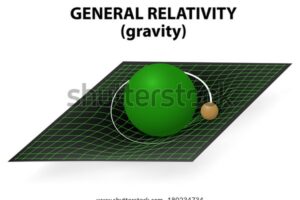
The classical view of physics, epitomized by Newton’s law of universal gravitation, offered a clear and poetic framework. It imagined the universe as a grand ballet, orchestrated by invisible gravitational forces that were predictable and consistent. This perspective was revolutionized by Einstein’s general theory of relativity, which redefined gravity not as a force but as the curvature of spacetime caused by mass and energy. This elegant theory has endured for over a century, successfully predicting phenomena ranging from black holes to the expansion of the universe.
Challenges to Conventional Cosmology
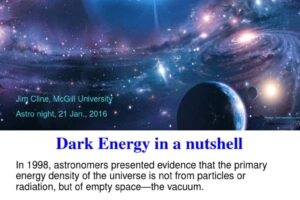
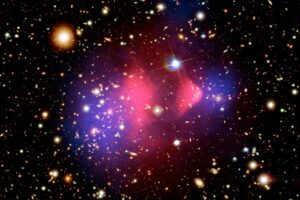
Despite the success of classical and relativistic physics, recent astronomical observations have introduced puzzling phenomena that resist integration into existing models. The unexpected rotation speeds of galaxies, gravitational lensing effects, and the accelerating expansion of the universe have led to the introduction of dark matter and dark energy-enigmatic entities that have yet to be directly observed but are inferred from their gravitational effects. This situation presents a paradox: Are these mysterious components genuine parts of the cosmos, or are they artifacts arising from the limitations of our current theories?
Reevaluating Gravity: New Theoretical Approaches
In light of these anomalies, some physicists propose that the fundamental description of gravity itself may require revision. If our current understanding is incomplete or incorrect, the very fabric of reality might demand a new conceptual framework. Alternative theories suggest modifications to the equations governing gravity, propose novel interactions, or hypothesize that gravity behaves differently at various cosmic scales. This shift is akin to discovering that the loom weaving the cosmic tapestry operates under principles far different from those previously assumed.
Gravity as a Complex Signal
One compelling analogy likens gravity to a whisper echoing through a vast hall. For centuries, scientists have interpreted this whisper as a steady, clear message. However, emerging evidence suggests that this signal may be distorted, fragmented, or accompanied by subtle harmonics previously undetected. These nuances could revolutionize our understanding of phenomena such as black hole dynamics and the ultimate shape and destiny of the universe.
The Intersection of Quantum Mechanics and Gravity
Quantum mechanics, which governs the behavior of the smallest particles, introduces a discordant element into the cosmological narrative. Reconciling quantum theory with general relativity remains one of the most significant challenges in physics. The incompatibility between these two frameworks resembles two master threads that resist being woven together without fraying. If gravity is misunderstood, the elusive theory of quantum gravity might unlock deeper cosmic truths. Some hypotheses even suggest that gravity is not a fundamental force but an emergent phenomenon arising from more basic interactions.
Philosophical and Scientific Implications
These evolving perspectives provoke profound philosophical questions about the nature of scientific knowledge. Rather than a fixed, absolute truth, science emerges as a dynamic, self-correcting process. The universe is not a static manuscript but a living document, continually rewritten as new discoveries illuminate previously hidden aspects. This fluidity challenges traditional views of science as a linear progression toward certainty.
The Significance of Questioning Established Theories
Embracing the possibility that foundational concepts like gravity might be incorrect is not a sign of failure but an invitation to intellectual exploration. It encourages scientists, philosophers, and curious minds to venture into uncharted realms where intuition may falter, and abstract reasoning prevails. The challenge lies in deciphering a cosmos that may operate under principles stranger and more beautiful than previously imagined.
Conclusion: The Ever-Unfolding Cosmic Mystery
Ultimately, whether the current framework of gravity withstands future scrutiny or is replaced by revolutionary insights, the journey enriches our connection to the cosmos. The universe remains a profound enigma, a vast tapestry yet to be fully unraveled. It invites us to reflect not only on what we know but also on the very nature of knowledge itself-a testament to humanity’s enduring spirit of discovery.
FAQ
What is the main focus of the article?
The article focuses on questioning the completeness of current theories of gravity and their implications for our understanding of the universe.
What challenges to existing theories are discussed?
The article discusses challenges posed by dark matter, dark energy, and discrepancies in astronomical observations.



Leave a Reply