
Short Answer
Overview of the James Webb Space Telescope
The James Webb Space Telescope (JWST) represents a groundbreaking advancement in astronomical observation, poised to revolutionize our comprehension of the universe. Far beyond a mere successor to the Hubble Space Telescope, JWST is engineered to explore cosmic phenomena that have remained elusive due to distance, time, and cosmic dust. Its mission promises to illuminate the earliest epochs of the cosmos and challenge existing scientific paradigms with unprecedented clarity and depth.
Definition and Purpose
The JWST is a large, space-based observatory designed primarily to observe the universe in the infrared spectrum. This capability allows it to detect faint signals from the earliest stars and galaxies, which are otherwise obscured or invisible to optical telescopes. By capturing this ancient light, JWST acts as a time machine, offering insights into the universe’s infancy and the processes that shaped its evolution.
- Infrared Observation:
JWST’s instruments are optimized for infrared wavelengths, enabling it to penetrate cosmic dust clouds and observe objects hidden from visible light telescopes. - Cosmic Dawn Exploration:
The telescope aims to study the formation of the first stars and galaxies, shedding light on the universe’s earliest structures. - Exoplanet Atmosphere Analysis:
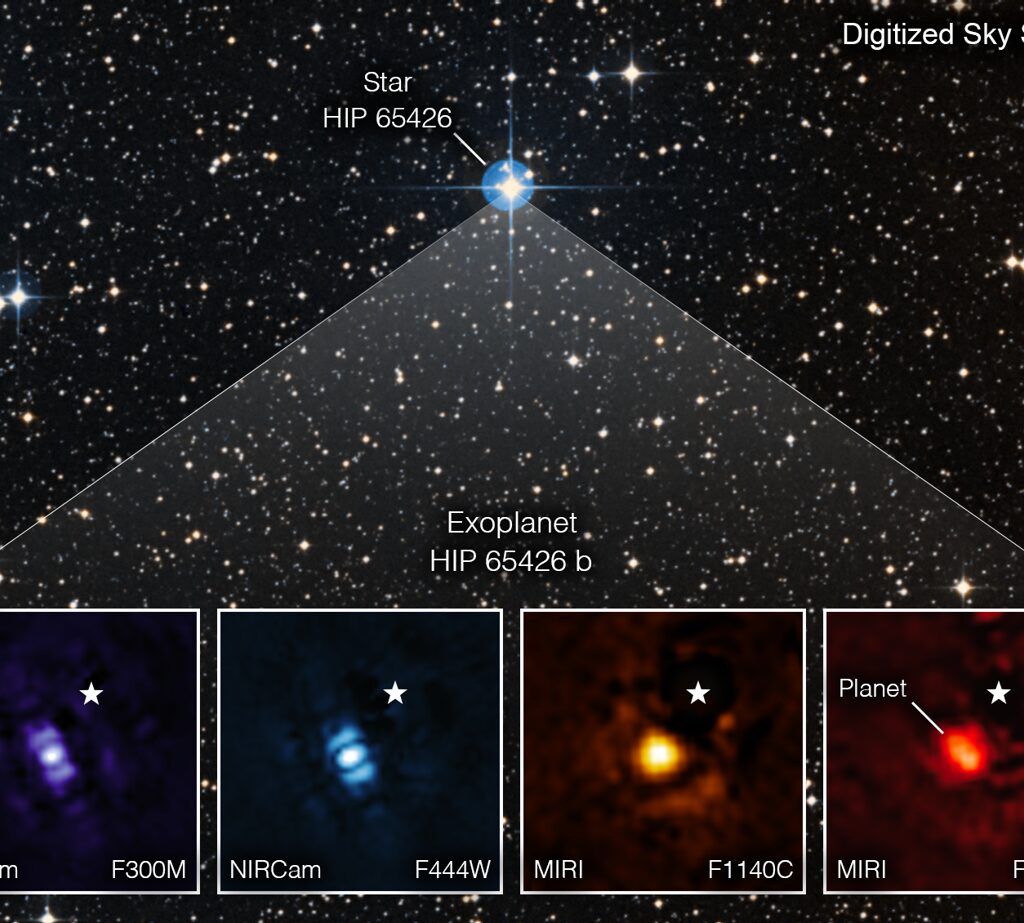
JWST will analyze the chemical composition of exoplanet atmospheres, searching for potential biosignatures that could indicate the presence of life.
Infrared Astronomy and Redshift
Infrared astronomy is crucial for studying the distant universe because the expansion of space stretches light from ancient celestial bodies into longer, infrared wavelengths-a process known as redshift. JWST’s sensitive infrared detectors capture this shifted light, allowing astronomers to observe events that occurred billions of years ago, shortly after the Big Bang. This capability is essential for understanding the timeline and mechanisms of cosmic evolution.
Engineering Challenges and Deployment
Deploying JWST involved overcoming significant technical hurdles. The telescope was positioned nearly one million miles from Earth at the second Lagrange point (L2), a gravitationally stable location that provides a clear, unobstructed view of space while minimizing interference from solar radiation. To maintain its sensitivity, JWST is equipped with a massive sunshield-comparable in size to a tennis court-that protects its instruments from heat and light.
Unlike the Hubble Space Telescope, which could be serviced by astronauts, JWST’s remote location means it must operate flawlessly without the possibility of repairs. This places immense pressure on the precision of its deployment and operation, as any malfunction could jeopardize the mission’s success.
Scientific Objectives and Potential Discoveries
JWST’s scientific goals are ambitious and multifaceted, encompassing the study of the early universe, galaxy formation, and the search for life beyond Earth. Its advanced spectroscopy tools will dissect the chemical makeup and physical properties of distant celestial bodies, providing insights into their origins and evolution.
- Early Universe Studies:
Observing the first generation of stars and galaxies to understand how the cosmos transitioned from darkness to light. - Dark Matter and Cosmology:
Potentially detecting indirect evidence of dark matter interactions and refining models of cosmic structure. - Exoplanet Research:
Characterizing atmospheres of planets orbiting other stars to identify signs of habitability or biological activity.
Impact on Astrophysics and Cosmology
The data collected by JWST is expected to challenge and possibly overturn existing astrophysical theories. By providing detailed observations of phenomena previously beyond reach, the telescope could redefine our understanding of star formation, galaxy evolution, and the fundamental forces shaping the universe. Its findings may also inspire new scientific disciplines and methodologies.
Cultural and Philosophical Significance
Beyond its scientific mission, JWST embodies humanity’s enduring curiosity and determination to explore the unknown. It serves as a symbol of international cooperation, technological innovation, and the quest for knowledge that transcends geopolitical boundaries. The telescope invites us to reconsider our place in the cosmos and to remain open to discoveries that may challenge deeply held beliefs about life and the universe.
Addressing Unexpected Discoveries
One of the most exciting aspects of JWST is its potential to reveal phenomena that defy current scientific understanding. Such discoveries could prompt a reevaluation of established theories and encourage a flexible, open-minded approach to scientific inquiry. The telescope’s mission underscores the importance of embracing uncertainty and the possibility of rewriting the cosmic narrative.
Conclusion: A New Era of Cosmic Exploration
The James Webb Space Telescope stands as a monumental achievement in space science, poised to unlock secrets of the universe that have remained hidden for eons. Its advanced technology and ambitious objectives mark the beginning of a transformative chapter in astronomy, promising to deepen our connection to the cosmos and inspire generations to come. As JWST embarks on its journey, it challenges humanity to expand the horizons of knowledge and imagination, heralding discoveries that could reshape our understanding of existence itself.
FAQ
What is the main purpose of the James Webb Space Telescope?
The main purpose of the JWST is to observe the universe in infrared light, enabling the study of the earliest stars and galaxies, as well as the chemical composition of exoplanet atmospheres.
How does the JWST differ from the Hubble Space Telescope?
Unlike Hubble, which observes in visible light, the JWST is designed for infrared observations, allowing it to see through cosmic dust and study objects that are otherwise invisible.
What are some of the scientific goals of the JWST?
Some goals include studying the formation of the first stars and galaxies, analyzing exoplanet atmospheres, and investigating the role of dark matter in the universe.

Leave a Reply