
Short Answer
Definition of Interstellar Objects
Interstellar objects are celestial bodies that originate outside our solar system and traverse the vast expanses between stars. Unlike typical asteroids or comets bound by the Sun’s gravity, these objects journey through interstellar space and occasionally pass through our solar neighborhood. Their transient visits offer rare opportunities to study materials and phenomena from distant regions of the galaxy.
- Example:
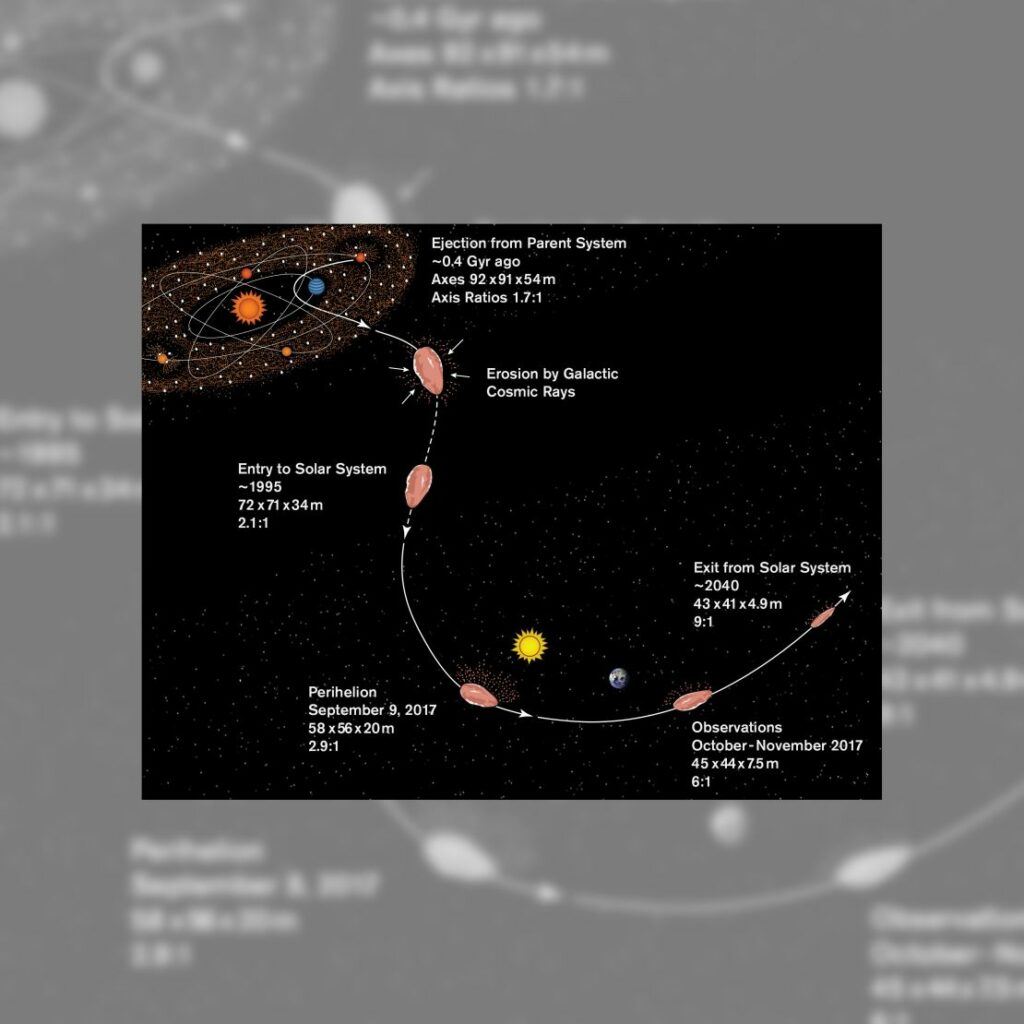
‘Oumuamua, the first confirmed interstellar visitor detected in 2017, exhibited unusual physical and orbital characteristics that distinguished it from known solar system objects. - Characteristics:
These objects often move at high velocities and display unique shapes, compositions, and trajectories that challenge conventional classifications.
Historical Context and Significance of ‘Oumuamua
Discovered in 2017, ‘Oumuamua marked a milestone as the inaugural interstellar object observed passing through our solar system. Its elongated, cigar-like form and unexpected acceleration defied typical cometary behavior, sparking widespread intrigue and debate among astronomers. Due to its rapid transit and limited observation window, many aspects of its nature remain enigmatic, highlighting the need for advanced observational tools to study future interstellar visitors in greater detail.
Observational Challenges of Interstellar Visitors
Interstellar objects present significant difficulties for astronomers due to their fleeting presence and swift movement through the solar system. They often appear suddenly, travel at high speeds, and quickly fade from view, leaving only narrow timeframes for detection and analysis. Ground-based telescopes must rapidly identify these objects to enable follow-up observations, but even then, their distance and faintness can limit data quality.
Capabilities of the James Webb Space Telescope (JWST)
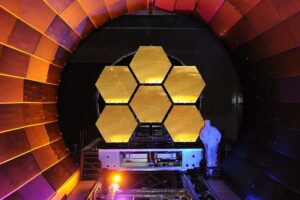
The James Webb Space Telescope, positioned near the Earth-Sun L2 Lagrange point, is equipped with cutting-edge technology designed to observe the universe primarily in the infrared spectrum. Its 6.5-meter primary mirror grants exceptional light-gathering ability and resolution, enabling detailed spectroscopic studies of distant and faint objects.
- Infrared Sensitivity:
JWST can detect heat emissions and molecular signatures invisible to optical telescopes, making it ideal for analyzing the composition of objects with low visible light reflectance. - Spectroscopy:
By breaking down light into its component wavelengths, JWST can identify the chemical makeup and surface properties of celestial bodies.
Limitations of JWST in Tracking Interstellar Objects
Despite its advanced instrumentation, JWST faces constraints when observing fast-moving interstellar objects. Its orbit and pointing capabilities are optimized for deep-space, relatively stationary targets rather than rapidly moving bodies near the inner solar system. Interstellar visitors like ‘Oumuamua are most detectable near the Sun, where their swift motion against the starry background challenges JWST’s tracking precision. Therefore, early detection by terrestrial surveys is crucial to enable timely JWST observations.
Detection and Future Prospects for Interstellar Object Studies
The rarity and elusive nature of interstellar objects necessitate enhanced detection strategies. Prior to ‘Oumuamua, no such objects had been conclusively identified, underscoring the need for more sensitive and rapid sky surveys. Upcoming observatories and survey programs aim to scan large sky areas with increased frequency and sensitivity, improving the chances of discovering new interstellar visitors. Coordinated efforts between ground-based detectors and space telescopes like JWST will be essential to maximize scientific returns from these fleeting encounters.
Scientific Importance of Studying Interstellar Objects
Interstellar objects serve as natural probes into the composition and history of distant planetary systems. They carry chemical and structural information from beyond our solar system, potentially revealing the processes of planetary formation and material exchange across the galaxy. Infrared spectral analysis by JWST can uncover organic molecules, ices, minerals, and complex compounds, offering insights into astrobiology and the potential for life-building materials to be distributed through interstellar space.
Astrobiological Implications
Investigating the molecular content of interstellar visitors may shed light on the presence of prebiotic chemicals capable of seeding life. These objects could be fragments of exoplanets, comets, or unknown celestial bodies, providing clues about the universality of life’s chemical precursors. Such research extends beyond pure scientific inquiry, touching on humanity’s quest to understand its origins and the broader cosmic context of life.
Summary and Outlook
While JWST’s design excels at probing distant, faint cosmic phenomena, observing transient, fast-moving interstellar objects remains a complex challenge. Its infrared capabilities and high sensitivity position it as a powerful tool for compositional studies, contingent on early detection and favorable trajectories. As detection technologies advance and collaboration between observatories strengthens, the potential for JWST to study future interstellar visitors grows, promising to enrich our understanding of the galaxy’s dynamic and interconnected nature.
Philosophical and Cultural Reflections
Interstellar objects are more than scientific curiosities; they are cosmic messengers that connect us to the broader universe. Their brief passages invite reflection on the vastness of space and the shared history of matter across stellar systems. Utilizing JWST to decode their mysteries embodies humanity’s enduring drive to explore, comprehend, and find meaning in the cosmos beyond our immediate surroundings.
FAQ
What is ‘Oumuamua?
‘Oumuamua is the first confirmed interstellar object observed passing through our solar system, discovered in 2017.
Why is JWST important for studying interstellar objects?
JWST's infrared capabilities allow it to analyze the composition of faint objects that are not easily detectable by optical telescopes.


Leave a Reply