
Short Answer
Definition of Gamma Rays
Gamma rays are the most energetic form of electromagnetic radiation, characterized by extremely short wavelengths and exceptionally high frequencies. Originating from some of the universe’s most violent and energetic events, these rays carry immense energy and can penetrate matter with remarkable intensity.
- Nature:
Gamma rays are photons, quantum particles of light, but with energies far exceeding those of visible light or X-rays. - Cosmic Sources:
They are emitted by phenomena such as supernova explosions, blazars, and rapidly spinning neutron stars known as pulsars.
Origins and Terrestrial Production
While gamma rays are often associated with distant cosmic events, they can also be generated on Earth through various physical processes. Their terrestrial production involves nuclear transitions, particle interactions, and advanced technological methods that replicate, on a smaller scale, the extreme conditions found in space.
Natural Terrestrial Sources
On Earth, gamma rays primarily arise from radioactive decay and nuclear reactions. These processes involve sudden changes in the energy states of atomic nuclei or the annihilation of matter and antimatter, releasing high-energy photons.
- Radioactive Decay:
Certain unstable isotopes emit gamma rays as they transition to more stable forms. - Nuclear Reactions:
Interactions within nuclear reactors or particle collisions can produce gamma radiation.
Engineered Gamma Ray Generation
Modern technology enables the deliberate creation of gamma rays through sophisticated equipment such as particle accelerators and high-powered lasers.
- Particle Accelerators:
These devices accelerate charged particles to near-light speeds, causing them to emit gamma rays when they collide with targets or magnetic fields. - Synchrotron Radiation:
Charged particles moving in circular paths within magnetic fields emit radiation that can extend into the gamma-ray spectrum at high energies. - Laser-Induced Gamma Rays:
Ultra-intense laser pulses can accelerate electrons to relativistic speeds, which then interact with matter or photons to produce gamma-ray bursts.
Mechanisms Behind Gamma Ray Production
Gamma rays are generated through processes involving high-energy transitions and particle interactions. Key mechanisms include nuclear energy state changes, particle annihilation, and electromagnetic radiation from accelerated charged particles.
Nuclear Transitions and Annihilation
When nucleons within an atomic nucleus rearrange or when matter meets antimatter, the resulting energy release manifests as gamma photons.
Synchrotron and Inverse Compton Scattering
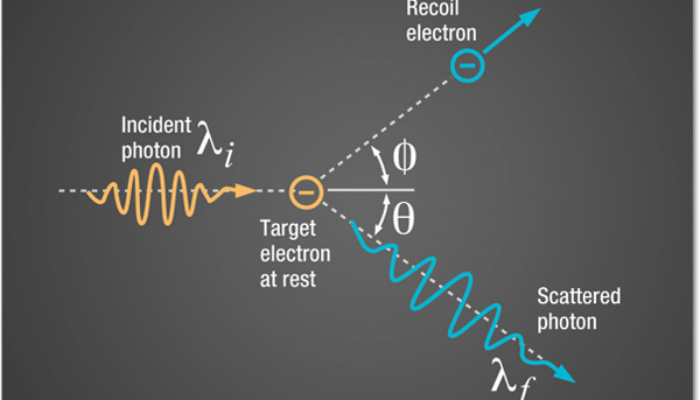
Charged particles accelerated in magnetic fields emit synchrotron radiation, which can reach gamma-ray energies. Additionally, inverse Compton scattering occurs when low-energy photons gain energy by colliding with high-speed electrons, transforming into gamma rays.
Mathematical and Physical Principles
The energy of a gamma photon is related to its frequency by the Planck-Einstein relation:
E = hν
- E: Energy of the photon (joules or electronvolts)
- h: Planck’s constant (~6.626 × 10⁻³⁴ Js)
- ν (nu): Frequency of the electromagnetic wave (Hz)
Because gamma rays have extremely high frequencies, their photon energies are correspondingly large, enabling them to penetrate materials and interact with atomic nuclei.
Applications and Practical Examples
Gamma rays have diverse uses across medicine, industry, and scientific research, leveraging their penetrating power and energy.
- Medical Therapy:
Targeted gamma radiation is employed in cancer treatments to destroy malignant cells resistant to other therapies. - Imaging and Inspection:
Gamma rays enable non-invasive imaging techniques in medical diagnostics and industrial quality control. - Materials Science:
They reveal atomic-level structures and defects within crystals, aiding in the development of new materials. - Scientific Research:
Particle accelerators and laser-driven gamma sources facilitate studies of fundamental physics and nuclear processes.
Challenges in Replicating Cosmic Gamma Rays
Despite technological advances, reproducing the immense energy and intensity of cosmic gamma ray bursts on Earth remains a formidable challenge. The energies involved in astrophysical events far exceed current terrestrial capabilities due to limitations in materials, safety, and energy supply.
Safety Considerations
Gamma rays’ ability to penetrate biological tissues makes them both valuable and hazardous. Strict safety protocols are essential in facilities that generate or use gamma radiation to prevent harmful exposure.
- Protective Measures:
Thick shielding, remote operation, and continuous monitoring are standard practices to ensure safe handling. - Health Risks:
Uncontrolled exposure can cause DNA damage and increase cancer risk.
Emerging Technologies in Gamma Ray Production
Innovations such as laser-driven gamma ray sources utilizing inverse Compton scattering are paving the way for more compact and accessible gamma ray generation. These advancements could democratize high-energy physics research, allowing smaller institutions to participate without massive infrastructure.
Significance and Impact
The ability to produce gamma rays on Earth is a testament to human ingenuity and scientific progress. It bridges the gap between cosmic phenomena and laboratory research, enabling breakthroughs in medicine, materials science, and fundamental physics. Each artificially generated gamma photon contributes to expanding our understanding of the universe and improving technologies that benefit society.



Leave a Reply