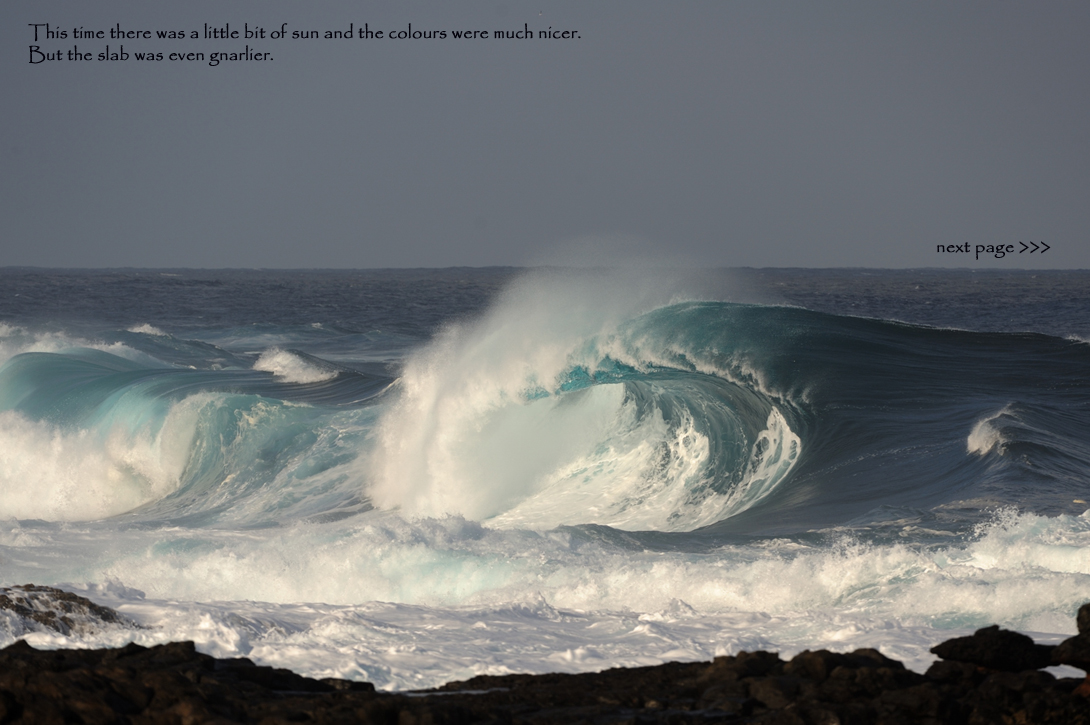
Freak waves, often referred to as “rogue waves,” present a sublime paradox in the realm of oceanography and hydrodynamics. These extraordinary phenomena emerge unexpectedly and rise dramatically from the surface of the sea, often surpassing the height of their surrounding waves by up to two times or more. Unlike typical ocean waves, which conform to mathematical predictability, freak waves remain somewhat inscrutable, eliciting both curiosity and apprehension among researchers and mariners alike.
The genesis of a freak wave can be attributed to a confluence of various physical processes. These processes include constructive interference, ocean currents, and wave energy focusing. Constructive interference occurs when waves traveling in the same direction converge, amplifying their height in a phenomenon reminiscent of the harmonic convergence in music, where multiple notes align to produce a resonant sound. The superposition principle, an essential tenet in wave theory, plays a pivotal role in this amplification, allowing smaller waves to merge into a single towering wave with formidable energy.
Ocean currents, particularly those found in the proximity of continental shelves or along coastlines, can create localized conditions where waves are funneled and intensified. In this scenario, waves approaching a shallower depth may increase in height, akin to a river narrowing as it flows over a waterfall. This juxtaposition of deep water and shallowing seas creates conditions uniquely ripe for the formation of freak waves.
The mathematical formulation of wave behavior respects Newtonian physics, yet translating these principles into the realm of freak waves remains a daunting challenge. The nonlinear Schrödinger equation, while fundamental in describing wave evolution, often falls short when accounting for the unpredictability inherent in freak wave phenomena. What arises is an intricate tapestry of variables that do not conform to conventional wave behavior, presenting a fascinating study of chaos and order within the sea. The unpredictability of these waves can be likened to a chiaroscuro painting; amidst the darkness of uncertainty, breathtaking beauty emerges.
Moreover, the energy dynamics involved in freak wave formation are governed by the dispersion relation of waves. In simplistic terms, this relationship describes how waves of different wavelengths travel at varying speeds. When waves of different frequencies interact, some may lag behind while others surge ahead, creating a complex interplay that can precipitate the sudden emergence of a freak wave. This phenomenon is paralleled in other physical systems, such as the behavior of particles in quantum mechanics, where probabilities can yield unexpected outcomes.
Environmental conditions also play a critical role in the emergence of freak waves. Weather patterns, including storms and high winds, can create a volatile atmosphere conducive to wave anomalies. Under certain circumstances, these environmental factors synergize to produce a confluence that fosters the birth of a freak wave. The turbulence of the sea below, against the backdrop of a stormy sky, creates an immersive arena where physics and chaos dance together, unveiling a spectacular display of the ocean’s might.
As scientific inquiry into freak waves continues, advancements in technology offer promising avenues for enhanced understanding. Satellite remote sensing and laser altimetry have augmented observational capabilities, enabling researchers to monitor wave heights and patterns with unprecedented accuracy. These innovations facilitate the gathering of substantial data, fostering the development of predictive models that aspire to demystify the capricious nature of freak waves. Yet, even with modern technology, comprehending the full spectrum of their behavior remains an elusive aspiration.
The psychological allure of freak waves captivates not only scientists but also the human imagination. They evoke a sense of the sublime—a blend of beauty and terror that resonates profoundly with our intrinsic respect for the formidable forces of nature. The experience of witnessing a freak wave can evoke existential reflections on humanity’s relationship with the ocean, merging feelings of admiration with an acute awareness of vulnerability. This interplay is akin to the dichotomy of creation and destruction; a singular wave can represent both the extraordinary beauty of nature and the potential for catastrophic consequences.
In maritime lore, freak waves have been portrayed as harbingers of doom. Numerous accounts of vessels being overwhelmed by these colossal waves serve as poignant reminders of nature’s unpredictable temperament. The sinking of the USS Cole and the disappearance of the MV Derbyshire are but two testimonies to the potent and often destructive nature of freak waves. These narratives enrich the cultural tapestry surrounding the ocean, where the allure of adventure intertwines with the specter of peril.
Conclusively, the study of freak waves exemplifies the continuous interplay between nature’s complexities and humanity’s insatiable quest for understanding. As the confluence of mathematical theory, environmental science, and technology advances, so does the prospect of unraveling the mysteries that enshroud these enigmatic waves. In essence, the pursuit of knowledge surrounding freak waves invites us not merely to reckon with the ocean’s unpredictable demeanor but to appreciate the profound beauty that emerges from its bestial forces. Thus, the quest to formulate a clearer understanding of freak waves continues to inspire awe and invites inquiry, challenging conventional paradigms and revolutionary our perception of the maritime world.