The concept of cold dark matter (CDM) has been a cornerstone of modern cosmology, providing a framework to understand the large-scale structure of the universe. However, a recent galaxy survey has introduced a degree of skepticism regarding the validity of CDM, igniting a rousing debate among astrophysicists and cosmologists. This article delineates the implications of the survey findings and critically examines the assumptions underlying the cold dark matter paradigm.
At the crux of the cold dark matter hypothesis lies the assertion that a substantial portion of the universe’s mass is composed of non-luminous, non-baryonic matter. Unlike ordinary matter, which emits electromagnetic radiation and can be observed directly, cold dark matter interacts primarily through gravitational forces. The necessity for such a concept arose from discrepancies observed in the rotational velocities of galaxies compared to the predictions of Newtonian dynamics and general relativity when only visible mass is considered.
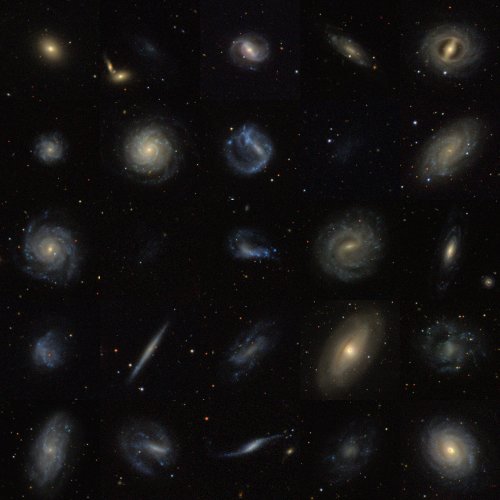
The galaxy survey in question employed advanced observational techniques to map the distribution of galaxies across vast cosmic distances, aiming to provide constraining data on the properties of dark matter. The analysis highlighted peculiar patterns of galaxy clustering that deviated from the expectations generated by the standard CDM model. Such discrepancies may suggest that the attractiveness of the CDM framework deserves reexamination, as the large-scale structure of the universe may not wholly align with established theoretical models.
Notably, the survey found evidence for significant deviations in the predicted versus observed mass distributions of certain galaxy clusters. These findings could imply a more complex scenario than what CDM posits. For instance, the emergence of warm dark matter (WDM) models, which propose particles with non-negligible velocities, has gained traction. Unlike the CDM candidates, which are characterized by negligible thermal velocities, WDM may account for the observed galactic configurations while mitigating certain anomalies associated with the CDM framework.
One salient aspect of the debate surrounds the implications for cosmic evolution. In the CDM paradigm, structures in the universe evolve hierarchically; small structures coalesce to form larger ones. However, the galaxy survey’s results indicated that certain expected structures appear less significant or entirely absent. This raises probing questions about the initial conditions of cosmic evolution and the nature of particle physics beyond the Standard Model.
Additionally, the relationship between dark energy and dark matter warrants scrutiny. While dark energy is postulated to drive the accelerated expansion of the universe, its interaction with dark matter is not fully understood. The survey’s observations propose that variations in dark matter’s characteristics potentially influence the dynamics of cosmic acceleration. A more nuanced understanding of this interplay is required to reconcile the emerging discrepancies observed in galaxy distributions.
Moreover, the interplay with modified Newtonian dynamics (MOND) theory merits examination. MOND aims to solve the rotational flatness of galaxies without invoking dark matter, based on a modification of Newton’s laws at low accelerations. The findings of the galaxy survey contribute to this dialogue by suggesting that there might be a departure from standard gravitational behavior under certain conditions, thus invigorating discussions surrounding alternative theories that could replace or augment the CDM model.
As the community contemplates these provocative findings, it must embrace the empirical rigor that underpins scientific inquiry. A critical analysis of the data is vital. While alternative models such as WDM and MOND may offer compelling explanations, they must withstand stringent observational scrutiny. The scientific method compels the formulation of falsifiable hypotheses based on new data, thereby inviting robust phenomenological tests.
Looking forward, further observational campaigns and simulations are essential to draw more definitive conclusions. The advent of more sophisticated telescopes and refined observational techniques will enhance our understanding of large-scale structure formation. As such, cosmologists must work collaboratively, integrating observations from diverse platforms and disciplines, to forge a consensus on the nature of dark matter and its role within the greater cosmic tapestry.
In conclusion, the galaxy survey has significantly disrupted the previously held hegemonic view of cold dark matter, prompting a careful reevaluation of fundamental cosmological tenets. As the debate intensifies, one must acknowledge that scientific progress is often iterative—shaped by debates that challenge established paradigms. The implications stretch beyond the realm of astrophysics, with potential ramifications for our comprehension of fundamental forces and the overarching narrative of the universe. Thus, while the essence of cold dark matter remains a crucial inquiry, it now stands on a precipice that may redefine our understanding of the cosmos in the years to come.