In the intricate tapestry of particle physics and astrophysics, positrons present a fascinating enigma. As the antiparticles of electrons, positrons hold a crucial role in understanding the fundamental symmetries of our universe. The observation of excess positrons in cosmic rays ignites a debate amongst the scientific community, drawing attention to the mysterious Geminga pulsars as a potentially pivotal source. This article seeks to explore the complexities surrounding positrons, their peculiar abundance, and the possible link to Geminga pulsars.
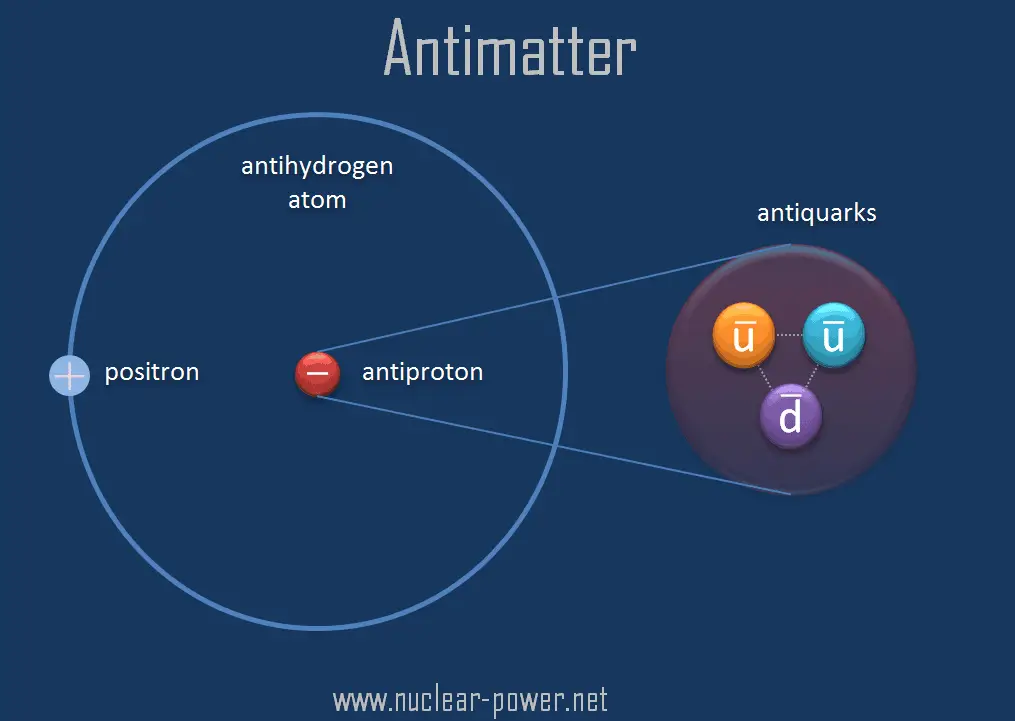
The positron, a particle of antimatter, bears a remarkable resemblance to the electron, yet it carries a positive charge. This charge leads to unique interactions with ordinary matter, resulting in annihilation events that release gamma-ray photons. Thus, positrons serve not only as a key to understanding antimatter but also as a critical factor in cosmic phenomena. The origin of positrons detected in cosmic rays has spurred extensive research since their initial discovery. Notably, the unexpected surge in positron counts observed in recent experiments has deepened the mystery surrounding their provenance.
One crucial observation stems from the findings of the PAMELA (Payload for Antimatter Matter Exploration and Light-nuclei Astrophysics) satellite, which detected an anomalously high ratio of positrons to electrons in cosmic rays. This excess poses a compelling question: What celestial phenomena account for the influx of such antiparticles? Several hypotheses have emerged, including dark matter annihilations and pulsar emissions. Each theory introduces complex interactions within the cosmic ecosystem, pulsars being particularly intriguing.
Geminga pulsars, a class of rapidly rotating neutron stars, have garnered attention as potential facilitators of the positron surplus. Specifically, the Geminga pulsar, located approximately 800 light-years from Earth, exhibits compelling features that may elucidate the positron puzzle. Neutron stars are born from the remnants of supernovae, birthing entities that possess extreme densities and formidable magnetic fields. These conditions create an environment ripe for particle acceleration, akin to natural particle colliders in the vast expanse of the universe.
In their rapid spins, pulsars emit beams of radiation and high-energy particles. The Geminga pulsar, particularly, is characterized by its relatively high rotational speed and energetic processes. The multi-wavelength emissions from such pulsars, including gamma rays, have led physicists to speculate about their role in positron generation. Various models suggest that the mechanism behind these emissions may be associated with the pulsar’s intense magnetic field and the acceleration of electrons and positrons in nearby regions.
Notably, the collaborations involving satellite observations and ground-based detectors bolster the notion that pulsars might be significant contributors to the positron excess observed. Various astrophysical models propose that as energetic particles are expelled from the pulsar’s magnetosphere, they undergo interactions with surrounding matter, producing positrons through pair production processes. This phenomenon leads to a cascade of high-energy events, facilitating the creation of a plethora of antiparticles.
However, the argument that Geminga pulsars are the primary culprits for the positron excess is not without contention. Alternative sources have been proposed, notably dark matter interactions. Dark matter, which constitutes approximately 27% of the universe, remains enigmatic, and its annihilation could indeed emit high-energy particles, including positrons. This theory underscores a broader search for understanding the universe’s composition and the role dark matter may play in cosmic ray physics.
The juxtaposition of pulsar emissions and dark matter interactions highlights the intricate dynamics of astrophysical processes. While significant evidence exists supporting pulsars as potential positron generators, the influence of dark matter cannot be overlooked. As researchers delve deeper into this cosmic riddle, the synthesis of data from various sources continues to yield insights. For instance, gamma-ray observations conducted by telescopes such as Fermi LAT corroborate the emissions expected from both pulsars and prospective dark matter signals.
Despite the ongoing debate, the Geminga pulsar hypothesis offers a tantalizing glimpse into the nature of astrophysical phenomena. Positrons, as carriers of information about cosmic events, compel physicists to consider both particle physics and cosmology in tandem. This interconnection not only enhances our understanding of fundamental physics but also stimulates broader inquiries into the universe’s composition and evolution.
In addressing the question, “Are Geminga pulsars the culprits behind the positron surplus?” one must consider the multi-faceted nature of cosmic ray production and the various sources of high-energy phenomena in the universe. The emergence of new observational technologies and methodologies promises to illuminate pathways previously obscured, potentially resolving this enduring positron puzzle. As scientists seek greater clarity, the intricate dance of electrons and positrons, of matter and antimatter, offers profound insights into the very fabric of existence.
Ultimately, the positron puzzle serves as a testament to the complexities of our universe, beckoning physicists to unravel its deeper mysteries. Whether the true origins of excess positrons lie with the elusive Geminga pulsars or the undetected machinations of dark matter, the pursuit of knowledge continues unabated, revealing the intricate interactions that govern the cosmos. The implications of these discoveries extend beyond mere particle physics, fostering a broader appreciation for the enchanting interplay between matter, energy, and the fundamental forces that shape our universe.