The classification of galaxies has long been a formidable challenge in the realm of astrophysics. Traditional paradigms have been established, shaping our understanding and categorizations of these celestial entities. However, recent notions in astronomical studies are prompting a re-evaluation of the very foundations upon which these classifications are built. The phrase “out of tune” aptly encapsulates this emergent paradigm shift, as astronomers are discovering that the existing frameworks may not adequately accommodate the complex and diverse nature of galaxies across the cosmos.
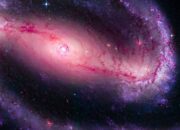
Historically, galaxies have been classified predominantly into three principal categories: elliptical, spiral, and irregular. This triad emerged from early observational efforts and has served as a cornerstone for much of our understanding. Elliptical galaxies, characterized by their smooth, featureless light profiles, constitute a broad range of sizes and are often found in dense galaxy clusters. Spiral galaxies, embodying structure through their distinctive arms, are perhaps the most recognized type. Irregular galaxies, lacking symmetry or a defined shape, offer a glimpse into the chaotic aspects of galaxy evolution.
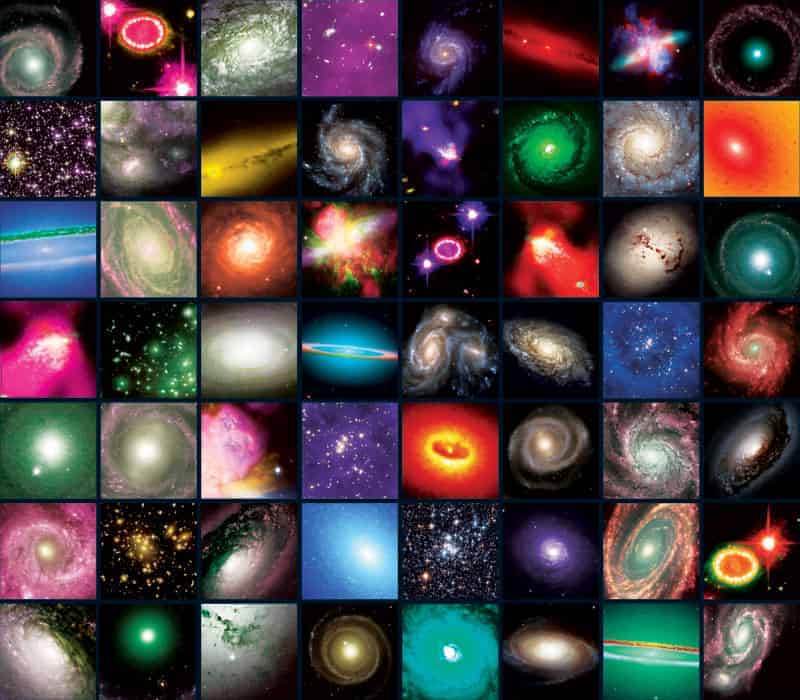
Yet, as observational technologies have advanced, the simplistic models have come under scrutiny. The advent of powerful telescopes and sophisticated imaging techniques has unveiled an astonishing variety of morphological traits that do not neatly conform to existing classifications. It has become evident that galaxies are far more diverse and dynamic than previously imagined. This realization has ignited a burgeoning discourse among astronomers regarding the limitations of conventional galaxy classification systems.
Central to this discourse is the understanding that galaxies are not static entities; instead, they are continuously evolving systems, influenced by myriad factors including gravitational interactions, cosmic gas flows, and dark matter dynamics. The evolutionary processes involve multiple phases, characterized by star formation, quiescence, and even galactic mergers. Each of these stages introduces unique attributes, leading to complexities that defy simplistic categorizations.
In the wake of this new understanding, a promising shift in perspective towards galaxy classification has begun to crystallize. The notion of a continuum rather than discrete categories is gaining traction. Galaxies could be viewed along a spectrum of morphological characteristics, allowing for a more nuanced appreciation of their features. This continuum acknowledges that transitionary forms exist and that a galaxy may exhibit traits properties of multiple classes, challenging the established classifications that have persisted for decades.
Furthermore, the discovery of peculiar galaxies—those exhibiting peculiar or unusual features—has further stimulated this conversation. These galaxies may display eccentricities such as non-axi-symmetric structures, excessive star formation rates, or anomalous chemical compositions. Such observations underscore the notion that the interplay between various astrophysical mechanisms can yield unexpected and often bewildering galactic configurations.
In this reimagined framework, classification may incorporate factors beyond mere morphology. Astronomers are increasingly considering a galaxy’s formation history, chemical evolution, and interaction history as fundamental components in understanding its nature. For example, examining a galaxy’s metallicity—a measure of the abundance of chemical elements heavier than hydrogen and helium—can provide critical insights into its past star formation activities and interactions with neighboring galaxies. Such revelations have profound implications for our understanding of galaxy formation and the overarching structure of the universe.
The technological advancements in observational astrophysics are playing a pivotal role in this intellectual evolution. With the deployment of next-generation telescopes such as the James Webb Space Telescope, astronomers are gaining unprecedented access to the deep universe. These observations are revealing galaxies in the early stages of their formation, illuminating the formative processes that preceded many of the galaxies we observe today. Insights gleaned from these distant implements will inevitably reshape our understanding and classification systems.
Furthermore, the application of machine learning and artificial intelligence in analyzing large datasets of astronomical images is proving to be transformative. These cutting-edge techniques allow for the identification of patterns and relationships that may have previously gone unnoticed by human observers. As these algorithms discern complex trends in galactic structures, they contribute to a more refined classification scheme that encapsulates the intricate complexities of galactic morphology.
The implications of these advancements are vast, extending beyond the academic realm into public discourse. The question of how we perceive our universe is intrinsically linked to these evolving classifications. Each classification carries with it an interpretive legacy that shapes our understanding of cosmic evolution. A comprehensive re-evaluation could enhance our understanding of fundamental astrophysical processes and foster a greater appreciation for the enigmatic nature of the universe.
As astronomers delve deeper into this re-imagined landscape of galaxy classification, they are not merely cataloging objects; they are embarking on an exploration of the essence of cosmic existence itself. “Out of tune” encapsulates not only a dissonance within our classical understanding but signifies an opportunity for harmonization and advancement. In the end, the pursuit of knowledge continues to propel the field of astronomy, urging it towards uncharted territories of discovery.
The reality is that the universe is a complex and interacting tapestry. As researchers adopt these newly developed frameworks and methodologies, they are not solely redefining galaxy classifications; they are also reaffirming humanity’s enduring quest to comprehend our place within the cosmos. The journey promises to be as profound as the discoveries it yields, engaging not only scientists but also stimulating curiosity among the broader populace. This shift invites us all to ponder a singular truth: the more we learn, the more we realize how little we truly know about the universe that surrounds us.