The spectral echoes of Tycho Brahe’s supernova, observed in the late 16th century, ignite a profound inquiry into the dynamics of cosmic phenomena. The marvel of supernova remnants, particularly SN 1572, resonates through the annals of astronomical history, offering more than mere historical curiosity—it serves as an illuminating prism for understanding stellar evolution, cosmic nucleosynthesis, and the pervasive nature of cosmic reverberations. Recent advancements in astrophysics and observational technologies have unveiled complex layers of this celestial event, promising a paradigm shift in our comprehension of the universe.
The supernova, known as Tycho’s Star, erupted in a spectacular display, outshining the planets and capturing the attention of Brahe, a meticulous observer. His extensive records mark an epoch in observational astronomy, wherein the demarcation between celestial and terrestrial phenomena began to blur. In a time devoid of the digital marvels we possess today, Tycho’s meticulous observations initiated a fundamentally new discourse about the cosmos, challenging Aristotelian notions of an immutable celestial sphere. The profound implications of these observations resonate even today, as they unveil not only the mechanics of stellar explosions but also the importance of the subsequent remnants.
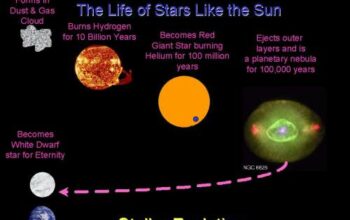
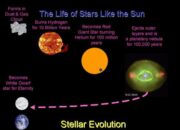
Supernovae, categorized primarily into Type I and II, exhibit distinct characteristics rooted in the progenitor stars from which they emerge. Tycho’s supernova is classified as a Type Ia, characterized by the thermonuclear explosion of a white dwarf in a binary system. This categorization offers insights into the interplay between mass transfer and the subsequent cataclysmic event. The synthesis of elements during these violent episodes contributes vital components to the cosmic inventory, shaping the chemical evolution of galaxies and planetary systems. In this light, Tycho’s supernova embodies a confluence of destruction and creation, revealing a universe steeped in dynamic cycles of birth and obliteration.
The remnants of Tycho’s supernova present an exquisite opportunity to study cosmic echoes. The initial explosion sends shock waves rippling through the interstellar medium, colliding with gas and dust, resulting in extraordinary luminosities and spectra. These interactions give rise to what can be considered an acoustic fingerprint of the explosion, providing a multifaceted understanding of the remnant’s expansion dynamics. Observing these echoes through various wavelengths, including radio, optical, and X-ray emissions, allows astrophysicists to assemble a comprehensive narrative of the supernova and its surrounding environment.
Recent investigations leveraging advanced observational techniques have elucidated significant revelations about the remnant’s structure. For example, research utilizing the Chandra X-ray Observatory has revealed the intricate distribution of elements such as iron, nickel, and silicon within the remnant’s debris. This elemental mapping serves as a cosmic ledger, documenting the explosive nucleosynthesis processes at play. The identification of these elements not only enriches our understanding of stellar life cycles but also contributes to the broader astrophysical narrative concerning the origins of heavy elements in the universe.
The phenomenon of cosmic reverberations extends beyond physical echoes; it invites a philosophical contemplation of time’s elasticity concerning astronomical events. Brahe’s meticulous records offer a temporal bridge, connecting the past to our contemporary understanding of stellar explosions. This reflection suggests a multi-dimensional experience of time within the cosmos, where past occurrences resonate through present scientific inquiry. The echoes of Tycho Brahe’s supernova serve as a continuous reminder that the universe is not merely a static tableau, but a dynamic and evolving entity, perpetually in flux.
Moreover, Tycho’s supernova exemplifies the collaborative convergence of art and science. The ethereal beauty captured in imaging and sound, such as the conversion of radio and other wavelengths into auditory experiences, creates a sensory appreciation of cosmic phenomena. This interdisciplinary approach enhances public engagement with astronomy, allowing individuals to experience the cosmos in unprecedented ways. By transforming visual data into sound, researchers can evoke a deeper emotional response to the phenomena, thereby piquing curiosity and fostering a more profound connection to the universe.
The potential ramifications of these investigations extend into future galactic studies. As researchers aspire to comprehend the mechanisms underlying supernova explosions, the correlations between supernovae and the expansion of the universe become increasingly pertinent. The understanding gleaned from Tycho Brahe’s supernova offers crucial insights into the role these stellar cataclysms play in cosmic evolution, particularly in relation to dark energy and the ultimate fate of the universe.
In conclusion, the echoes of Tycho Brahe’s supernova illuminate the complexities of the cosmos, bridging historical observations with cutting-edge scientific inquiry. This remarkable event continues to yield significant insights into the fabric of the universe, transforming our comprehension of stellar life cycles, nucleosynthesis, and the reverberating effects of cosmic events on a grand scale. The interplay of destruction and creation encapsulated in the remnants of Tycho’s supernova not only enriches the scientific narrative but also fosters a renewed curiosity about the cosmos, inviting future generations to explore and unravel the enigmas that lie beyond the terrestrial sphere.