
Short Answer
Understanding the Concept of Center of Gravity
The term “center of gravity” traditionally refers to a specific point within a physical system where the total gravitational force can be considered to act. In classical mechanics, this point represents the weighted average position of all mass in an object or system, serving as a crucial factor in analyzing balance and motion. For tangible objects like planets, spinning tops, or engineered structures, identifying the center of gravity is straightforward and essential for predicting behavior under gravitational forces.
- Definition:
The center of gravity is the point at which the entire weight of a body or system is considered to be concentrated. - Application:
Used to determine stability, balance, and motion in physical systems.
Challenges in Defining a Universal Center of Gravity
Extending the idea of a center of gravity to the entire universe introduces significant conceptual and scientific challenges. Unlike finite objects, the universe is an immense, dynamic expanse without clear boundaries or a fixed amount of matter confined to a specific region. It consists of billions of galaxies, stars, planets, dark matter, and dark energy, all embedded within an expanding fabric of spacetime. This complexity makes the notion of a single gravitational center for the cosmos problematic.
One fundamental obstacle is the cosmological principle, which states that on large scales, the universe is homogeneous (uniform in composition) and isotropic (appearing the same in all directions). This principle implies that no location in the universe is privileged or uniquely central. Every observer, regardless of their position, perceives themselves as being at the center of cosmic expansion, with galaxies receding uniformly in all directions.
Gravity on a Cosmic Scale: From Newton to Einstein
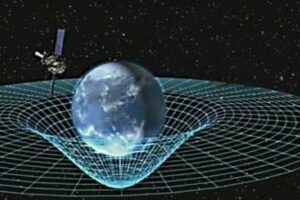
Gravity’s nature transforms dramatically when viewed through the lens of cosmology. While Newtonian gravity describes it as a force pulling masses toward each other, Einstein’s general relativity redefines gravity as the curvature of spacetime caused by mass and energy. This curvature dictates the trajectories of objects, making gravity a geometric property rather than a simple force.
The universe’s mass-energy content, including elusive components like dark matter and dark energy, shapes its overall geometry and expansion behavior. Dark energy, in particular, drives the accelerated expansion of the universe, counteracting gravitational attraction on the largest scales and further complicating any attempt to pinpoint a universal gravitational center.
The Universe’s Shape and Its Implications for a Center
The topology and geometry of the universe play a crucial role in understanding the possibility of a center of gravity. Current cosmological models suggest the universe may be infinite and flat or curved but without edges or boundaries. In an infinite, uniform cosmos, gravitational influences average out, making the concept of a central gravitational point meaningless.
Even if the universe is finite yet unbounded-similar to the two-dimensional surface of a sphere extended into higher dimensions-the “center” would exist only in a higher-dimensional space beyond our direct perception. Thus, from our three-dimensional viewpoint, no central point can be identified.
Localized Gravitational Centers Within the Observable Universe
While the universe as a whole lacks a center of gravity, certain massive structures within the observable cosmos act as regional gravitational focal points. For example, the Great Attractor is a gravitational anomaly influencing the motion of galaxies in its vicinity, pulling them toward a specific region of space. Similarly, galaxy superclusters represent concentrations of mass that exert significant gravitational effects locally.
However, these phenomena are limited in scale and do not represent a universal center of gravity. Their influence is overshadowed by the overall expansion of the universe and the distribution of matter on cosmic scales.
Philosophical Reflections on Cosmic Centrality
The quest to identify a center of gravity for the universe also touches on deeper philosophical questions about our place in the cosmos. The curved and expanding nature of spacetime challenges the human tendency to seek a fixed point of reference or order. Instead, the idea of a “center” may be more a product of observational perspective and conceptual framing than an intrinsic property of the universe itself.
Modern Theoretical Perspectives: Beyond Classical Gravity
Advances in astrophysics and quantum gravity introduce new frameworks that further complicate traditional notions of center and edge. The holographic principle, for instance, suggests that the universe’s information content might be encoded on its boundaries rather than concentrated at a central point. Additionally, some quantum gravity theories propose that spacetime emerges from more fundamental, non-local structures, where classical ideas of location and centrality lose their usual meaning.
Summary: The Universe’s Gravity as a Complex Interplay
In conclusion, the universe does not possess a singular center of gravity analogous to that of a planet or star. Instead, its gravitational behavior arises from a complex interplay of mass-energy distributions, spacetime curvature, and cosmic expansion. Each galaxy, star, and particle participates in a vast cosmic dance where the concept of a central gravitational point becomes abstract and diffuse.
Why Understanding This Matters
Exploring whether the universe has a center of gravity deepens our comprehension of cosmology, gravity, and the fundamental structure of reality. It challenges classical intuitions and encourages the development of more sophisticated models that better reflect the universe’s true nature. This inquiry not only advances scientific knowledge but also enriches philosophical perspectives on existence and our place within the cosmos.
Common Misconceptions About Universal Gravity
The universe has a single center of gravity like a planet.
Due to the universe’s homogeneity and isotropy, no unique gravitational center exists on a cosmic scale.
Gravity always pulls objects toward a fixed point.
On cosmic scales, gravity is the curvature of spacetime, and the universe’s expansion causes galaxies to move away from each other rather than toward a central location.
The Great Attractor is the center of the universe.
The Great Attractor is a local gravitational anomaly, not a universal center.
Real-World Analogies and Examples
To visualize why the universe lacks a center of gravity, consider the surface of a balloon being inflated. Every point on the balloon’s surface moves away from every other point as it expands, and no single spot serves as the center on the two-dimensional surface itself. Similarly, in our three-dimensional universe, expansion occurs uniformly without a central point.
Another example is the distribution of galaxies: observers in different galaxies each see other galaxies moving away from them, reinforcing the idea that every location can be perceived as the center of expansion, but none is the absolute center.
FAQ
Does the universe have a center of gravity?
No, the universe does not have a singular center of gravity due to its homogeneity and isotropy.
What is the Great Attractor?
The Great Attractor is a local gravitational anomaly affecting galaxy motion but is not the center of the universe.
How does Einstein's theory of gravity differ from Newton's?
Einstein’s theory describes gravity as the curvature of spacetime, while Newton’s views it as a force pulling masses together.


Leave a Reply