
Short Answer
Definition of Gravitational Interaction Between Earth and the Sun
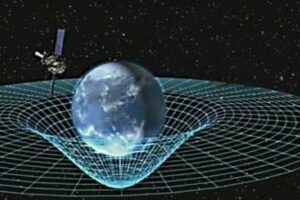
The gravitational relationship between Earth and the Sun is a fundamental aspect of celestial mechanics, describing how these two bodies exert forces on each other. Contrary to the common perception that the Sun solely governs Earth’s orbit, gravity operates as a mutual force, with Earth also pulling on the Sun. This reciprocal attraction shapes their motions and the dynamics of the solar system.
- Gravitational Force:
A force of attraction that exists between any two masses, proportional to their masses and inversely proportional to the square of the distance between them. - Barycenter:
The common center of mass around which two bodies orbit due to their mutual gravitational pull.
Newton’s Law of Universal Gravitation and Its Implications
Sir Isaac Newton’s law of universal gravitation provides the foundation for understanding the forces between Earth and the Sun. It states that every mass attracts every other mass with a force directly proportional to the product of their masses and inversely proportional to the square of the distance separating them. This law inherently implies that the gravitational pull is mutual and equal in magnitude but opposite in direction.
- Reciprocal Forces:
If the Sun exerts a gravitational force on Earth, Earth simultaneously exerts an equal and opposite force on the Sun. - Magnitude Difference:
Although Earth’s mass is minuscule compared to the Sun, its gravitational influence, while small, is real and measurable.
Understanding the Barycenter of the Earth-Sun System
The barycenter is the pivotal point around which both Earth and the Sun revolve due to their gravitational interaction. Because the Sun’s mass is overwhelmingly larger, this point lies very close to the Sun’s center but not exactly at it. This offset causes the Sun to exhibit a subtle wobble as it responds to Earth’s gravitational tug.
- Location:
The barycenter of the Earth-Sun system is located just inside the Sun’s radius, reflecting the mass disparity. - Sun’s Motion:
The Sun’s slight orbital movement around the barycenter is imperceptible without precise instruments but is crucial for understanding the mutual nature of gravitational forces.
How Mutual Gravitational Pull Shapes Celestial Dynamics
Rather than viewing the Sun as a fixed anchor with Earth orbiting passively, it is more accurate to see both bodies engaged in a gravitational dance. This interaction influences not only their positions but also the stability and behavior of the entire solar system.
- Gravitational Tug-of-War:
Earth’s pull causes the Sun to move slightly, demonstrating that orbits are co-created phenomena. - Influence on Orbital Stability:
The mutual forces contribute to orbital resonances, tidal effects, and subtle changes in Earth’s rotation and axial tilt.
Gravitational Effects Beyond Earth and the Sun
The principle of mutual gravitational attraction extends beyond our solar system, influencing interactions among stars, galaxies, and larger cosmic structures. The Earth-Sun relationship serves as a microcosm of these universal dynamics.
- Stellar Wobbles:
In systems with massive exoplanets, the barycenter shifts more dramatically, causing detectable stellar movements used to discover new planets. - Cosmic Scale Interactions:
Binary stars, star clusters, and galaxies all exhibit mutual gravitational influences that govern their motions and evolution.
Real-World Examples of Gravitational Reciprocity
While Earth’s gravitational effect on the Sun is subtle, it is measurable and significant in precise astrophysical calculations. Larger planets like Jupiter and Saturn exert more pronounced influences, causing the Sun to wobble noticeably around the solar system’s barycenter.
- Jupiter’s Influence:
Jupiter’s massive size causes the solar barycenter to shift outside the Sun’s surface at times, leading to a more pronounced solar wobble. - Earth’s Subtle Role:
Earth’s gravitational pull, though smaller, is essential for refining models of solar motion and understanding multi-body gravitational interactions.
Common Misconceptions About Earth’s Gravitational Pull on the Sun
The Sun’s gravity acts only on Earth, with no reciprocal effect.
Gravity is a mutual force; Earth pulls on the Sun with equal magnitude but opposite direction.
Earth’s gravitational influence on the Sun is negligible and irrelevant.
Although small, Earth’s pull affects the Sun’s position and is important for precise astrophysical modeling.
Why Understanding Earth’s Pull on the Sun Is Important
Recognizing the mutual gravitational forces between Earth and the Sun enriches our comprehension of orbital mechanics and the dynamic nature of celestial bodies. It challenges simplistic views of the solar system and highlights the interconnectedness of cosmic entities.
- Scientific Significance:
Enhances accuracy in modeling planetary orbits and predicting celestial events. - Philosophical Insight:
Encourages a perspective of balance and mutual influence rather than hierarchical dominance in the cosmos. - Technological Applications:
Informs methods used in detecting exoplanets through stellar wobble analysis.
Conclusion: The Elegant Balance of Gravitational Forces
In summary, Earth does indeed exert a gravitational pull on the Sun, a fact that underscores the symmetrical and reciprocal nature of gravity. This subtle interaction is a testament to the intricate cosmic choreography that governs the motions of celestial bodies. Appreciating this mutual influence invites a deeper respect for the delicate balances that sustain our solar system and the universe at large.
FAQ
What is the significance of Earth's gravitational pull on the Sun?
It enhances our understanding of orbital mechanics and the dynamics of celestial bodies.



Leave a Reply