

Short Answer
Definition of Double Star Systems
A double star system consists of two stars gravitationally linked, orbiting a shared center of mass. These systems, also known as binary stars, are fundamental objects in astrophysics, exhibiting a variety of dynamic interactions and phenomena. Among these, an especially intriguing occurrence is the unexpected increase in brightness of one star during an eclipse, which contrasts with the typical dimming observed in eclipsing binaries.
Fundamental Dynamics of Binary Stars
In a binary star system, the two stellar bodies revolve around their mutual barycenter. During eclipses, one star may pass in front of the other from the observer’s viewpoint, usually causing a reduction in the system’s apparent luminosity due to the partial or complete blocking of light. However, certain systems defy this norm by exhibiting a rise in brightness during such eclipses, presenting a paradox that challenges conventional understanding.
Mechanisms Behind Brightness Increase During Eclipses
Reflection Effects
One key explanation for the brightening phenomenon is the reflection effect. When stars are in close proximity, the intense light from the more luminous star can illuminate the side of its companion facing it. During an eclipse, this illuminated face may become more visible, effectively reflecting and enhancing the total light output observed from Earth, thereby causing an apparent increase in brightness.
Role of Accretion Disks
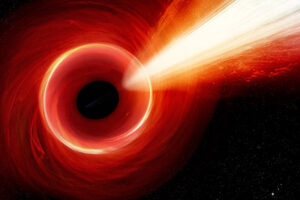
Another factor contributing to this unusual luminosity boost involves accretion disks. These disks form when material from one star spirals inward due to gravitational attraction, heating up and emitting additional radiation. In eclipsing binaries with accretion disks, the interaction between the stars and the disk can lead to increased thermal emission during eclipses, further amplifying the system’s brightness.
Gravitational Lensing Effects
Gravitational lensing, a phenomenon predicted by Einstein’s General Relativity, can also explain the brightness enhancement. The gravitational field of one star can bend and magnify the light from its companion when aligned during an eclipse. This bending of light can cause the obscured star’s light to be amplified, resulting in a net increase in observed luminosity despite the eclipse.
Observational Techniques and Discoveries
Modern astrophysics has greatly benefited from advanced observational tools, including ground-based telescopes with high-precision photometers and space observatories like the Kepler Space Telescope. These instruments enable astronomers to monitor light curves meticulously, detecting anomalies such as brightness increases during eclipses. Large-scale surveys have been instrumental in identifying and cataloging these exceptional binary systems, enhancing our understanding of their complex behaviors.
Theoretical Models and Simulations
Theoretical astrophysics employs sophisticated numerical simulations to unravel the complexities of these systems. By modeling various parameters-such as stellar masses, luminosities, orbital geometries, and physical conditions-researchers can replicate and study the conditions that lead to brightness augmentation during eclipses. These models help refine our comprehension of stellar interactions and guide future observational strategies.
Significance in Astrophysics
Understanding why some double star systems brighten during eclipses is crucial for several reasons. It sheds light on the processes of star formation and evolution, reveals the intricate interplay of gravitational and radiative forces, and challenges existing stellar models. These insights contribute to a more nuanced picture of stellar dynamics and the lifecycle of binary systems.
Expanding Horizons: Future Research and Discoveries
The discovery of such unusual eclipsing binaries encourages ongoing exploration beyond our galaxy. Diverse star formation environments in distant galaxies may host similar or even more exotic systems, offering opportunities to test and expand current astrophysical theories. Continued observation and theoretical development promise to deepen our understanding of the universe’s stellar population and its myriad phenomena.
Summary
The phenomenon of increased brightness in double star systems during eclipses highlights the complexity of stellar interactions. Reflection effects, accretion disks, and gravitational lensing provide plausible explanations for this counterintuitive behavior. Advances in observational technology and theoretical modeling have been pivotal in uncovering and explaining these occurrences. Ongoing research in this area not only enriches astrophysical knowledge but also challenges and refines our understanding of the cosmos.
FAQ
What is a double star system?
A double star system consists of two stars that are gravitationally linked, orbiting a shared center of mass.
Why do some double stars get brighter during an eclipse?
Some double stars exhibit increased brightness during an eclipse due to effects like reflection, accretion disks, and gravitational lensing.
What observational techniques are used to study double star systems?
Advanced telescopes and photometers are used to monitor light curves and detect anomalies in brightness during eclipses.



Leave a Reply