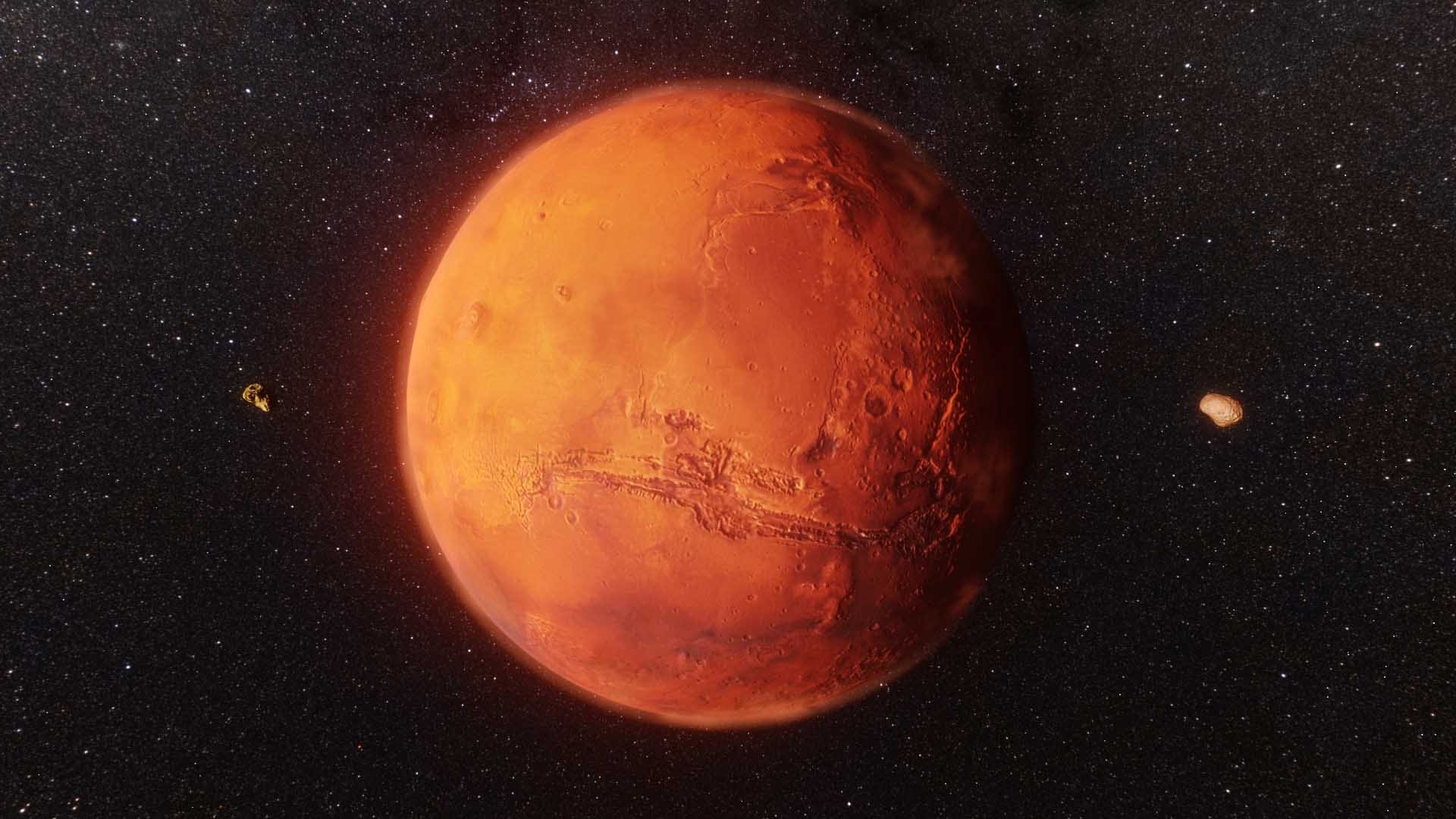
Mars, often celebrated as the Red Planet, has long captivated the imaginations of scientists and the public alike. Rich in geological history, this celestial body presents a complex tableau worthy of rigorous examination. One of the foremost questions in Martian geology pertains to the presence of water—specifically, flowing liquid water. Understanding the dynamics of Martian water is vital, not only for astrobiological explorations but also for future manned missions. This discourse delineates the evidence and theories surrounding the presence of flowing water on Mars, encapsulating various dimensions of the subject.
The quest for water on Mars surfaces from historical observations, including telescopic studies on Earth as well as missions that orbit and land on the Martian terrain. In the late 19th century, astronomer Giovanni Schiaparelli described what he called “canali,” which has translated into the modern English term “canals.” This misinterpretation of Martian surface features set the stage for subsequent inquiries. Furthermore, data acquired from the Mariner, Viking, and Mars Global Surveyor missions have all contributed to a paradigm shift. While initial theories suggested a barren desert landscape, subsequent evidence proposed that water—at least in some form—has been a persistent component of Mars’s environmental history.
The narrative of water on Mars impregnates much evidence collected from continuous exploration. The most compelling observations stem from the Mars Reconnaissance Orbiter (MRO), which has been conducting high-resolution imaging of the planet’s surface since 2006. One of the defining features identified is the recurrent slope lineae (RSL), which are dark streaks that appear to ebb and flow with seasonal changes. These features occur on sun-facing slopes and demonstrate a distinct temporal variation. Researchers have posited that these RSLs might indicate the presence of briny liquid water, particularly during warmer seasons when they exhibit increased activity.
To scrutinize the potential role of saline solutions, it is crucial to examine the properties of different salts, primarily perchlorates, which lower the freezing point of water. Laboratory experiments conducted under Martian simulation conditions suggest that liquid brines could remain stable for extended periods, thereby facilitating a transitional phase of water in states inconsistent with conventional terrestrial understanding. Such chemical interactions challenge traditional assumptions and invite questions regarding the implications for microbial life.
In addition to direct evidence of RSLs, geological formations on Mars—such as ancient river valleys, lake beds, and deltas—hint at a time when the planet hosted abundant liquid water. The existence of these formations, coupled with isotopic signatures found in Martian meteorites, bolsters theories of a hydrologically active past. Studies indicate that Mars underwent a climatic evolution characterized by periods of warmer temperatures that likely enabled surface water to exist in liquid form, despite the planet’s current cold desert environment.
Further investigations into Martian polar ice caps reveal another dimension of water’s presence. The northern polar region, which houses a cap primarily composed of water ice and seasonal carbon dioxide ice, displays seasonal changes that suggest both sublimation and condensation cycles. Data gathered from the Phoenix lander and other spacecraft revealed that subsurface ice can transition to liquid water under specific conditions, notably when impacted by solar radiation. This phenomenon of transient liquid water encapsulates the complexity of Mars’s climatic dynamics.
Moreover, the concept of subsurface aquifers presents an intriguing possibility. Potential reserves of liquid water may reside beneath the Martian surface, insulated from the harsh atmospheric conditions. Radar sounding instruments aboard the MRO and the European Space Agency’s Mars Express have detected reflective layers beneath the southern polar ice cap, tantalizingly hinting at the presence of liquid water. Such discoveries ignite ambitious aspirations for future exploration missions designed to penetrate this enigmatic crust.
Astrobiologically, the implications of finding liquid water—and possibly life—on Mars are profound. Microbial life forms on Earth have adapted to survive in extreme conditions, including highly saline environments. If similar organisms exist on Mars, their discovery would redefine our understanding of life’s tenacity and adaptability across different planetary environments. Consequently, the search for Martian water not only informs our conception of the planet’s history but also frames the broader discourse on the potential for extraterrestrial life.
While the evidence mounts, skepticism persists within the scientific community regarding the current existence of flowing water. The arid conditions, low atmospheric pressure, and the predominance of carbon dioxide raise questions about the stability of liquid water. Further in situ analysis, however, remains paramount. Future missions, such as the Mars Sample Return mission, aim to retrieve Martian soil and rock samples, which may yield insights of unparalleled significance regarding the planet’s hydrosphere.
In summation, the investigation into the phenomena of flowing water on Mars encompasses an intricate interplay of observational data, chemical experimentation, and astrobiological inference. Each layer of inquiry unravels new questions while illuminating our comprehension of Martian history. As methodologies evolve and exploration continues, the quest to disclose Mars’s wet secrets stands not only as a pinnacle of planetary science but also as a profound quest in understanding the potential for life beyond Earth.