Throughout the annals of scientific inquiry, the origins of life have remained one of the most tantalizing enigmas. The exploration of interplanetary dust as a potential precursor to terrestrial life has garnered significant interest in recent decades. Theoretical frameworks positing the genesis of life from the molecular and elemental constituents found in interstellar space provide fertile ground for discourse. In this examination, the interplay between interplanetary grains and biogenesis will be delineated, emphasizing the multifaceted pathways that could lead from cosmic dust to the formation of DNA and, thereby, the foundational structures of life as we comprehend it.
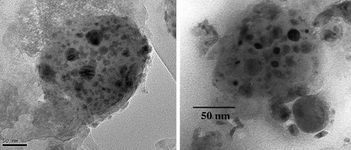
Interplanetary dust particles (IDPs) are microscopic remnants that drift through space, originating from comets, asteroids, and other celestial bodies. These minuscule grains are composed of a myriad of elements, including carbon, silicon, and various metals, often encased in silicate matrices. Their analysis has revealed that some IDPs contain organic compounds—complex molecules that form the building blocks of life. Therein lies the hypothesis that these cosmic travelers might have delivered the primordial ingredients necessary for the emergence of life on Earth.
The concept of panspermia posits that life, or at least its components, is distributed throughout the cosmos via such interstellar mediums. This theory is predicated on the observation that many organic compounds, including amino acids, have been detected in meteorites and comets. Furthermore, laboratory simulations have demonstrated that certain microorganisms can survive the harsh conditions of space, leading to speculation that life may not be an Earth-exclusive phenomenon. The relevance of IDPs in this dialogue cannot be overstated, as they act as potential vessels for both organic materials and microbial life.
Central to the discussion of IDPs and their contribution to the emergence of life is the process of abiogenesis. This refers to the natural process by which life arises from non-living matter. The primordial Earth, characterized by a reducing atmosphere, had conditions favorable for the synthesis of organic molecules. In such an environment, it is plausible to contemplate that IDPs might serve as catalysts, introducing vital components such as peptides and nucleobases. This suggests a synergistic interplay between extraterrestrial materials and Earth’s biochemistry, fostering an environment conducive to the evolution of complex life forms.
The transformation of simple organic compounds into complex bio-macromolecules, including nucleic acids like DNA, is a pivotal phase in the theorization of life’s origins. Research has illuminated the possibility that the sugars and bases critical to DNA formation could have been synthesized in space or delivered via IDPs. For instance, ribose, a sugar essential for RNA and, by extension, the RNA world hypothesis, has been detected in some extraterrestrial materials. This notion bridges the gap between raw cosmic materials and the fundamental components of biological systems.
Investigating the mechanisms by which IDPs could facilitate the emergence of life necessitates an understanding of their interactions with Earth’s primordial environments. These particles may have played a dual role: providing essential organic precursors and catalyzing biochemical reactions through their unique chemical properties. The surface chemistry of IDPs, characterized by reactive sites, might initiate polymerization processes critical for the formation of larger molecules, a hypothesis supported by aqueous experiments simulating early Earth conditions.
The environmental dynamics of primitive Earth, coupled with the influx of IDPs, could have sparked the onset of prebiotic evolution. The notion of a “cosmic soup,” enriched with the necessary chemical constituents for life, proposes that these early organic compounds underwent self-organization and selective replication. This is reminiscent of the RNA world hypothesis, a model suggesting that RNA, capable of both storing genetic information and catalyzing biochemical reactions, formed prior to DNA-based life. In this context, the role of space-faring organic compounds becomes pivotal in the discourse of life’s lineage.
The phenomenon of chirality—where biological molecules exist in asymmetric forms—also merits consideration in this discourse. The dominance of homochirality in biological systems raises questions about the origins of life’s molecular handedness. Some scientists hypothesize that extraterrestrial processes could have influenced the chiral selection of amino acids and sugars delivered to the early Earth, hence shaping the molecular architecture of emerging life forms. Such implications require rigorous empirical studies and a multifaceted approach, drawing from biology, chemistry, and astrobiology.
In examining the potential trajectory from dust to DNA, one must also confront the implications of these hypotheses on our understanding of life’s uniqueness. If the building blocks of life are indeed cosmic in origin, humanity’s perception of itself as an isolated phenomenon within a vast universe necessitates reevaluation. This realization could pave the way for interdisciplinary collaboration, converging fields such as planetary science, biology, and cosmology.
In conclusion, the exploration of interplanetary dust and its implications for the origins of life offers a profound narrative that transcends individual disciplines. It challenges conventional paradigms and invites new dialogues surrounding the interplay between extraterrestrial environments and the genesis of life on Earth. Each IDP represents not merely a vestige of cosmic history but a potential key to unlocking the mysteries of our own existence. By rigorously pursuing this line of inquiry, scientists may be equipped to unveil the intricate tapestry of life, woven together through the vast expanses of space and time.