The concept of reionization is profoundly significant in the domains of cosmology and astrophysics. It is an era that encapsulates the transition of the universe from a state of opacity to one that is transparent to radiation. This transformation is primarily attributed to the emission of ultraviolet (UV) light from the first generations of stars and galaxies. The birthing of these luminous entities initiated a cascade of interactions that ultimately reionized the primordial hydrogen that permeated the early cosmos.
To achieve an understanding of reionization, one must delve into the composition of the universe during its infancy. Initially, the universe was a hot, dense mix of particles, primarily electrons and protons. As it expanded, it cooled, allowing protons and electrons to combine and form neutral hydrogen atoms. This epoch, known as recombination, occurred approximately 380,000 years after the Big Bang. At this juncture, the universe became opaque, filled with a fog of neutral hydrogen photons that scattered any incoming radiation. Consequently, the cosmic microwave background (CMB) radiation, which provides a relic snapshot of the universe, was formed.
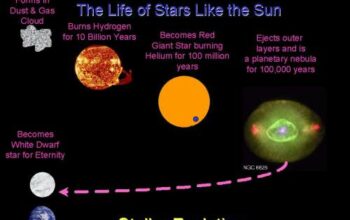
As the universe continued to expand, it entered the dark ages—a period marked by the absence of visible light sources. This epoch lasted until around 400 million years post-Big Bang, when the first stars and, subsequently, galaxies ignited. The formation of these celestial bodies is crucial since they acted as luminous beacons that heralded the end of the dark ages. The ultraviolet radiation emitted from these early stars played a pivotal role in ionizing the surrounding hydrogen gas, thus initiating the epoch of reionization.
The epoch of reionization is thought to have transpired between redshifts of approximately 6 to 20, signifying roughly 500 million to 1 billion years after the Big Bang. Observational studies indicate that this epoch involved the simultaneous contribution from both massive stars and early galaxies, though the precise ratio of contributions remains a subject of ongoing research. The efficiency with which these first stars ionized their surroundings depended on various factors, including stellar mass, temperature, and the escape fraction of the emitted radiation.
Recent astronomical observations have vastly improved our comprehension of galaxies during this formative period. The discovery of high-redshift galaxies using advanced telescopes, such as the Hubble Space Telescope, revealed that these structures were not only more numerous than previously thought but also exhibited varying degrees of luminosity and star formation activity. This diversity indicates that the process of galaxy formation was both complex and multifaceted. The interplay between gravitational forces, gas dynamics, and feedback mechanisms ultimately influenced how effectively galaxies could contribute to the reionization process.
Among the observed high-redshift galaxies, those classified as Lyman-alpha emitters are particularly noteworthy. The Lyman-alpha line, corresponding to a specific transition in hydrogen, serves as an excellent indicator of star formation. The emission and transmission of Lyman-alpha photons enable astronomers to probe the conditions of the intergalactic medium and thereby infer the ionization state of hydrogen during the reionization epoch.
Intriguingly, numerical simulations have attempted to model the large-scale structure of the universe during reionization. These simulations underscore the significance of cosmic structure formation, illustrating how gravitational clustering of matter facilitated the emergence of vast galaxies. Large-scale structures contributed to the local ionization fields, allowing for a patchy reionization process, rather than a uniform one. This means that ionized and neutral regions likely coexisted for some time, leading to a nuanced understanding of how light interacted with the gas surrounding these stellar formations.
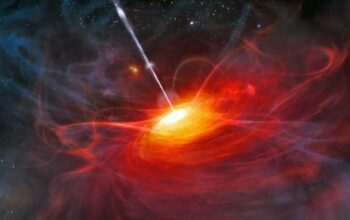
The contributions of massive stars versus active galactic nuclei (AGN) remain pivotal discussions at the forefront of reionization research. While massive stars are widely accepted as prime agents in providing the necessary ultraviolet flux for ionization, some researchers postulate that AGN may also play a significant role. AGN, powered by supermassive black holes, are capable of emitting substantial radiation across various wavelengths, possessing the potential to influence the ionization of their surroundings. Distinguishing between their contributions remains challenging due to the complexities of feedback mechanisms and the intricate interstellar medium dynamics.
Further verifying these models and establishing a temporal framework for reionization also involves proxy methods that analyze the observed properties of distant quasars and gamma-ray bursts. Observational data derived from these sources can offer valuable insights into the ionization characteristics of surrounding media and its evolution over time. Technological advances in spectroscopy and observational methods continue to refine our understanding of the details involved in the reionization phenomenon.
Ultimately, the quest to unravel the intricacies of reionization signifies a critical endeavor in astrophysics, as it intertwines with our comprehension of the subsequent cosmic evolution. The universe’s luminous glow that emanated from the formation of galaxies not only marked the end of the dark ages but also shaped the large-scale structure and dynamics of the cosmos. As research progresses, uncovering the remnants of this profound era will yield essential insights into the formation and evolution of galaxies, the intergalactic medium, and the fabric of the universe itself.