
Short Answer
Understanding the Origin of Space in Cosmology
The question of whether the Big Bang initiated the creation of space itself or if space preexisted to accommodate this primordial event is a profound and complex inquiry. While the Big Bang is commonly described as the “beginning of everything,” a closer examination reveals deep uncertainties about the very nature and origin of space. This topic challenges foundational assumptions in cosmology and invites exploration into the relationship between space, time, and matter.
Definition: The Big Bang and Space
The Big Bang theory posits that the universe began from an extremely hot, dense state and has been expanding ever since. Traditionally, this event is considered the origin not only of all matter and energy but also of spacetime-the unified continuum of space and time.
- Big Bang:
The initial singularity or state from which the universe expanded. - Spacetime:
The four-dimensional fabric combining three spatial dimensions and one temporal dimension. - Space:
The three-dimensional expanse in which matter and energy exist and events occur.
The Interplay Between Space, Time, and Matter
To grasp the significance of whether space was created by the Big Bang, it is essential to understand how space, time, and matter are intertwined. According to standard cosmological models, the Big Bang marks the inception of spacetime itself, implying that space did not exist independently before this event. This view suggests that space and time emerged simultaneously with matter and energy, forming the dynamic arena in which the universe evolves.
How the Big Bang Relates to Space
In classical cosmology, the Big Bang is often described as an initial singularity-a point where densities and temperatures become infinite and conventional physics breaks down. From this singularity, space expanded rapidly, carrying matter and radiation along with it. However, this raises a conceptual puzzle: if space is the “container” for matter and events, how can it be produced by an explosion? Does the Big Bang occur within space, or is it the expansion of space itself?
Expansion of Space vs. Explosion Within Space
Modern cosmological theories clarify that the Big Bang was not an explosion in preexisting space but rather an expansion of space itself. This means that space is not a static backdrop but a dynamic entity that stretches and evolves. During the inflationary epoch, space expanded exponentially from an extremely compressed state, embedding matter and radiation as it grew. This perspective shifts the understanding of the Big Bang from a conventional explosion to a process of spatial expansion.
Quantum Cosmology and the Nature of Space
Quantum cosmology introduces further complexity by suggesting that at the smallest scales, space may not be a smooth continuum but a probabilistic foam governed by quantum uncertainty. In this framework, space and time could be emergent phenomena arising from a deeper, more fundamental substratum beyond classical spacetime. The Big Bang, then, might represent a transition within this quantum landscape rather than a singular starting point within space.
Speculative Models of Universe Origin
Several theoretical models propose alternative views on the origin of space and the universe:
- Self-Creation Hypothesis:
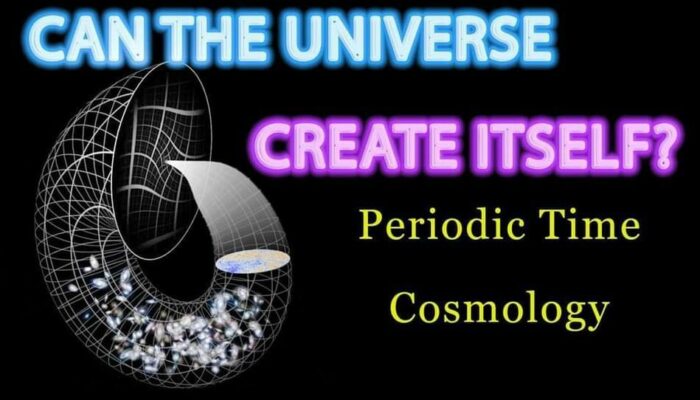
The universe may generate itself through internal quantum processes, possibly involving causality reversal or quantum fluctuations. - Cyclic Universe Models:
Space and time might undergo endless cycles of creation and destruction, with the Big Bang representing one phase transition in an eternal cosmic rhythm. - Multiverse and Meta-Geometry:
Our observable space could be one layer within a larger multiversal structure, where different spatial dimensions or geometries exist beyond our perception.
Philosophical and Metaphysical Implications
The question of space’s origin transcends physics and touches on philosophical issues concerning existence, causality, and the limits of human understanding. It challenges whether space is a prerequisite for events like the Big Bang or a consequence thereof. Moreover, it raises the possibility that our language and concepts may be inadequate to fully describe phenomena beyond empirical experience, echoing ancient metaphysical debates about creation ex nihilo (creation out of nothing).
Challenges in Current Scientific Frameworks
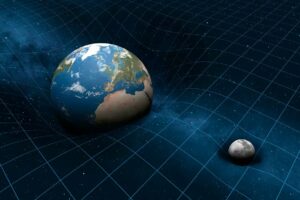
General relativity, the cornerstone of modern cosmology, merges space and time into a dynamic fabric influenced by mass and energy. However, its equations break down at singularities, such as the Big Bang, necessitating a quantum theory of gravity to resolve these paradoxes. Until such a unified theory is developed, the true nature and origin of space remain elusive.
Why the Origin of Space Matters
Understanding whether the Big Bang created space or space preexisted has profound implications for science and philosophy. It influences our comprehension of the universe’s birth, the nature of reality, and the fundamental laws governing existence. This inquiry drives advancements in theoretical physics, cosmology, and quantum gravity, pushing the boundaries of human knowledge and inspiring new paradigms about the cosmos.
Common Misconceptions About the Big Bang and Space
The Big Bang was an explosion in space.
The Big Bang was an expansion of space itself, not an explosion occurring within preexisting space.
Space existed before the Big Bang.
According to standard cosmology, space and time originated with the Big Bang, though alternative theories suggest more complex scenarios.
The Big Bang singularity is a physical point in space.
The singularity is a mathematical concept where known physics breaks down, not a physical location within space.
Real-World Observations Supporting These Ideas
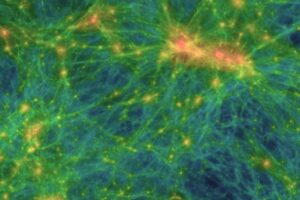
Empirical evidence such as the cosmic microwave background radiation, large-scale structure of the universe, and gravitational wave detections provide indirect support for the Big Bang and inflationary models. These observations constrain theoretical models and guide physicists in refining their understanding of space’s origin and the universe’s evolution.
Conclusion: The Enigma of Space’s Genesis
The question of whether the Big Bang created space remains one of the most intriguing puzzles in cosmology. While the Big Bang marks a transformative event in the universe’s history, the absolute origin of space is still debated. This inquiry sits at the intersection of science, philosophy, and imagination, inviting us to explore beyond conventional wisdom and embrace the profound mysteries woven into the fabric of existence.
FAQ
What does the Big Bang theory state about space?
The Big Bang theory posits that space and time originated with the Big Bang event.
Are there alternative theories regarding space's origin?
Yes, several speculative models, such as cyclic universe models and the self-creation hypothesis, propose different views on the origin of space.
Leave a Reply