
Short Answer
Understanding Rotating Black Holes
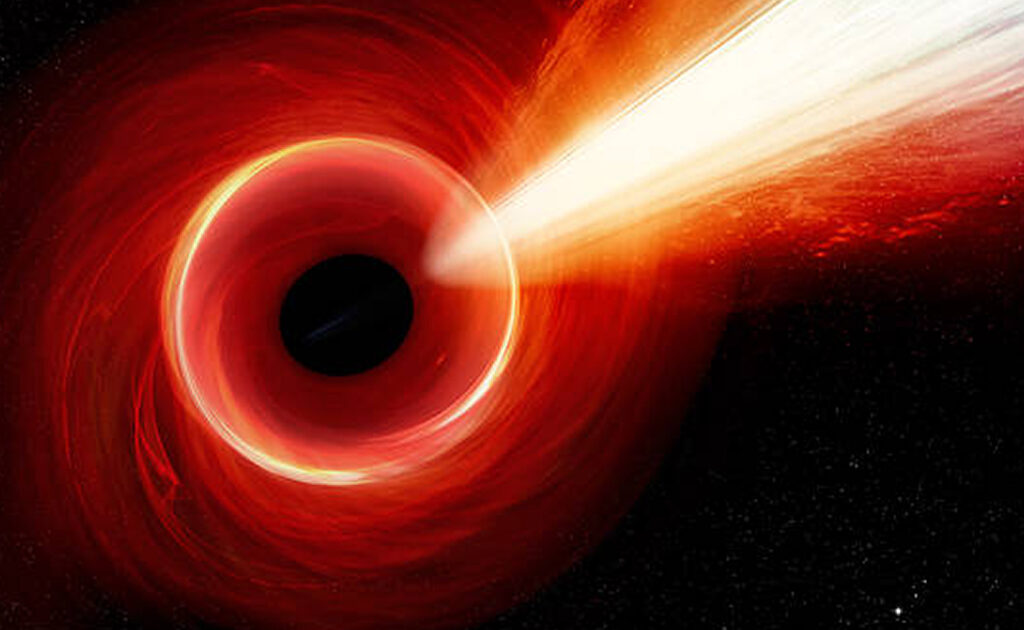
Black holes have fascinated both scientists and the public for decades, representing some of the most mysterious objects in the cosmos. These massive entities exert gravitational forces so powerful that even light-the fastest entity in the universe-cannot escape their pull under classical conditions. However, when considering rotating black holes, also known as Kerr black holes, the behavior of light and photons becomes more complex and intriguing. This article explores whether light can truly break free from the grip of a rotating black hole and examines the underlying physics that govern such phenomena.
Definition and Characteristics of Kerr Black Holes
A Kerr black hole is a type of black hole distinguished by its angular momentum, meaning it spins at extremely high speeds. Unlike the simpler Schwarzschild black hole, which is non-rotating and has a static event horizon, Kerr black holes feature a dynamic spacetime geometry influenced by their rotation.
- Event Horizon:
The boundary around a black hole beyond which nothing can escape, not even light. - Ergosphere:
A unique region outside the event horizon where spacetime is dragged around by the black hole’s rotation, forcing all matter and radiation to co-rotate. - Frame-Dragging:
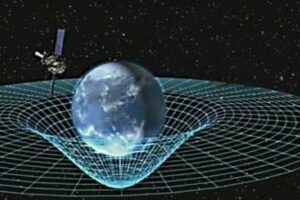
The twisting of spacetime caused by the black hole’s spin, which alters the paths of particles and photons near the black hole.
How Rotating Black Holes Affect Light
The rotation of Kerr black holes introduces phenomena absent in non-rotating black holes. The ergosphere, in particular, plays a crucial role in modifying photon trajectories. Within this region, the dragging of spacetime compels photons and matter to move in the direction of the black hole’s spin, creating conditions where light can gain energy and follow unusual paths.
One notable theoretical mechanism is the Penrose process, which suggests that particles entering the ergosphere can split, with one particle falling into the black hole and the other escaping with increased energy. Although this process primarily involves particles, it conceptually demonstrates how energy can be extracted from a rotating black hole, influencing the behavior of light near it.
Photon Orbits and Gravitational Effects Near Kerr Black Holes
Photons near a rotating black hole can become trapped in unstable orbits known as photon spheres. Unlike the single, fixed-radius photon sphere around Schwarzschild black holes, Kerr black holes have a more complex, latitude-dependent photon region due to their spin. Photons may orbit multiple times before either falling into the black hole or escaping, contributing to phenomena such as gravitational lensing, where light bends around the black hole to create multiple images or rings.
Additionally, gravitational redshift and blueshift affect photons differently depending on their direction relative to the black hole’s rotation. Photons moving outward lose energy (redshift), while those moving inward gain energy (blueshift). However, frame-dragging can reduce energy loss or even increase photon energy for those traveling along the rotation direction, enhancing their chances of escaping the ergosphere.
Quantum Effects: Hawking Radiation
While classical physics dictates that nothing can escape the event horizon, quantum mechanics introduces exceptions. Hawking radiation, a theoretical prediction by Stephen Hawking, arises from quantum effects near the event horizon, allowing black holes to emit thermal radiation. This radiation causes black holes to lose mass gradually over immense timescales, indicating that black holes are not entirely black but emit faint light due to quantum phenomena.
Astrophysical Observations and Emissions
Rotating black holes are often surrounded by accretion disks-disks of matter spiraling inward and heating to extreme temperatures. These disks emit intense electromagnetic radiation, including X-rays, especially near the innermost stable circular orbit, which lies closer to the event horizon in rapidly spinning black holes. Although this radiation originates outside the event horizon, it provides indirect evidence of the extreme gravitational environment and the interaction between light and warped spacetime.
Moreover, many active rotating black holes produce relativistic jets-narrow beams of particles and radiation ejected along their rotational axes. These jets, powered by magnetic and electromagnetic processes linked to the black hole’s spin, emit light that can travel vast distances, serving as luminous markers of the energetic processes occurring near Kerr black holes.
Mathematical Framework: Kerr Metric and Photon Dynamics
The behavior of light near rotating black holes is described by the Kerr metric, a solution to Einstein’s field equations that accounts for rotation. The metric defines the geometry of spacetime around the black hole and includes parameters such as mass (M) and angular momentum per unit mass (a).
Key variables and concepts include:
- Mass (M): The black hole’s mass, influencing the strength of its gravitational field.
- Spin Parameter (a): The angular momentum per unit mass, determining the black hole’s rotation rate.
- Event Horizon Radius (r+): Given by ( r_+ = M + sqrt{M^2 – a^2} ), marking the boundary beyond which escape is impossible.
- Ergosphere Boundary: Defined by ( r_{erg} = M + sqrt{M^2 – a^2 cos^2 theta} ), where frame-dragging effects dominate.
Photon trajectories are governed by geodesics in this curved spacetime, with their stability and escape potential influenced by the black hole’s spin and the direction of photon emission.
Common Misconceptions About Light and Black Holes
Light can escape from inside the event horizon.
The event horizon is an absolute boundary; no classical information or light can exit once crossed.
All black holes are completely black and emit no light.
Quantum effects like Hawking radiation allow black holes to emit faint thermal radiation over time.
The ergosphere allows light to escape from inside the event horizon.
The ergosphere lies outside the event horizon; while it enables energy extraction, it does not permit escape from within the event horizon.
Significance of Rotating Black Holes in Astrophysics
Rotating black holes are fundamental to our understanding of high-energy astrophysical phenomena. Their unique spacetime properties influence the behavior of matter and light in extreme gravitational fields, shaping the emissions observed from accretion disks and relativistic jets. Studying Kerr black holes enhances our comprehension of gravity, quantum mechanics, and the dynamic processes occurring in the universe’s most extreme environments.
Advances in observational technology and theoretical modeling continue to shed light on the complex interactions between rotation, gravity, and light near these cosmic giants, deepening our insight into the nature of black holes and the fabric of spacetime itself.
FAQ
Can light escape from a rotating black hole?
Under certain conditions, light can escape from the ergosphere of a rotating black hole, but it cannot escape once it crosses the event horizon.
What is the difference between a Kerr black hole and a Schwarzschild black hole?
A Kerr black hole is rotating and has a dynamic spacetime geometry, while a Schwarzschild black hole is non-rotating and has a static event horizon.



Leave a Reply