
Short Answer
Definition of Gravity and Its Planetary Significance
Gravity is a fundamental natural force responsible for the attraction between masses, governing the motion of planets, moons, and other celestial bodies. It also influences the behavior of objects on planetary surfaces, shaping environments and affecting biological adaptations. On planets like Earth and Mars, gravity plays a crucial role in maintaining atmospheric retention, regulating climate, and determining the physical conditions that support life.
Understanding Gravity as a Variable Phenomenon
Although gravity is often presented as a fixed constant-approximately 9.81 m/s² on Earth and about 3.71 m/s² on Mars-these values represent average accelerations. In reality, gravity is a dynamic force that can exhibit subtle fluctuations over time and location. These variations arise from changes in planetary mass distribution, geological activity, and external influences, challenging the notion of gravity as an unchanging constant.
Newton’s Law and the Role of Mass in Gravity
Gravity’s strength depends fundamentally on mass and distance, as described by Newton’s law of universal gravitation:
F = G * (m₁ * m₂) / r²
- F: Gravitational force between two masses
- G: Gravitational constant
- m₁, m₂: Masses of the two objects
- r: Distance between the centers of the masses
This formula implies that any significant change in a planet’s total mass or its internal mass distribution can alter its gravitational pull. While such changes are generally slow and subtle, geological and astronomical processes can induce measurable effects over time.
Gravity Variations on Earth
Earth’s gravity is not uniform and experiences minor fluctuations due to several factors:
- Geological Activity:
Movements of magma chambers and tectonic shifts can redistribute mass within the planet, causing slight gravitational changes. - Water Redistribution:
Melting glaciers and ice sheets, such as those in Greenland and Antarctica, transfer mass from ice to oceans, altering local gravity fields. - Topographical and Density Differences:
Gravity is stronger at sea level than at higher altitudes and varies with Earth’s internal density variations and equatorial bulge caused by rotation. - Seasonal and Daily Changes:
Variations in atmospheric pressure and water mass movement lead to measurable short-term gravity fluctuations.
Advanced satellite missions and gravimeters have mapped these variations with high precision, revealing the dynamic nature of Earth’s gravitational field.
Gravitational Dynamics on Mars
Mars, with about one-tenth Earth’s mass and roughly 38% of Earth’s surface gravity, exhibits its own unique gravitational characteristics:
- Seasonal Ice Cap Changes:
The polar ice caps, composed of carbon dioxide and water ice, undergo seasonal sublimation and deposition, causing cyclical mass shifts that slightly affect local gravity. - Volcanic and Geological Features:
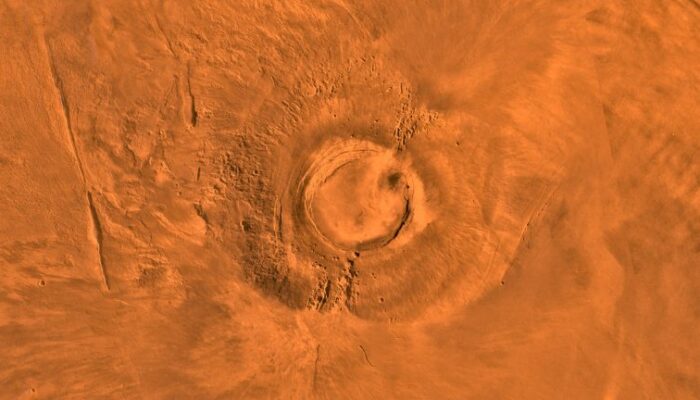
Massive volcanic structures like Olympus Mons and impact craters have altered Mars’s mass distribution over geological timescales. - Absence of Plate Tectonics:
Unlike Earth, Mars lacks active plate tectonics, resulting in less frequent internal mass redistribution. - Atmospheric and Dust Storm Effects:
Dust storms and atmospheric changes contribute to minor gravitational variations.
External Influences on Planetary Gravity
Gravity on Earth and Mars is also affected by external celestial bodies:
- Earth’s Moon:
The Moon’s gravitational pull generates tidal forces that redistribute ocean and land masses, causing small but measurable gravity fluctuations. - Mars’s Moons:
Phobos and Deimos exert weaker tidal effects due to their smaller size and greater distance. - Cosmic Scale Factors:
While the universe’s overall mass, dark matter, and dark energy influence gravity on a grand scale, these effects remain constant over human timescales and do not significantly impact planetary gravity variations.
Implications of Changing Gravity
Understanding gravity’s variability is vital for several reasons:
- Atmospheric Retention and Climate:
Changes in gravity can influence a planet’s ability to hold onto its atmosphere, affecting climate and habitability. - Geophysical and Hydrological Insights:
On Earth, monitoring gravity variations helps track water cycles, seismic activity, and resource distribution. - Space Exploration and Colonization:
For Mars, knowledge of gravitational changes informs habitat construction, mobility, and long-term human presence strategies.
Technological Advances in Gravity Measurement
Modern satellite missions have revolutionized the study of gravity:
- GRACE Mission:
The Gravity Recovery and Climate Experiment (GRACE) satellites continuously map Earth’s gravitational field, detecting changes linked to hydrological and geological processes. - Future Mars Missions:
Planned missions aim to apply similar gravimetric techniques to Mars, enhancing understanding of its internal structure and seasonal mass shifts.
Summary: Gravity as a Dynamic Force
Gravity is not a static, unchanging force but a dynamic phenomenon influenced by planetary mass distribution, geological activity, and external celestial interactions. Both Earth and Mars demonstrate measurable gravitational variations over time, reflecting their unique geological histories and environmental cycles. These subtle changes deepen our comprehension of planetary evolution and underscore gravity’s central role in shaping the conditions for life and exploration in the solar system.
FAQ
How does gravity differ between Earth and Mars?
Gravity on Mars is about 38% that of Earth, primarily due to its smaller mass.
Can gravity change on a planet?
Yes, gravity can vary due to factors like geological changes, mass redistribution, and atmospheric conditions.
What factors influence gravity on Earth?
Factors include geological activity, water redistribution, sea level changes, and atmospheric pressure variations.

Leave a Reply