
Short Answer
Definition of the Universe
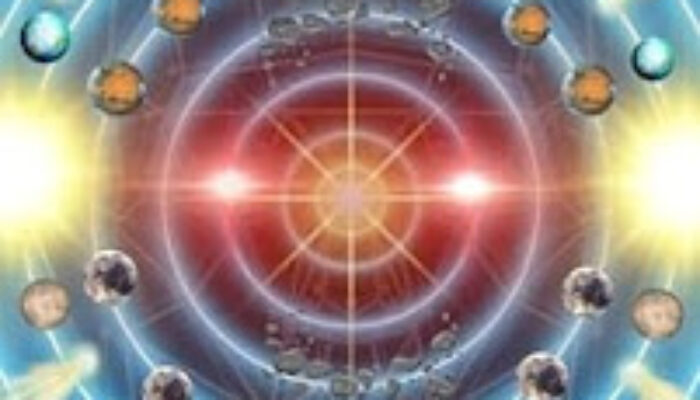
The universe can be envisioned as an immense cosmic expanse, a vast and intricate system composed of all matter, energy, space, and time. It encompasses everything from the smallest subatomic particles to the largest galactic superclusters, forming a complex and dynamic whole that extends beyond human comprehension.
- Cosmic Scale:
The universe includes all celestial bodies, cosmic phenomena, and the very fabric of spacetime itself. - Dynamic Nature:
Far from static, the universe is continuously evolving, expanding, and transforming.
Historical Perspectives on the Universe
For centuries, humanity viewed the cosmos as a fixed and orderly stage where stars and planets moved in predictable patterns. Early astronomical models portrayed the universe as a static arena, governed by simple laws and familiar forces. This perspective provided a comforting sense of certainty and control over the celestial realm.
However, advances in astrophysics and quantum theory have dramatically altered this view, revealing a universe far more complex and mysterious than previously imagined. The classical image of a silent, clockwork cosmos has given way to a vision of a living, pulsating entity shaped by unseen forces and paradoxical phenomena.
Dark Matter and Dark Energy: The Invisible Architects
One of the most profound discoveries in modern cosmology is the identification of dark matter and dark energy, which together constitute about 95% of the universe’s total mass-energy content. Despite their overwhelming presence, these components remain invisible to direct observation, detectable only through their gravitational effects and influence on cosmic expansion.
- Dark Matter:
An unseen form of matter that exerts gravitational pull, shaping the structure and movement of galaxies. - Dark Energy:
A mysterious force driving the accelerated expansion of the universe, counteracting gravitational attraction.
These enigmatic elements challenge our understanding of reality, suggesting that the visible matter we observe is merely a thin veneer over a vast, intangible cosmic framework.
Spacetime and Gravity: The Fabric of the Cosmos
Einstein’s theory of general relativity revolutionized our comprehension of gravity, describing it not as a force but as the curvature of spacetime caused by mass and energy. This concept can be likened to a stretched trampoline deformed by a heavy object, where smaller bodies move along the curved surface rather than being pulled by an invisible force.
Beyond this analogy, spacetime exhibits complex behaviors such as gravitational waves-ripples propagating through the cosmic fabric, generated by cataclysmic events like black hole mergers billions of light-years away. These waves carry invaluable information about the universe’s most violent phenomena.
Quantum Mechanics and the Nature of Reality
At the smallest scales, the universe operates under the principles of quantum mechanics, where particles exist in probabilistic states rather than fixed positions. This realm is characterized by phenomena such as superposition, where particles can be in multiple states simultaneously, and entanglement, where particles remain interconnected across vast distances.
These quantum effects challenge classical notions of locality and causality, revealing a universe that is fundamentally uncertain and interconnected in ways that defy everyday experience.
The Cosmic Microwave Background and the Universe’s Origins
The discovery of the cosmic microwave background (CMB) radiation provided a snapshot of the early universe, a faint glow left over from the Big Bang approximately 13.8 billion years ago. This relic radiation offers critical evidence that the universe began as an extremely hot, dense point before undergoing rapid expansion during a period known as cosmic inflation.
The CMB serves as a cosmic time capsule, allowing scientists to reconstruct the universe’s infancy and understand its ongoing evolution.
The Multiverse Hypothesis: Beyond Our Universe
Emerging theories in cosmology propose the existence of a multiverse-a collection of potentially infinite universes, each with distinct physical laws, constants, and dimensions. This speculative idea expands the boundaries of reality, suggesting that our universe may be just one bubble within a vast cosmic foam.
The multiverse concept invites profound philosophical questions about existence, reality, and humanity’s place within an unfathomably large ensemble of worlds.
Common Misconceptions About the Universe
The universe is static and unchanging.
Observations show the universe is expanding and evolving continuously.
Gravity is a force pulling objects together.
Gravity is the effect of spacetime curvature caused by mass and energy.
Matter constitutes most of the universe.
Visible matter accounts for only about 5% of the universe; dark matter and dark energy dominate.
Significance of Understanding the Universe
Grasping the true nature of the universe is crucial for advancing science and technology, as it informs our knowledge of fundamental physics, cosmology, and the origins of existence. This understanding fuels innovation, inspires philosophical inquiry, and deepens our appreciation of the cosmos.
Moreover, recognizing the universe’s complexity fosters humility and wonder, reminding us of our transient place within an ever-expanding cosmic mosaic. The pursuit of cosmic knowledge is a testament to human curiosity and the enduring quest to comprehend the infinite.
Conclusion: The Universe as an Ever-Evolving Mystery
The universe transcends the simplistic models of the past, revealing itself as a vast, unfolding enigma-a cosmic symphony composed of light and shadow, certainty and mystery. Each discovery peels back a layer of the unknown, inviting us to explore further and embrace the profound complexity of the cosmos.
To look at the stars today is to engage with a deeper truth: the universe is a dynamic narrative written across the fabric of infinity, perpetually challenging our understanding and inspiring awe.
FAQ
What is dark matter?
Dark matter is an unseen form of matter that exerts gravitational pull, shaping the structure and movement of galaxies.
What is dark energy?
Dark energy is a mysterious force driving the accelerated expansion of the universe, counteracting gravitational attraction.
How does quantum mechanics affect our understanding of the universe?
Quantum mechanics reveals that particles exist in probabilistic states rather than fixed positions, challenging classical notions of locality and causality.

Leave a Reply